
Finding a single unit that provides both effective heating and cooling can simplify year-round comfort. Below is a quick comparison of top all-season fan/heater combos chosen for airflow, heating performance, safety features, and size.
| Product | Type | Key Strength |
|---|---|---|
| Lasko Oscillating Hybrid Fan And Space Heater (FHV820) | Tower / High Velocity Hybrid | High-velocity airflow + AutoEco thermostat |
| Dreo Tower Fan And Heater Combo (MC706) | Tall Tower | Wide oscillation, precise ECO temperature control |
| Lasko Oscillating All Season Tower Fan And Space Heater (FH515) | Tower | Slim footprint with ETL safety features |
| KIAMI Bladeless Tower Fan With Heater | Bladeless Tower | Fast heat-up and wide oscillation |
| Dyson Hot+Cool Fan Heater AM09 | Bladeless / Air Multiplier | Smooth amplified airflow and fast heating |
Content Navigation
Lasko Oscillating Hybrid Fan And Space Heater
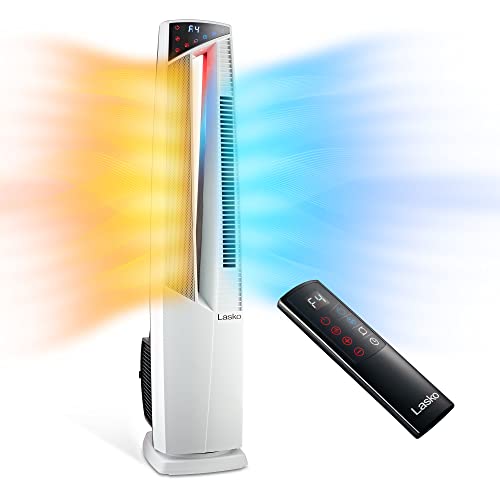
Overview: This Lasko model combines a ceramic space heater and an electric tower fan in one unit designed for year-round use. The hybrid design aims to deliver both high-velocity cooling and targeted heating.
Key Features: 3 heat settings and 4 fan speeds provide customizable comfort. Widespread oscillation helps distribute air for even coverage. The AutoEco thermostat adjusts heat output to maintain set temperatures while aiming to reduce energy use.
Practical Considerations: The high-velocity fan is suited for larger rooms or areas where strong circulation is needed. Built-in tip-over switch and standard safety features are intended for safer daily operation. Controls include remote and timer options for convenience.
Dreo Tower Fan And Heater Combo

Call 888-896-7031 for Free Local HVAC Quotes – Compare and Save Today!
Overview: The Dreo MC706 integrates a PTC room heater with multiple fan speeds and wide oscillation, designed to perform across seasons with precise temperature control.
Key Features: Auto-shift tech switches between a 5-level 1500W PTC heater and 12 cooling fan speeds. A strong DC motor delivers high airflow (claimed CFM and distance coverage) with 120° oscillation. ECO mode and ±1.5°F precision allow targeted temperature maintenance.
Practical Considerations: Suited for rooms where long-distance airflow and precise temperature control matter. The combination of multiple fan speeds and advanced ECO settings supports energy-conscious operation while providing rapid heating when needed.
Lasko Oscillating All Season Tower Fan And Space Heater

Overview: A slim-profile tower combining a 1500W ceramic heater and multiple fan speeds, designed to save floor space while delivering full-room circulation.
Key Features: 3 heat settings, 4 fan speeds, and built-in safety features including ETL listing, overheat protection, and cool-touch housing. Its tall oscillating design aims to spread air widely from a compact footprint.
Call 888-896-7031 for Free Local HVAC Quotes – Compare and Save Today!
Practical Considerations: This model is appropriate where space-saving and safety certifications are priorities, such as apartments or dorm rooms. The self-regulating heating element and remote control add convenience for extended use.
KIAMI Bladeless Tower Fan With Heater

Overview: A bladeless tower unit that claims rapid heating and delicate airflow, combining a brushless DC heater element with multi-speed fan operation and wide oscillation.
Key Features: 3-second fast heat ramp-up from a 1400W heating element, 8 adjustable wind speeds, and 80° oscillation for broad coverage. Modes include multiple heating levels and a fan-only option; remote control and timer functions are included.
Practical Considerations: Bladeless design simplifies cleaning and reduces exposed moving parts, which may appeal in homes with children or pets. Rapid warm-up can benefit smaller rooms or personal zones needing quick heat.
Dyson Hot+Cool Fan Heater AM09

Overview: Dyson’s Hot+Cool uses Air Multiplier technology to amplify surrounding air for smooth, uninterrupted airflow while providing ceramic-based heating plates for fast heat delivery.
Key Features: Air Multiplier amplifies air for consistent coverage without visible blades. Ceramic plates heat quickly for immediate warmth, and the unit offers powerful cooled airflow for summer use. Design emphasizes smooth airflow and user-friendly controls.
Practical Considerations: Known for engineered airflow performance and bladeless aesthetics, this model targets buyers looking for smooth, amplified airflow and compact styling. The unit is intended for personal to medium room coverage with an emphasis on air quality and safety.
Buying Guide: How To Choose A Fan With Heater And Cooler
Choosing the right combination fan and heater requires weighing room size, heating capacity, airflow needs, safety features, and operational convenience. Use the following factors to match a model to your home environment and use cases.
Room Size And Coverage
Measure the Space: Determine the square footage of the room you want to heat or cool. High-velocity tower units and models with higher CFM or long-distance airflow claims are better for larger rooms, whereas compact or desk-sized units suit small offices or bedrooms.
CFM And Distance: Manufacturers sometimes quote airflow (CFM) and reach distance—higher values indicate stronger circulation. For whole-room comfort in living rooms or open areas, prioritize models with wider oscillation and stronger airflow.
Heating Performance And Technology
Ceramic vs PTC Elements: Ceramic and PTC (positive temperature coefficient) heaters both provide fast, even heat. PTC elements often self-regulate and can be more energy-efficient in some designs. Check claimed wattage (commonly 1400–1500W) and available heat settings.
Heat-Up Time: Some models advertise fast heat-up; faster response matters for personal comfort and intermittent use. Consider whether instant warmth or sustained mild heating is your priority.
Cooling Performance
Fan Speeds And Oscillation: Multiple fan speeds and wide oscillation angles (e.g., 80–120°) help disperse cool air more evenly. Bladeless or air-multiplier designs typically create smooth airflow, while high-velocity tower fans deliver stronger gusts for distance.
Airflow Type: If you prefer quiet, gentle breezes for bedrooms, look for low-noise DC motors and models with low dB ratings. For rapid circulation or to supplement central AC, high-speed modes and wide oscillation are preferable.
Controls And Convenience
Remote & Timer: Remote control and programmable timers improve usability, allowing temperature or mode adjustments from across the room. Digital displays and app integration may further simplify operation.
Thermostat & ECO Modes: Built-in thermostats and ECO modes regulate output to maintain a set temperature, which can reduce energy use. Precise temperature control is useful for bedrooms or office spaces requiring stable conditions.
Safety Features
Overheat Protection & Tip-Over Switch: Essential for space heaters—ensure the model includes automatic shutoff for overheating and tip-over protection for tower units placed in high-traffic areas.
Certifications: ETL or UL listings indicate independent safety testing. Cool-touch housing, insulated elements, and child-friendly designs (e.g., bladeless units) add safety for households with kids or pets.
Design, Size, And Placement
Footprint: Slim towers save floor space; compact desk units fit on tables. Consider placement near power outlets and away from flammable materials.
Noise Level: Bedrooms benefit from low dB designs and DC motors. High-velocity models are effective for open areas but often produce higher noise during peak fan settings.
Energy Efficiency And Running Costs
Wattage And Modes: Typical heater wattages range around 1400–1500W for effective space heating. ECO modes and programmable thermostats reduce runtime and energy consumption. Use lower fan speeds or oscillation-only modes to circulate heated or cooled air with less energy use.
Operational Patterns: For long-duration heating, combine the unit with insulation improvements and set thermostats to stable, moderate temperatures. For occasional spot heating or cooling, prioritize fast warm-up and targeted airflow.
Maintenance And Durability
Cleaning: Bladeless models are generally easier to wipe down. Units with removable grilles or filters simplify maintenance. Regular dusting and occasional filter cleaning extend performance and airflow.
Warranty And Support: Check manufacturer warranties and available customer support. Parts and replacement options matter for long-term use.
Comparison Perspectives
- Performance-Oriented: Choose high-CFM, high-velocity designs for large rooms and strong circulation.
- Safety-Oriented: Favor ETL/UL-listed models with overheat and tip-over protection—especially for homes with children or pets.
- Quiet Bedroom Use: Prioritize low-dB DC motors, bladeless designs, and precise thermostat control for stable sleep environments.
- Space-Saving: Pick slim tower units with small footprints if floor space is limited.
- Quick Heat-Up: Select models advertising fast heat response for short-term, targeted warmth.
Evaluate which combination of airflow, heating technology, safety, and control features aligns with your primary use—whole-room climate control, personal spot heating, or supplemental cooling—to select the best fan/heater combo for your needs.
Tips for Getting the Best HVAC Prices
- Prioritize Quality Over Cost
The most critical factor in any HVAC project is the quality of the installation. Don’t compromise on contractor expertise just to save money. - Check for Rebates
Always research current rebates and incentives — they can significantly reduce your overall cost. - Compare Multiple Quotes
Request at least three estimates before making your choice. You can click here to get three free quotes from local professionals. These quotes include available rebates and tax credits and automatically exclude unqualified contractors. - Negotiate Smartly
Once you've chosen a contractor, use the proven strategies from our guide — How Homeowners Can Negotiate with HVAC Dealers — to get the best possible final price.