
Forced-air heaters deliver fast, directional heat for garages, job sites, and large open spaces. Below is a concise comparison of five popular forced-air units selected for power source, portability, and duty cycle. Use the summary table to match features to your space and power availability.
| Product | Fuel / Power | Output | Best For |
|---|---|---|---|
| Dura Heat EUH1465 | Electric (120V) | 1500W PTC ceramic | Small shops, personal workspaces |
| Dura Heat EWH5510 | Electric (Hard-wired 240V) | 17,060 BTU / 5,000W | Larger garages, installed garage heating |
| Mr. Heater MH60QFAV | Propane | Up To 60,000 BTU | Large job sites, temporary heat |
| Mr. Heater MH35FA | Propane | 35,000 BTU | Medium workspaces and shops |
| VEVOR Kerosene Forced Air Heater | Kerosene / Diesel | 215,000 BTU | Very large barns, warehouses, farms |
Content Navigation
- Dura Heat EUH1465 Electric Forced Air Heater With Pivoting Base
- Dura Heat EWH5510 Electric Forced Air Heater With Remote Control
- Mr. Heater MH60QFAV 60,000 BTU Portable Propane Forced Air Heater
- Mr. Heater 35,000 BTU Propane Forced-Air Heater MH35FA
- VEVOR Kerosene Forced Air Heater 215,000 BTU
- Buying Guide: How To Choose A Forced-Air Heater
Dura Heat EUH1465 Electric Forced Air Heater With Pivoting Base
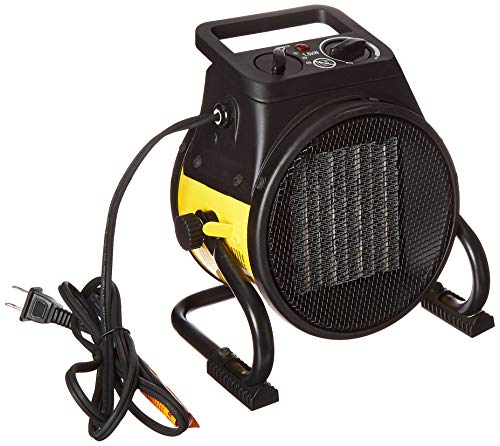
The Dura Heat EUH1465 is a compact electric forced-air heater that prioritizes durability and quick warm-up. It uses a 1500W PTC ceramic element to produce heated air rapidly and features a rugged steel housing for job-site resilience.
- Power Source: 120V electric, plug-in operation.
- Modes: Heat and fan-only settings for circulation without heat.
- Construction: Steel body suited to workshop conditions.
- Use Case: Ideal for small shops, benches, and localized heating where electricity is available.
Objectively, this heater offers quick, safe electric heating without fuel handling. It fits areas where ventilation and combustion emissions of fuel-fired units would be undesirable. Limitations include lower total output compared with propane or kerosene forced-air units.
Dura Heat EWH5510 Electric Forced Air Heater With Remote Control

The Dura Heat EWH5510 is a hard-wired garage heater designed for whole-bay coverage. It is a higher-capacity electric forced-air unit intended for installation where 240V power and professional mounting are appropriate.
Call 888-896-7031 for Free Local HVAC Quotes – Compare and Save Today!
- Power / Output: 5,000W / 17,060 BTU; covers up to ~750 sq. ft. per manufacturer guidance.
- Installation: Requires professional hard-wiring to 240V circuits.
- Controls: Remote control and adjustable thermostat; LED display for temperature settings.
- Application: Best for attached garages, workshops, or retail backrooms where a permanently installed electric heater is desired.
As a hard-wired forced-air heater, this unit provides clean electric heat and integrated control options. Consider electrical service capacity and professional installation requirements before selection.
Mr. Heater MH60QFAV 60,000 BTU Portable Propane Forced Air Heater

The Mr. Heater MH60QFAV is a high-output forced-air propane heater built for large, open job sites and temporary heating scenarios. It uses a forced-air blower to distribute combustion heat quickly.
- Output: Up to 60,000 BTU with variable 30,000–60,000 BTU control.
- Noise Reduction: QBT technology claims reduced operational noise relative to older models.
- Runtime: Manufacturer-stated run times on 20 lb tanks vary by output setting.
- Use Case: Suitable for construction sites, large garages, and outdoor-covered work areas with adequate ventilation.
Propane forced-air heaters offer high heat density and mobility. Users must plan for proper ventilation, fuel storage, and safe operation per local codes. This model emphasizes quieter operation for a forced-air propane unit.
Mr. Heater 35,000 BTU Propane Forced-Air Heater MH35FA

The Mr. Heater MH35FA is a mid-range propane forced-air heater suited for medium-sized shops and temporary project spaces. It balances portability with substantial output for spot and area heating.
Call 888-896-7031 for Free Local HVAC Quotes – Compare and Save Today!
- Output: 35,000 BTU geared toward heating areas up to several hundred square feet.
- Runtime: Manufacturer guidance indicates extended runtimes on standard propane tanks when operated at lower settings.
- Ideal Use: Workshops, hobby garages, and temporary workspace heating where electrical capacity is limited.
This unit represents a compromise between the higher-output 60,000 BTU models and small electric heaters, offering fuel-based heat without the bulk of industrial kerosene units. Proper ventilation remains a key safety consideration.
VEVOR Kerosene Forced Air Heater 215,000 BTU

The VEVOR Kerosene Forced Air Heater is a high-capacity fuel-fired unit designed for very large spaces like barns, warehouses, and large agricultural buildings. It emphasizes sustained, high-BTU output and fuel flexibility.
- Output: 215,000 BTU intended for large-volume spaces and heavy-duty warming requirements.
- Fuel Options: Supports kerosene and diesel (use one at a time); recommended 1-K kerosene for comfort and reduced odor.
- Controls & Safety: Thermostat knob, room temperature display, overheat protection, low-fuel auto-shutoff, and fuel gauge.
- Application: Farms, large work bays, and industrial scenarios needing significant heat where exhaust management is planned.
Kerosene forced-air heaters provide large-scale heating without electrical dependence, but they require fuel handling, storage, and exhaust planning. Models with thermostats and auto-shutoff enhance efficient operation for large spaces.
Buying Guide: How To Choose A Forced-Air Heater
Selecting the right forced-air heater depends on power source, space volume, portability needs, and safety constraints. Use the sections below to compare core considerations objectively.
1. Fuel Type And Power Source
- Electric (Plug-In / Hard-Wired): Clean operation, no combustion exhaust. Best indoors, attached garages, and where ventilation is limited. Output is constrained by circuit capacity.
- Propane: High output and portability. Requires fuel storage and ventilation. Common for temporary job-site heat and detached work areas.
- Kerosene / Diesel: Very high BTU output for large spaces. Fuel handling, odor, and exhaust management are important. Typically used in agricultural or heavy-industrial settings.
2. Heat Output And Coverage
- Compare BTU or wattage against the cubic footage or square footage you need to heat. Higher BTU units warm larger spaces faster but may require greater ventilation or fuel resources.
- For directional, rapid heating of work areas, forced-air units with adjustable output provide better control than fixed-output radiant sources.
3. Portability Versus Permanent Installation
- Portable Units: Propane and many electric forced-air heaters are movable for temporary tasks. Consider weight, handles, and base stability.
- Hard-Wired Units: Electric garage heaters typically require professional installation but deliver integrated, clean heat for long-term use.
4. Ventilation, Indoor Use, And Safety
- Fuel-fired appliances require ventilation and compliance with local codes. Plan exhaust and fresh-air requirements.
- Electric forced-air units avoid combustion hazards but can trip circuits if improperly sized for available amperage.
- Look for built-in safety features: overheat protection, tip-over shutoff, low-fuel auto-shutoff, and thermostatic controls.
5. Noise, Duty Cycle, And Motor Design
- Forced-air heaters use blowers; noise levels vary with motor design. If working around people or animals, prioritize models with quieter operation or QBT-like tech claims.
- Consider duty cycle and intended runtime. Industrial projects often require continuous operation; ensure the unit is rated for extended use.
6. Controls And Efficiency
- Thermostats, variable BTU settings, and remote controls enable energy-efficient operation by preventing overheating and reducing fuel/electric consumption.
- Electric models with PTC ceramic elements can provide steady, efficient heat without exposed heating coils.
7. Maintenance, Fuel Availability, And Operating Costs
- Factor in regular maintenance: filter or nozzle cleaning for fuel units, periodic inspection of hoses and fittings for propane, and electrical checks for hard-wired units.
- Estimate ongoing fuel or electricity usage for the projected runtime to compare operating costs over time.
8. Space-Specific Comparisons
- Small Enclosed Workshop: Electric forced-air (1500W–5000W) provides clean heat with minimal ventilation concerns.
- Medium Workshop / Detached Garage: Propane 30k–60k BTU or larger electric hard-wired units offer a balance of power and flexibility.
- Large Barns / Warehouses: High-BTU kerosene or diesel forced-air heaters deliver the necessary capacity; plan for exhaust and fuel logistics.
When comparing models, align fuel availability, ventilation capability, and the required heat load for the workspace. Prioritize safety features and controls that match your operational needs.
Tips for Getting the Best HVAC Prices
- Prioritize Quality Over Cost
The most critical factor in any HVAC project is the quality of the installation. Don’t compromise on contractor expertise just to save money. - Check for Rebates
Always research current rebates and incentives — they can significantly reduce your overall cost. - Compare Multiple Quotes
Request at least three estimates before making your choice. You can click here to get three free quotes from local professionals. These quotes include available rebates and tax credits and automatically exclude unqualified contractors. - Negotiate Smartly
Once you've chosen a contractor, use the proven strategies from our guide — How Homeowners Can Negotiate with HVAC Dealers — to get the best possible final price.