
Choosing the right forced air electric heater for your garage depends on space, mounting preference, power source, and safety features. The table below summarizes five top models selected for different garage sizes and installation types to help you compare at a glance.
| Model | Type | Key Feature | Coverage |
|---|---|---|---|
| Dura Heat EWH5510 | Hardwired 240V Wall/Ceiling | Remote & Adjustable Thermostat | Up To 750 Sq. Ft. |
| TEMPWARE 7500W | Hardwired Ceiling/Shop Heater | Digital Controls, ECO Mode, Timer | Up To 1,250 Sq. Ft. |
| Comfort Zone CZ230ERBK | Hardwired Ceiling Mount | Space-Saving Ceiling Design, 12-Hour Timer | Up To 1,250 Sq. Ft. |
| VEVOR 10000W | Hardwired Wall/Ceiling | Precise Temp Control, Overheat Protection | Large Workshop Coverage |
| Dura Heat EUH1465 | Portable Forced Air | 1500W PTC Ceramic, Pivoting Base | Small Spaces / Spot Heat |
Content Navigation
- Dura Heat EWH5510 Electric Forced Air Heater With Remote Control
- TEMPWARE 7500-Watt Digital Fan-Forced Ceiling Mount Shop Heater
- Comfort Zone Hard-Wired Ceiling Mount Garage Space Heater CZ230ERBK
- VEVOR Electric Garage Heater 10000-Watt Digital Fan-Forced Heater
- Dura Heat EUH1465 Electric Forced Air Heater With Pivoting Base
- Buying Guide: Choosing A Forced Air Electric Heater For Your Garage
Dura Heat EWH5510 Electric Forced Air Heater With Remote Control

This electric garage heater is a hard-wired 240V unit designed to deliver significant output for larger garages and workshops. Built for installation on a 30A/30 amp or 240V circuit, it provides up to 5,000W and a rated output of 17,060 BTU, with manufacturer guidance that it covers up to 750 sq. ft.
Key features listed include a remote control with adjustable thermostat and LED display with settable range from 45–99°F. The design emphasizes wide-area warm air distribution through fan-forced output, suitable for spaces where centralized heat is required.
Note the unit is hard-wired and requires professional installation. The product description highlights a power indicator that confirms proper installation and connection. This model is relevant for homeowners seeking a mid-to-large capacity, mounted electric forced-air solution.
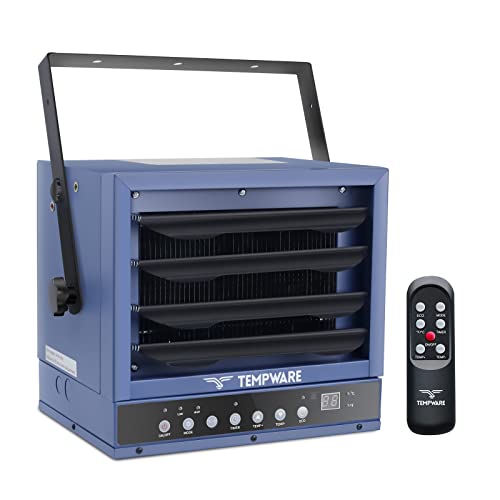
TEMPWARE 7500-Watt Digital Fan-Forced Ceiling Mount Shop Heater
Call 888-896-7031 for Free Local HVAC Quotes – Compare and Save Today!
The TEMPWARE ceiling-mount heater is a high-capacity, hardwired option offering up to 7,500 watts and a maximum BTU output listed to heat large garages and workshops. The design includes adjustable louvers and angle mounting to direct forced air where it’s needed most.
Prominent features include an ECO mode with automatic adjustments based on ambient temperature, a 12-hour timer, full-function remote control, and a built-in thermostat adjustable across a wide range. Overheat protection is built into the unit for safety.
This heater supports variable power settings (listed between 6,250–7,500W on the product page), making it adaptable for different insulation levels and garage sizes. It targets users seeking a ceiling-mounted, energy-manageable forced-air heater for larger spaces.
Comfort Zone Hard-Wired Ceiling Mount Garage Space Heater CZ230ERBK

Comfort Zone provides a space-saving ceiling-mounted fan-forced heater that targets garages and workshops where floor space is at a premium. The unit is designed to mount overhead and direct heated air with adjustable louvers and angle settings.
Features include a digital thermostat, 12-hour timer, overheat protection, and a robust steel body suitable for harsh workshop environments. The manufacturer indicates coverage up to 1,250 sq. ft. depending on insulation and local conditions.
Call 888-896-7031 for Free Local HVAC Quotes – Compare and Save Today!
This model is a fit for users prioritizing ceiling installation to preserve floor area while delivering even forced-air distribution. It is a hardwired 240V system and typically requires professional electrical setup.
VEVOR Electric Garage Heater 10000-Watt Digital Fan-Forced Heater

The VEVOR 10,000W unit is a high-power hardwired heater intended for larger garages or small commercial shops. It emphasizes wide coverage and high air circulation for even convection heating.
Product features include precise temperature control maintaining close temperature differentials, a sturdy SPCC cold-rolled steel shell, and overheat automatic power-off protection. The listing also notes ETL certification, which addresses basic electrical safety standards.
Two adjustable power levels and a remote control are highlighted, allowing users to switch among power settings or select fan-only mode. This model suits spaces where robust, consistent forced-air heating and protective safety features are priorities.
Dura Heat EUH1465 Electric Forced Air Heater With Pivoting Base
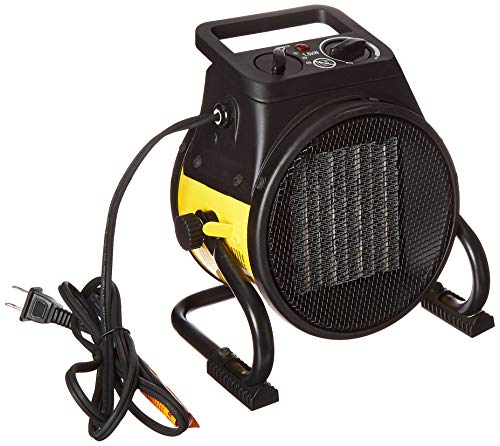
The Dura Heat EUH1465 is a portable, 1500W PTC ceramic forced air heater designed for spot heating in small garages, workshops, or workbenches. Its compact steel construction and pivoting base provide directional heat where needed.
Listed features include heat and fan-only settings, a rugged steel body for durability in shop environments, and rapid warm-up characteristics common to ceramic PTC elements. This is a plug-and-play portable option without hardwiring needs.
This unit is suitable for users needing temporary or localized heat rather than whole-space forced-air heating. It functions well where portability and immediate spot warmth are the primary requirements.
Buying Guide: Choosing A Forced Air Electric Heater For Your Garage
Selecting the right forced air electric heater requires matching the unit’s design and features to your garage size, electrical capacity, mounting preference, and safety needs. Below are key considerations to compare models objectively.
1. Coverage And Output
Estimate your garage square footage and insulation level. Manufacturers often list BTU or watt ratings and estimated coverage. As a rule of thumb, higher wattage (5,000–10,000W) and higher BTU models suit larger, poorly insulated garages. Portable 1,500W units are best for small or spot-heating tasks.
2. Mounting Type: Portable Vs Hardwired
- Portable Units (plug-in): Offer mobility and easy setup for spot heating or temporary use. They typically have lower output.
- Hardwired Ceiling/Wall Heaters: Provide centralized heating and larger output. These usually require a 240V circuit and professional installation but free up floor space.
3. Electrical Requirements
Confirm your available service capacity. Many high-output forced-air electric heaters demand 240V circuits, dedicated breakers, and specific amperage (30A, 50A, etc.). Verify panel capacity and consult an electrician for correct wiring and breaker sizing.
4. Controls And Thermostat
Digital thermostats, remote controls, timers, and ECO modes help manage energy use and maintain target temperatures. Units with precise thermostats reduce cycling and may improve comfort and efficiency.
5. Airflow And Distribution
Look for adjustable louvers, pivoting bases, or directional outlets to aim warm air where it’s needed. Fan-forced designs promote quicker distribution compared with radiant-only heaters.
6. Safety Features And Certifications
- Overheat Protection: Automatically shuts off the heater if internal temperatures exceed safe limits.
- Cool-Touch Housing: Useful in portable units to reduce burn risk.
- Third-Party Certification (ETL/UL): Indicates the heater meets recognized electrical safety standards.
7. Build Quality And Durability
Metal housings and industrial-grade components stand up better in shop environments. Cold-rolled steel or heavy-gauge panels resist deformation from prolonged heating and workshop conditions.
8. Energy Use And Efficiency
Electric forced-air heaters convert nearly all electrical input to heat but vary in controllability. Features like ECO modes, timers, and multi-level power settings help manage consumption. Proper sizing for the space avoids energy waste from oversized continuous operation.
9. Installation And Maintenance
Hardwired ceiling or wall heaters typically require professional installation. Check access for mounting brackets, clearances, and wiring. Periodic maintenance—cleaning fans and ensuring vents are clear—preserves airflow and reduces wear.
10. Use Case Comparison
- Small Garage Or Spot Heat: Portable 1,500W ceramic forced-air heaters are appropriate.
- Medium Garage (Single-Car To Two-Car): Mid-range hardwired units (around 5,000W) with remote thermostats work well.
- Large Garage Or Workshop: Ceiling-mounted 7,000–10,000W heaters or more are preferable for whole-space heating.
- Commercial Or Poorly Insulated Spaces: Higher BTU/Wattage units with robust steel enclosures and safety certifications are advisable.
When comparing models, align the heater’s wattage, mounting type, controls, safety features, and electrical requirements with your garage’s size, wiring, and intended use. Professional installation for hardwired systems ensures safe and reliable performance.
Tips for Getting the Best HVAC Prices
- Prioritize Quality Over Cost
The most critical factor in any HVAC project is the quality of the installation. Don’t compromise on contractor expertise just to save money. - Check for Rebates
Always research current rebates and incentives — they can significantly reduce your overall cost. - Compare Multiple Quotes
Request at least three estimates before making your choice. You can click here to get three free quotes from local professionals. These quotes include available rebates and tax credits and automatically exclude unqualified contractors. - Negotiate Smartly
Once you've chosen a contractor, use the proven strategies from our guide — How Homeowners Can Negotiate with HVAC Dealers — to get the best possible final price.