
Choosing the right garage heater blower depends on space, fuel type, mounting, and airflow. The table below summarizes five top garage blower heaters chosen for different needs: portable electric, forced-air propane, and hard-wired ceiling options. Each product section below links to the Amazon listing and highlights features relevant to garages, workshops, and jobsite use.
| Product | Type | Coverage / Key Strength |
|---|---|---|
| NewAir NGH160GA00 | Portable Electric Ceramic Fan | Compact, 200 CFM fan; quick spot heating |
| Dura Heat EUH1465 | Electric Forced-Air Heater | PTC ceramic, rugged steel body for small spaces |
| Mr. Heater MH60QFAV | Portable Propane Forced-Air | High output forced-air blower for large spaces |
| Flame King 60,000 BTU | Propane Forced-Air Blower | Very high output; jobsite and large garage coverage |
| TEMPWARE 7500W | Hard-Wired Ceiling Fan-Forced | Ceiling mount, wide-area heating with thermostat |
Content Navigation
- NewAir NGH160GA00 120V Portable Garage Heater
- Dura Heat EUH1465 Electric Forced Air Heater
- Mr. Heater MH60QFAV 60,000 BTU Portable Propane Forced Air
- Flame King 60,000 BTU Portable Propane Forced Air Heater
- TEMPWARE 7500-Watt Hard-Wired Ceiling Mount Shop Heater
- Buying Guide: How To Choose The Right Garage Heater Blower
NewAir NGH160GA00 120V Portable Garage Heater

This compact electric ceramic heater is designed for portable warmth in small garages and work areas. It features an internal thermostat, two heat modes, and a tilting head for directed airflow. The built-in handle and lightweight design make relocation simple for spot heating near workbenches or vehicle bays.
Key functional points include a cool-to-the-touch design and automatic shut-off to address safety during continuous use. The heater uses a ceramic heating plate paired with a 200 CFM fan to provide rapid, steady heat. Adjustable temperature control helps maintain set points when used in short-term tasks or intermittent work.
Best Suited For: Small garages, spot heating, temporary workshop setups, and users seeking a portable electric blower with basic safety features.
Dura Heat EUH1465 Electric Forced Air Heater
Call 888-896-7031 for Free Local HVAC Quotes – Compare and Save Today!
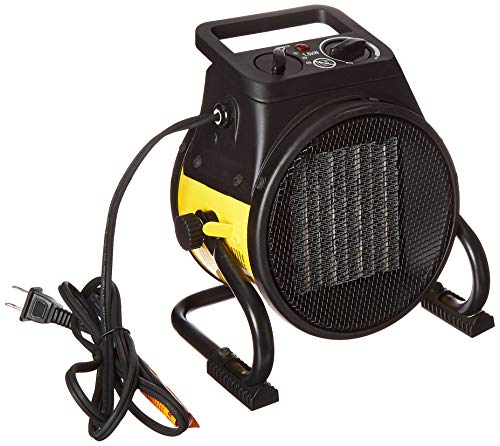
The Dura Heat EUH1465 is an electric forced-air heater with PTC ceramic heating delivering 1500W output for rapid warmth. Its steel construction and pivoting base align it for workshop and garage work where durability matters and the heater may receive occasional impact or heavy use.
Design features allow operation in heat or fan-only modes for circulation without heat. The pivoting base lets you aim the airflow toward a bench or across a bay. As a PTC-based unit, it provides steady heat without open elements and offers inherent overheat characteristics common to ceramic designs.
Best Suited For: Users who want a durable, portable electric forced-air heater for workshops, small garages, and enclosed jobsite spaces needing robust construction and directional airflow.
Mr. Heater MH60QFAV 60,000 BTU Portable Propane Forced Air

The Mr. Heater MH60QFAV is a high-output propane forced-air blower that targets larger garages, shops, and jobsite tents. It offers variable BTU output up to 60,000 BTU and employs QBT technology to reduce noise relative to older models, making it more user-friendly in occupied spaces.
Its forced-air design moves large volumes of heated air, useful for quickly raising ambient temperature in cold, large-volume areas. Portable operation on a 20 lb. propane cylinder provides fuel flexibility for locations without electrical service. Variable output also helps modulate runtime and fuel consumption.
Call 888-896-7031 for Free Local HVAC Quotes – Compare and Save Today!
Best Suited For: Large garages, workshops, and construction sites that require high heat output, portable fuel-driven operation, and a quieter forced-air blower solution.
Flame King 60,000 BTU Portable Propane Forced Air Heater

The Flame King forced-air blower provides very high output intended for expansive garages, barns, and jobsite heating. Rated to affect large volumes of air, it includes safety systems such as fuel shutoff, fire detection, and tilt shutoff to mitigate hazardous conditions during portable operation.
With an auto piezo ignition and gas control button, the Flame King is configured for practical field use where quick starts and adjustable flame control are needed. Stainless steel elements improve durability in outdoor-adjacent or rugged jobsite environments where corrosion resistance matters.
Best Suited For: Outdoor-adjacent work areas, large uninsulated garages, and construction job sites needing a high-capacity propane blower with multiple safety layers.
TEMPWARE 7500-Watt Hard-Wired Ceiling Mount Shop Heater
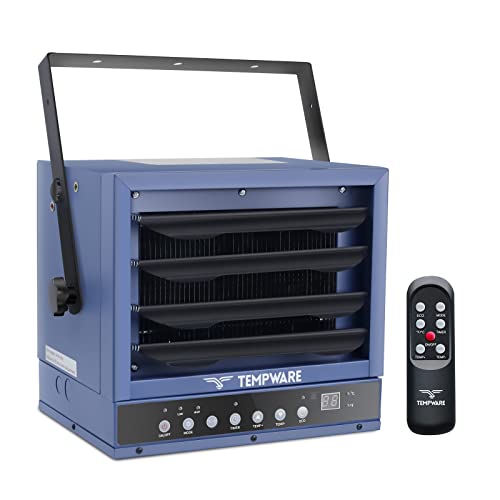
The TEMPWARE ceiling-mounted fan-forced heater is intended for larger garages and workshops where floor space must remain clear. Hard-wired installation and an adjustable mounting angle enable broad coverage and directed heat via louvers.
It includes a built-in thermostat, ECO mode, timer, and overheat protection. Multiple heat settings and a wide output range make it suitable for moderate to large areas, while the hard-wired 240V power requires professional installation but frees the unit from cord limitations.
Best Suited For: Owners of larger, frequently used garages or workshops who prefer a permanent, overhead heating solution with programmable controls and efficient distribution.
Buying Guide: How To Choose The Right Garage Heater Blower
Selecting a garage heater blower involves assessing space size, fuel source, mounting preference, airflow, safety features, and noise. Below are clarified criteria and comparison perspectives to guide a purchase based on common scenarios.
1. Space Size And Heat Output
Estimate garage volume (length x width x height) and insulation level. Electric ceramic and infrared units work well for small to medium, insulated spaces. Forced-air propane and high-BTU blowers are suited to large or poorly insulated garages where rapid air warming is required.
2. Fuel Type: Electric vs Propane
- Electric Blowers (ceramic/PTC, infrared): Easier installation, cleaner operation indoors, ideal for garages with reliable electrical service.
- Propane Forced-Air: Higher BTU output and portability without electricity, better for job sites or very large spaces, but require ventilation awareness and safety systems.
3. Airflow And Distribution
For blower-style heaters, CFM and directional louvers matter. Higher airflow moves heat faster across open bays. Ceiling-mounted fan-forced units distribute heat broadly, while portable blowers let you aim the stream at work areas.
4. Safety Features
Look for automatic shut-off, tilt and overheat protection, oxygen depletion sensors (for gas appliances used indoors), and cool-to-touch housings. These features reduce risk in garages where materials and tools may be near the heater.
5. Mounting And Portability
Decide if you need a permanent hard-wired ceiling unit or a portable blower. Ceiling units free floor space and provide consistent distribution, while portables offer flexibility and are simpler to deploy or remove.
6. Noise And Comfort
Forced-air blowers can be loud; models with noise reduction technology are preferable for occupied workshops. Infrared and ceramic units typically operate quieter but may not heat large volumes as quickly.
7. Controls, Thermostat, And Efficiency
Integrated thermostats, ECO modes, timers, and remote controls enhance usability and energy management. Consider models with variable output for better control over runtime and utility consumption.
8. Installation And Maintenance
Hard-wired and gas appliances may require professional installation and periodic servicing. Electric plug-in units offer low installation cost but inspect cords and clean fans regularly to maintain efficiency.
9. Safety And Local Codes
Verify local building codes and emissions restrictions. Use gas heaters intended for indoor use only when certified and installed per manufacturer guidelines. Ensure proper ventilation if required.
10. Comparison Perspectives
- Budget-Focused: Small electric ceramic blowers provide low upfront cost and portability for occasional use.
- Performance-Focused: High-BTU propane forced-air blowers deliver rapid heating for large, uninsulated spaces.
- Space-Saving: Ceiling-mounted fan-forced electric units free floor space and offer even distribution.
- Safety-Focused: Choose units with multiple fail-safes—tilt, overheat, ODS for gas models—and certified listings.
Using these criteria, match product features—airflow, BTU/wattage, mounting style, and safety systems—to your garage size and usage patterns to choose the most appropriate garage heater blower.
Tips for Getting the Best HVAC Prices
- Prioritize Quality Over Cost
The most critical factor in any HVAC project is the quality of the installation. Don’t compromise on contractor expertise just to save money. - Check for Rebates
Always research current rebates and incentives — they can significantly reduce your overall cost. - Compare Multiple Quotes
Request at least three estimates before making your choice. You can click here to get three free quotes from local professionals. These quotes include available rebates and tax credits and automatically exclude unqualified contractors. - Negotiate Smartly
Once you've chosen a contractor, use the proven strategies from our guide — How Homeowners Can Negotiate with HVAC Dealers — to get the best possible final price.