
Choosing the right garage heater depends on garage size, fuel type, installation preference, and safety features. Below is a quick comparison of five top heater options that cover portable, hardwired electric, and natural gas unit heaters suited to American garages and workshops.
| Product | Type | Key Strength |
|---|---|---|
| Comfort Zone CZ230ER | Hardwired Ceiling-Mount Electric | Ceiling-mounted, heats up to 1250 sq ft |
| Mr. Heater Big Maxx MHU80NG | Natural Gas Unit Heater | High BTU output, covers large areas |
| CTSC 10000W Electric Garage Heater | Hardwired Electric Shop Heater | High wattage with voltage display and ETL listing |
| TEMPWARE 7500W Garage Heater | Hardwired Ceiling-Mount Electric | Adjustable louvers, ECO mode and thermostat |
| NewAir NGH160GA00 | Portable Electric Heater | Portable, cool-to-touch design for small garages |
Content Navigation
- Comfort Zone Ceiling Mount Garage Heater
- Mr. Heater Big Maxx Natural Gas Heater
- CTSC 10000W Electric Garage Heater
- TEMPWARE 7500W Ceiling Mount Shop Heater
- NewAir Portable Electric Garage Heater
- Buying Guide: How To Choose The Right Garage Heater
- 1. Fuel Type And Availability
- 2. Heating Capacity And Coverage
- 3. Installation Requirements
- 4. Safety Features
- 5. Controls And Convenience
- 6. Air Distribution Type
- 7. Durability And Environment
- 8. Energy Efficiency And Operating Cost
- 9. Noise And Workspace Comfort
- 10. Clearance, Location, And Mounting
- Comparison Perspectives
Comfort Zone Ceiling Mount Garage Heater

The Comfort Zone CZ230ER is a hardwired, ceiling-mounted, fan-forced heater designed to free floor space while heating large areas. The unit is constructed from heavy gauge steel for durability in workshop or garage environments.
Key features include adjustable louvers and variable mounting angle to direct airflow, a digital thermostat, and a 12-hour timer. It is rated for up to 7,500 watts on 240V and claims coverage for up to 1250 square feet, making it suitable for large, poorly insulated spaces.
For installation, hardwiring to a 240V circuit is required and professional installation is often recommended. The fan-forced design helps distribute heat evenly but requires sufficient clearance and proper mounting for safe operation.
Mr. Heater Big Maxx Natural Gas Heater
Call 888-896-7031 for Free Local HVAC Quotes – Compare and Save Today!
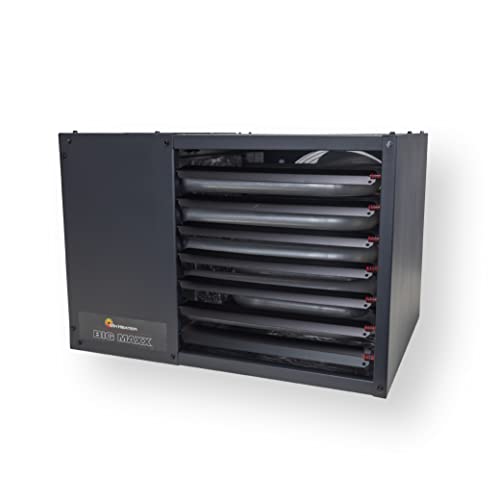
The Mr. Heater Big Maxx MHU80NG is a high-capacity natural gas unit heater delivering 80,000 BTU and intended for large garages, shops, or warehouse spaces. It’s a vented unit heater compatible with category 1 vertical or category 3 horizontal venting.
Included with the heater are two angle brackets and a propane conversion kit. The unit is engineered to heat spaces up to 2,000 square feet under appropriate conditions and mounts to a wall or ceiling with recommended clearances—note the minimum 8 ft clearance from floor to base of unit.
This heater requires a natural gas supply, proper venting, and typically professional installation. It operates on 120V for controls but relies on gas for primary heat, making it cost-effective for high-demand heating where gas is available.
CTSC 10000W Electric Garage Heater

The CTSC 10000W electric garage heater is a heavy-duty, hardwired unit aimed at workshops and larger garages. It provides three heat settings—10000W, 7500W, and fan-only—and includes a digital thermostat, remote control, and timer function.
A distinctive feature is the voltage display screen that helps troubleshoot installation issues by showing incoming voltage. The body is fabricated from SPCC cold-rolled steel and includes overheat protection and ETL certification for safety reliability.
Call 888-896-7031 for Free Local HVAC Quotes – Compare and Save Today!
Installation requires a compatible 240V circuit and proper hardwiring. The combination of high wattage and controls makes this model suited for users who need precise temperature management and robust output in insulated or partially insulated spaces.
TEMPWARE 7500W Ceiling Mount Shop Heater
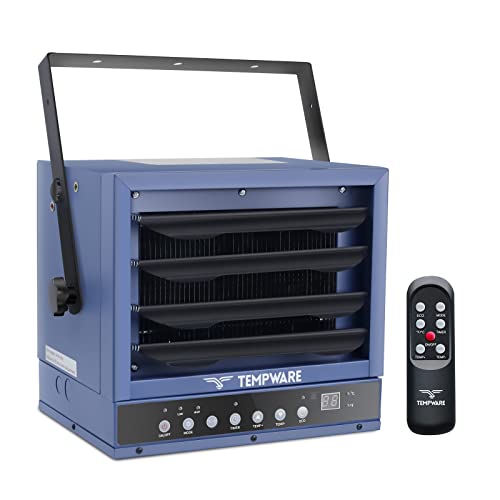
The TEMPWARE 7500W heater is a ceiling-mount, hardwired electric unit designed for workshops and garages up to roughly 1,250 sq ft. It features adjustable louvers and mounting angle for directed airflow, a built-in thermostat, and ECO mode to optimize energy use.
Power ranges from 6,250 to 7,500 watts with a timer and full-function remote control. The heater includes automatic cut-off for overheat protection and allows temperature adjustment between about 45°F and 95°F via the onboard control system.
This type of heater is well suited for typical two-car garages or medium-sized workshops that require efficient distribution of forced-air heat and programmable scheduling to avoid unnecessary runtime.
NewAir Portable Electric Garage Heater

The NewAir NGH160GA00 is a compact, portable electric heater designed for smaller garages, workbenches, or spot heating. It uses a ceramic heating plate with a 200 CFM fan for rapid, directed heat.
Safety features include a cool-to-the-touch exterior, internal thermostat, and automatic shutoff to reduce overheating risk. The unit offers adjustable temperature control, two heat modes, and a tilting head for aiming warm air where needed.
This model is suited to users seeking a non-permanent solution with mobility. It requires only standard household power and can function as supplementary heat for short tasks or when full hardwired heating is not necessary.
Buying Guide: How To Choose The Right Garage Heater
Selecting the correct garage heater requires evaluating several technical and practical factors. Below are the most important considerations to determine the best option for your space and needs.
1. Fuel Type And Availability
Options include electric (portable or hardwired) and natural gas. Electric heaters are easy to install (portable) or provide consistent heat (hardwired), while natural gas heaters deliver cost-effective high output where gas hookup and proper venting are available.
2. Heating Capacity And Coverage
Measure your garage square footage and consider insulation levels. High-BTU or high-wattage units are needed for larger, poorly insulated spaces. For example, natural gas unit heaters often provide tens of thousands of BTUs and can heat much larger areas than small portable electric units.
3. Installation Requirements
Portable heaters require minimal setup. Ceiling-mounted or wall-mounted electric units require hardwiring to 240V circuits and secure mounting. Gas units require professional gas line connection and venting. Factor installation complexity and possible electrician or HVAC technician costs.
4. Safety Features
Look for overheat protection, automatic shutoff, ETL/UL certification, cool-to-touch housing (for portable units), and secure mounting recommendations. Proper clearance from combustibles is essential for both vented gas units and hardwired electric units.
5. Controls And Convenience
Thermostats, timers, remote controls, and ECO modes improve convenience and energy efficiency. Variable louvers and adjustable mounting angles allow you to direct heat where needed. Wifi-enabled or programmable models add remote operation and scheduling options.
6. Air Distribution Type
Fan-forced heaters distribute warm air quickly and evenly, useful in larger areas. Radiant or infrared-style heaters offer direct heat to objects and people and are often better for outdoor or semi-open spaces where air circulation would dissipate convected heat.
7. Durability And Environment
Consider materials and IP ratings for heaters used in semi-exposed garages or dusty workshops. Corrosion-resistant and heavy-gauge steel constructions are durable in demanding conditions, while outdoor-rated units should have appropriate IP ratings.
8. Energy Efficiency And Operating Cost
Operating cost is influenced by fuel type, unit efficiency, and how well your garage is insulated. Natural gas generally costs less per unit of heat in many regions for continuous heavy use, while electric units can be efficient for intermittent or targeted heating when paired with good controls and insulation.
9. Noise And Workspace Comfort
Fan-forced units create airflow noise that may be noticeable during long use periods. If silent operation is important, consider lower-speed fans, spot radiant heaters, or positioning the heater away from workstations.
10. Clearance, Location, And Mounting
Follow manufacturer recommendations for minimum clearances, mounting height, and orientation. Ceiling mount units free floor space but require secure attachment points; gas heaters need adequate venting and clearance from combustibles.
Comparison Perspectives
- Small Garage / Occasional Use: Portable electric like the NewAir offers mobility, quick setup, and essential safety features for spot heating.
- Medium Garage / Regular Use: Hardwired electric ceiling units such as the TEMPWARE or Comfort Zone balance coverage, controls, and installation permanence.
- Large Or Poorly Insulated Spaces: High-BTU natural gas heaters like the Mr. Heater Big Maxx provide greater sustained output and lower operating costs where gas is available and proper venting is installed.
- High-Power, Feature-Rich Electric: Models like the CTSC with a voltage display, multiple settings, and ETL certification suit users needing precise control and diagnostic feedback.
When comparing models, match output and installation type to your garage dimensions and usage pattern, prioritize safety certifications, and confirm installation requirements before purchasing.
Tips for Getting the Best HVAC Prices
- Prioritize Quality Over Cost
The most critical factor in any HVAC project is the quality of the installation. Don’t compromise on contractor expertise just to save money. - Check for Rebates
Always research current rebates and incentives — they can significantly reduce your overall cost. - Compare Multiple Quotes
Request at least three estimates before making your choice. You can click here to get three free quotes from local professionals. These quotes include available rebates and tax credits and automatically exclude unqualified contractors. - Negotiate Smartly
Once you've chosen a contractor, use the proven strategies from our guide — How Homeowners Can Negotiate with HVAC Dealers — to get the best possible final price.