
Find the right garage heater with a fan for effective, quick heat and improved air circulation. This guide compares durable ceiling-mounted and portable fan-forced models that fit garages, workshops, and larger spaces, highlighting capacity, mounting, controls, and safety features.
| Model | Type | Heating Capacity / Key Feature |
|---|---|---|
| TEMPWARE Electric Garage Heater | Hardwired Ceiling-Mount | Up To 7,500W, 25,590 BTU, Adjustable Louvers |
| Comfort Zone CZ230ERBK | Hardwired Ceiling-Mount | 7,500W, Steel Build, Adjustable Louvers |
| Comfort Zone CZ225ER | Hardwired Ceiling-Mount | 6,000W, Wide Air Distribution, Durable Steel |
| Dura Heat EUH1465 | Portable Forced-Air | 1,500W PTC Ceramic, Pivoting Base, Rugged Steel |
| NewAir NGH160GA00 | Portable Electric | 120V Portable, Ceramic Plate, 200 CFM Fan |
Content Navigation
- TEMPWARE Electric Garage Heater, 7500-Watt Ceiling Mount
- Comfort Zone Hard-Wired Ceiling Mount, 7,500 Watt
- Comfort Zone Hard-Wired Digital Fan-Forced Space Heater, 6,000 Watt
- Dura Heat EUH1465 Electric Forced Air Heater With Pivoting Base
- NewAir NGH160GA00 120V Portable Garage Heater
- Buying Guide: How To Choose A Garage Heater With Fan
TEMPWARE Electric Garage Heater, 7500-Watt Ceiling Mount
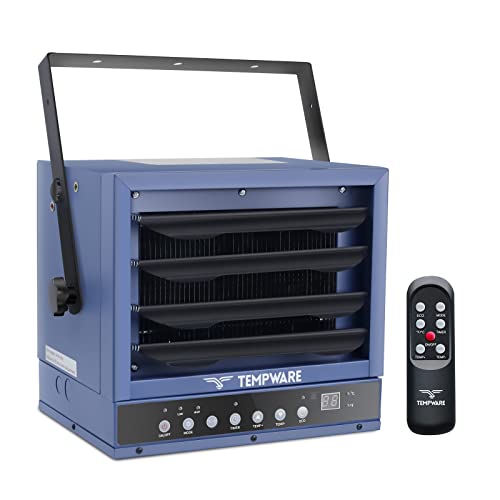
The TEMPWARE ceiling heater is a hardwired, fan-forced unit designed for large garages and workshops. It provides up to 7,500 watts and a rated maximum of 25,590 BTU, with claimed coverage up to 1,250 sq. ft. Adjustable louvers and a variable mounting angle let users direct airflow where needed.
Key features include an integrated digital thermostat, ECO mode with automatic adjustments, and a 12-hour timer. Overheat protection with an internal sensor adds a safety layer. Power settings range from about 6,250W to 7,500W, providing stepped output for different load needs.
This model emphasizes programmable control and safety, with remote operation and a focus on maintaining target temperature efficiently. Hardwire installation requires 240V wiring and professional or qualified installation for safe operation.
Comfort Zone Hard-Wired Ceiling Mount, 7,500 Watt

Call 888-896-7031 for Free Local HVAC Quotes – Compare and Save Today!
The Comfort Zone CZ230ERBK is a commercial-style fan-forced ceiling heater built from heavy gauge steel for durability in uninsulated spaces. It operates at 7,500 watts on 240V and targets coverage up to 1,250 sq. ft., making it suitable for large garages or small warehouses.
Designed for ceiling mounting, it aims to maximize floor space. Adjustable louvers and variable mounting angles enable targeted heating, while the fan-forced design aids even heat distribution. The unit includes a digital thermostat, remote control, and a 12-hour timer for programmed operation.
Durability, targeted airflow, and a focus on space-saving installation are primary features. This model requires hardwiring and is positioned for users seeking a durable, ceiling-mounted heating solution with built-in controls and safety protections.
Comfort Zone Hard-Wired Digital Fan-Forced Space Heater, 6,000 Watt

This Comfort Zone ceiling heater offers 6,000 watts of fan-forced heat with adjustable directed airflow vents for wider air distribution. Constructed from heavy gauge steel, it stresses long-term durability for garages and workshops with temperature fluctuation.
Features include adjustable mounting brackets for positioning, a digital thermostat, overheat protection, and a 12-hour timer. The fan-forced system aims to reduce cold spots by pushing heated air through adjustable louvers.
Call 888-896-7031 for Free Local HVAC Quotes – Compare and Save Today!
Intended for hardwire installation at 240V, this model is suitable for users who want a slightly lower wattage ceiling heater yet still need fan-assisted distribution and robust steel construction for commercial or residential garage environments.
Dura Heat EUH1465 Electric Forced Air Heater With Pivoting Base
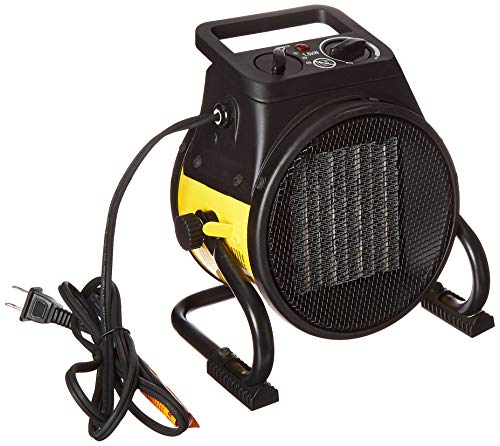
The Dura Heat EUH1465 is a portable forced-air heater offering 1,500W of PTC ceramic heating, designed for quick localized warmth. Its pivoting base provides directional control of airflow to target specific work areas in a garage.
Built with a rugged steel body, the unit is positioned for shop use where portability matters. It offers heat and fan-only settings, making it useful for both winter heating and air circulation during milder months. Overheat protection and a simple control layout are included for safety and ease of use.
This model suits users needing a moveable, durable heater for spot heating near workbenches or vehicles where permanent hardwiring is unnecessary or impractical.
NewAir NGH160GA00 120V Portable Garage Heater

The NewAir NGH160GA00 is a 120V portable ceramic garage heater designed for small garages and targeted heating. It features an internal thermostat, automatic shut-off, and a tilting head to direct warmed airflow.
With a powerful 200 CFM fan and ceramic heating plate, the unit aims for rapid warmth in compact areas up to approximately the manufacturer’s stated coverage. It includes adjustable temperature control, two heat modes, and a carry handle for mobility.
Safety-focused features include a cool-to-touch exterior, internal thermostat monitoring, and automatic shut-off to prevent overheating. This unit is practical for users who need an easy-to-move heater without hardwire installation.
Buying Guide: How To Choose A Garage Heater With Fan
Selecting the best garage heater with a fan requires balancing heating capacity, installation type, safety features, and airflow control. Below are key considerations and comparison perspectives.
Heating Capacity And Coverage
- Wattage/BTU: Higher wattage (e.g., 6,000–7,500W) suits larger, less-insulated garages. Portable units are commonly 1,200–1,500W and fit smaller or targeted areas.
- Square Footage: Match unit output to space. Ceiling-mounted 7,500W units are often rated for 1,000–1,250 sq. ft.; portable ceramic units cover smaller footprints.
Installation Type
- Hardwired Ceiling-Mount: Frees floor space and distributes heat broadly; requires 240V wiring and professional installation.
- Portable Forced-Air: Plug-and-play options for spot heating, easier repositioning, no hardwiring required; less overall coverage.
Airflow And Distribution
- Fan-Forced Distribution: Promotes even temperature by circulating heated air and reducing cold spots.
- Adjustable Louvers & Mounting Angle: Allow targeted direction of warm air to work areas or vehicle bays.
- Oscillation vs Fixed: Oscillating or pivoting bases improve coverage for portable units; ceiling units rely on louvers and fan strength.
Controls And Programmability
- Thermostats: Digital thermostats provide precise temperature control and can reduce energy use by cycling heat.
- Timers & ECO Modes: Auto-off timers and ECO modes improve convenience and energy efficiency.
- Remote Control: Useful for ceiling units or when access is limited.
Safety Features
- Overheat Protection: Automatically shuts the unit off if internal components exceed safe temperatures.
- Cool-To-Touch Exteriors: Important in portable models used in tight spaces or around people.
- Professional Hardwiring: Ensures safe and code-compliant installation for high-wattage ceiling units.
Durability And Construction
- Heavy Gauge Steel: Preferred for ceiling and commercial units exposed to dust, cold, and occasional impacts.
- Portable Ruggedness: Steel-bodied portable heaters stand up to workshop conditions better than plastic housings.
Energy Use And Operating Costs
- Wattage Directly Impacts Consumption: Higher output raises electricity use. Use thermostats or ECO modes to minimize runtime.
- Targeted Heating: Portable units reduce waste when heating only occupied zones; ceiling units offer whole-space heating but may run longer.
Noise And Fan Performance
- Fan Speed vs Noise: Stronger fans improve distribution but can raise noise. Look for quieter-rated motors if noise matters.
- Air Volume (CFM): Higher CFM moves heat farther and reduces layering of warm air near the ceiling.
Maintenance And Accessibility
- Filter And Fan Access: Check how easily the fan and air passages can be cleaned to maintain efficiency and safety.
- Serviceability: Ceiling-mounted units require lift access for service; portability simplifies maintenance.
Comparison Perspectives
- Whole-Garage Heating: Choose hardwired, fan-forced ceiling units with high wattage and louvers for broad distribution.
- Spot Or Task Heating: Choose portable forced-air or ceramic units with pivoting heads for targeted warmth near workstations.
- Budget vs Performance: Portable 1,500W units have lower upfront costs; ceiling-mounted 6,000–7,500W units require install costs but deliver whole-space performance.
- Safety Priority: For unattended or multi-user workshops, prioritize units with robust overheat protection, internal thermostats, and hardwire installation conforming to local electrical codes.
Final Selection Tips: Measure your garage, note insulation levels, decide between whole-space vs spot heating, and confirm electrical supply (120V vs 240V). For permanent, whole-space solutions, consider hardwired fan-forced ceiling heaters; for flexible or portable needs, select robust portable forced-air or ceramic models with directional airflow and safety features.
Tips for Getting the Best HVAC Prices
- Prioritize Quality Over Cost
The most critical factor in any HVAC project is the quality of the installation. Don’t compromise on contractor expertise just to save money. - Check for Rebates
Always research current rebates and incentives — they can significantly reduce your overall cost. - Compare Multiple Quotes
Request at least three estimates before making your choice. You can click here to get three free quotes from local professionals. These quotes include available rebates and tax credits and automatically exclude unqualified contractors. - Negotiate Smartly
Once you've chosen a contractor, use the proven strategies from our guide — How Homeowners Can Negotiate with HVAC Dealers — to get the best possible final price.