
Keeping a garage warm and usable through cold months requires a heater built for confined, sometimes drafty spaces. This guide compares five popular wall-mounted and wall-compatible heaters suited for garages and workshops, focusing on installation type, heating method, control options, and safety features. The table below summarizes the selected units for quick comparison.
| Product | Type | Power/BTU | Key Feature |
|---|---|---|---|
| Heat Storm HS-1500-PHX-WIFI | Infrared / Wall | 1500W | Wi‑Fi control, wall‑mounted |
| DR Infrared DR-238 | Carbon Infrared / Indoor & Outdoor | 900–1500W | IP55 rating, plug‑in |
| Cadet Com-Pak CSC151TW | Electric Wall Convection | 1500W / 5120 BTU | Complete unit with thermostat |
| GiveBest Electric Wall Heater | PTC Electric / Wall or Floor | 1500W | Wi‑Fi, multiple mounting options |
| Dyna‑Glo IR30NMDG‑1 | Natural Gas Infrared | Up To 30,000 BTU | High‑output gas infrared for large spaces |
Content Navigation
Heat Storm HS-1500-PHX-WIFI Infrared Heater

The Heat Storm HS-1500-PHX-WIFI is a wall-mounted infrared heater designed to save floor space while delivering targeted warmth. It lists Wi‑Fi capability, making remote control from a phone possible, and includes a touch screen with a digital thermostat and remote. The unit features tip‑over safety shutoff (note: listed as part of model safety) and a space‑saving profile suitable for garages with limited floor area.
Relevant features include Wi‑Fi enabled control for preheating and schedule management, a digital thermostat for setpoint control, and a compact wall mount that preserves workshop floor space. Infrared heating warms objects and people directly, which can be efficient for workbenches and occupied areas in a garage.
Dr Infrared DR-238 Carbon Infrared Heater
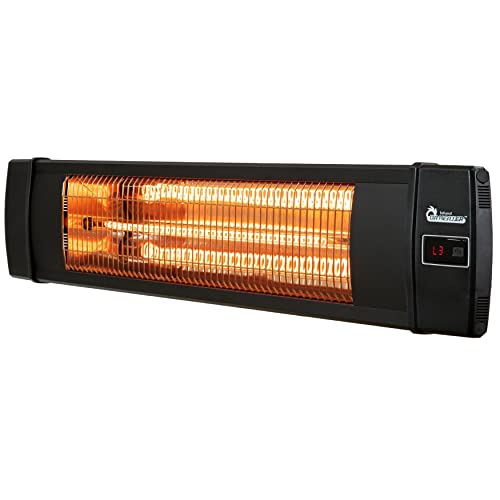
The DR Infrared DR-238 is marketed for both indoor and outdoor use, with an IP55 rating suitable for patios, garages, and open commercial spaces. It provides clean, instant infrared heat across three power settings: 900W, 1200W, and 1500W. The heater operates on standard 120V and includes a remote for control.
Call 888-896-7031 for Free Local HVAC Quotes – Compare and Save Today!
Key practical features for garages are the IP55 weather resistance, which allows usage in semi-exposed locations, and multiple power levels to match heating needs. Infrared radiant warmth is effective for localized heating in garages where you want to warm a work area or seating zone without heating the entire volume of the building.
Cadet Com-Pak Electric Wall Heater Complete Unit

The Cadet Com-Pak CSC151TW is a hardwired electric wall heater with an integrated thermostat, rated at 1500W and listed at 5120 BTU. This model is a traditional convection wall heater often used in garages, basements, and workshops where a permanent installation is acceptable.
Notable features include a complete unit with thermostat and a design intended for wall recess or surface mounting. Because it is a full electric wall heater designed for continuous duty, it suits garages where you want consistent ambient air temperature rather than localized radiant heating.
GiveBest Electric Wall Heater With WiFi

The GiveBest Electric Wall Heater offers both wall mounting and portable floor placement with retractable feet, making it versatile for garages that need movable heat. It lists remote, Wi‑Fi, and touch controls, along with an ECO mode tied to a precise thermostat for energy-efficient operation.
Call 888-896-7031 for Free Local HVAC Quotes – Compare and Save Today!
Relevant features include Wi‑Fi control for remote scheduling, multiple heating modes, and the ability to mount on the wall or place on the floor. This versatility helps garages that alternate between stationary workspace heating and temporary heating needs in different zones.
Dyna-Glo IR30NMDG-1 Natural Gas Infrared Heater

The Dyna‑Glo IR30NMDG‑1 is a high‑output infrared wall heater designed for large spaces, delivering up to 30,000 BTU/hr. It operates on natural gas and radiates heat to warm objects and surfaces first, which can be more efficient in large, high‑ceiling garages or commercial bays.
Key attributes include infrared radiant heat that warms people and equipment directly and a power level suitable for spaces up to approximately 1,000 sq. ft. Note that it is natural gas ready and subject to local fuel and installation codes; professional installation is typically required for gas heaters.
Buying Guide: Choosing A Garage Wall Heater
Selecting the right garage wall heater depends on several factors. Use the checklist and considerations below to match a heater to your garage size, usage patterns, installation constraints, and safety needs.
Tips for Getting the Best HVAC Prices
- Prioritize Quality Over Cost
The most critical factor in any HVAC project is the quality of the installation. Don’t compromise on contractor expertise just to save money. - Check for Rebates
Always research current rebates and incentives — they can significantly reduce your overall cost. - Compare Multiple Quotes
Request at least three estimates before making your choice. You can click here to get three free quotes from local professionals. These quotes include available rebates and tax credits and automatically exclude unqualified contractors. - Negotiate Smartly
Once you've chosen a contractor, use the proven strategies from our guide — How Homeowners Can Negotiate with HVAC Dealers — to get the best possible final price.
Heating Method
- Infrared / Radiant Heaters: Warm people and objects directly. Efficient for spot heating over workbenches or open garages where warming the entire air volume is inefficient.
- Convection Electric Heaters: Heat air for more uniform ambient temperatures. Better when you want to maintain a steady whole‑room temperature in a sealed garage.
- Natural Gas Infrared: Higher output for large or poorly insulated spaces. Requires gas supply and professional installation; good for large workshops and commercial bays.
Power And Coverage
- Match wattage/BTU to garage size. As a rough guide, 1500W electric units are suitable for small to medium garages or localized heating zones.
- For larger or high‑ceiling garages, consider higher BTU gas heaters or multiple electric units.
- Consider insulation, door leaks, and how much time you spend in the space; less insulated spaces need more capacity.
Installation And Mounting
- Hardwired Units: Many permanent wall heaters like Cadet require electrical wiring and possibly a dedicated circuit; professional installation may be needed.
- Plug‑In/Portable Units: Items such as the DR Infrared can be plug‑in and relocated easily; check cord length and outlet rating.
- Wall/Ceiling Mounting: Ensure wall studs or mounting surfaces can support the heater and that clearances meet manufacturer instructions.
Controls And Convenience
- Thermostat Accuracy: Precise temperature control (1°F increments in some smart units) helps avoid overshooting and can save energy.
- Smart/Wi‑Fi Control: Allows remote preheating and scheduling; useful for garages used intermittently.
- Remote/Timer Functions: Helpful when accessing the garage from outside or programming on/off cycles.
Durability And Location Considerations
- For semi‑exposed or open doors, choose an IP‑rated or outdoor‑rated unit if moisture or dust is a concern.
- Consider corrosion resistance and whether the unit’s materials are suited to workshop environments with solvents or metal filings.
Safety Features
- Look for overheat protection, tip‑over shutoff (for portable models), and proper grille design to prevent contact with heating elements.
- Gas heaters require carbon monoxide precautions, correct venting where applicable, and compliance with local codes.
Energy Efficiency And Operating Costs
- Electric units convert almost all input power to heat at the point of use; efficiency differences are about controls and heat delivery method.
- Gas units may have lower operating cost per heat output in areas with inexpensive natural gas but require careful sizing and installation.
- ECO modes, programmable thermostats, and zoning (heating only occupied areas) reduce runtime and energy use.
Noise And Airflow
- If you use power tools or need quiet for certain tasks, check reported noise levels and whether the heater uses fans.
- Fan‑forced heaters distribute heat faster but can add noise; radiant heaters are often quieter but provide localized warming.
Maintenance And Warranty
- Consider filterless infrared units for low maintenance; convection units with fans may need occasional cleaning.
- Check warranty duration and what it covers, especially for components like thermostats and electronics when used in a workshop environment.
Comparative Perspectives
- Budget vs. Performance: Plug‑in infrared and portable units lower upfront costs and require minimal installation, while hardwired or gas units provide higher sustained output for larger spaces.
- Spot Heating vs. Whole‑Room Heating: Use radiant heaters for spot heating and convection or gas for whole space conditioning.
- Smart Features vs. Simplicity: Smart/Wi‑Fi heaters add convenience but introduce electronic components that might be affected by dusty garage conditions; weigh benefit against durability needs.