
Choosing the right gas bathroom wall heater balances safety, venting type, heating capacity, and installation constraints. Below is a concise comparison table of top gas wall heaters selected for bathrooms and small rooms to help you compare features at a glance.
| Model | Fuel / Venting | Max BTU | Coverage (Approx.) |
|---|---|---|---|
| Comfort Glow 25,000 BTU Direct Vent Natural Gas | Natural Gas / Direct Vent | 25,000 | Up To 825 sq. ft. |
| Comfort Glow 17,000 BTU Direct Vent Natural Gas | Natural Gas / Direct Vent | 17,000 | Up To 570 sq. ft. |
| Comfort Glow 11,000 BTU Direct Vent Liquid Propane | Liquid Propane / Direct Vent | 11,000 | Up To 375 sq. ft. |
| Dyna-Glo 10,000 BTU Vent Free Blue Flame | Natural Gas / Vent-Free | 5,000–10,000 | Up To 300 sq. ft. |
| ProCom 30,000 BTU Ventless Blue Flame | Natural Gas / Ventless | 30,000 | Up To 1,400 sq. ft. |
Content Navigation
- Comfort Glow 25,000 BTU Direct Vent Natural Gas Wall Heater
- Comfort Glow 17,000 BTU Direct Vent Natural Gas Wall Heater
- Comfort Glow 11,000 BTU Direct Vent Liquid Propane Gas Wall Heater
- Dyna-Glo 10,000 BTU Natural Gas Blue Flame Vent Free Wall Heater
- ProCom 30,000 BTU Natural Gas Ventless Blue Flame Heater
- Buying Guide: Choosing A Gas Bathroom Wall Heater
Comfort Glow 25,000 BTU Direct Vent Natural Gas Wall Heater

This direct vent natural gas unit delivers 25,000 BTU and is rated to heat up to 825 sq. ft. The sealed burn system and Matchless Piezo ignition provide continuous pilot operation while the built-in pressure regulator and safety pilot stop gas flow if the pilot is extinguished, addressing common safety concerns for bathrooms and humid environments.
Key design points include a wall-mounted, space-saving footprint (26.5 H x 32.25 W x 8.75 D). The direct vent configuration draws combustion air from outside and exhausts outdoors, reducing indoor moisture and combustion byproducts exposure—an important factor in bathrooms where ventilation is limited.
Comfort Glow 17,000 BTU Direct Vent Natural Gas Wall Heater

The 17,000 BTU Comfort Glow direct vent model is a smaller-capacity option suitable for medium bathrooms and adjacent spaces. It covers approximately 570 sq. ft. and retains the same safety features: sealed burn system, Matchless Piezo ignition, and a pilot pressure regulator that shuts gas flow if the pilot goes out.
Call 888-896-7031 for Free Local HVAC Quotes – Compare and Save Today!
Its more compact dimensions (20 H x 27.3 W x 6.5 D) make it easier to place in tighter wall cavities. Direct venting keeps combustion sealed from the indoor environment, which is advantageous in bathrooms to minimize moisture and maintain indoor air quality.
Comfort Glow 11,000 BTU Direct Vent Liquid Propane Gas Wall Heater
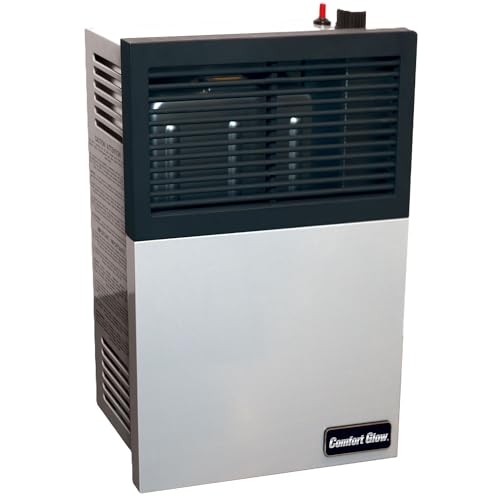
This liquid propane direct vent model produces 11,000 BTU, suitable for smaller bathrooms and powder rooms up to about 375 sq. ft. It uses the same sealed burn and Matchless Piezo ignition system as other Comfort Glow units, and includes a safety pilot with pressure regulation to cut gas flow if the pilot extinguishes.
Because it’s propane, this model is useful where natural gas is unavailable. Direct venting isolates combustion products from indoor air, making it compatible with bathroom use when installed per local codes. The smaller size (20 H x 17 W x 7 D) fits constrained wall spaces.
Dyna-Glo 10,000 BTU Natural Gas Blue Flame Vent Free Wall Heater

The Dyna-Glo blue flame unit is a vent-free natural gas heater with variable output from 5,000 to 10,000 BTU, rated for up to 300 sq. ft. Blue flame technology convects warmed air, providing even room heating without ductwork or external venting.
Call 888-896-7031 for Free Local HVAC Quotes – Compare and Save Today!
Vent-free heaters deliver high efficiency since combustion products are released into the living space after CO and moisture controls—an important caveat for bathroom use. Local codes often restrict vent-free units in bathrooms or require specific clearances and ventilation. Confirm local regulations and ensure adequate fresh air exchange prior to installation.
ProCom 30,000 BTU Natural Gas Ventless Blue Flame Heater

This ProCom unit is a high-capacity ventless blue flame heater with a 30,000 BTU maximum output, designed to heat up to 1,400 sq. ft. It operates without electricity and includes a push-button Piezo ignition and an Oxygen Depletion Sensor (ODS) that shuts off the unit if oxygen levels fall below safe thresholds.
Manual control and three heat settings allow output adjustment. While powerful, ventless heaters increase indoor moisture and exhaust into the room, which may be unsuitable for bathrooms unless local codes allow ventless models in that space. For bathrooms, vented options are typically preferred to limit moisture and combustion byproducts.
Buying Guide: Choosing A Gas Bathroom Wall Heater
Selecting the right gas bathroom wall heater depends on several interrelated factors: venting type, fuel availability, safety features, heating capacity, installation constraints, and local codes. Review these considerations before buying.
Tips for Getting the Best HVAC Prices
- Prioritize Quality Over Cost
The most critical factor in any HVAC project is the quality of the installation. Don’t compromise on contractor expertise just to save money. - Check for Rebates
Always research current rebates and incentives — they can significantly reduce your overall cost. - Compare Multiple Quotes
Request at least three estimates before making your choice. You can click here to get three free quotes from local professionals. These quotes include available rebates and tax credits and automatically exclude unqualified contractors. - Negotiate Smartly
Once you've chosen a contractor, use the proven strategies from our guide — How Homeowners Can Negotiate with HVAC Dealers — to get the best possible final price.
Venting Type: Direct Vent Vs Vent-Free
- Direct Vent (Sealed Combustion): Draws combustion air from outside and exhausts outdoors. Best for bathrooms because it keeps combustion byproducts and additional moisture out of the room.
- Vent-Free / Ventless: Releases combustion products into the room; high efficiency but can increase moisture and require strict venting/clearance rules. Check local building codes; many jurisdictions restrict vent-free units in bathrooms.
Fuel Type And Availability
- Natural Gas: Common in many homes and typically less expensive. Many high-output wall heaters are natural gas models.
- Propane (LP): Useful where natural gas is unavailable. Propane models are available in direct vent designs for safer bathroom use.
Heating Capacity (BTU) And Room Size
- Estimate room heat load. As a rule of thumb, small bathrooms commonly need 3,000–8,000 BTU; larger bathrooms or open-plan areas require more.
- Direct vent units often list coverage (e.g., 375–825 sq. ft.). Match heater capacity to the actual space, considering high ceilings or cold exterior walls will increase load.
Safety Features
- Sealed Burn System: Prevents combustion air from mixing with indoor air.
- Oxygen Depletion Sensor (ODS): Automatically shuts off ventless units if oxygen gets low.
- Matchless Piezo Ignition & Safety Pilot: Prevents gas flow if pilot extinguishes.
Installation And Placement
- Wall-mounted units need adequate clearances. Measure available wall space—units vary in height and depth.
- Direct venting requires routing an exterior vent; confirm feasibility and cost for routing through a wall or roof.
- Vent-free units simplify installation but may require additional room ventilation and compliance with code limitations.
Moisture, Indoor Air Quality, And Bathroom Use
- Bathrooms have high humidity. Direct vent units reduce indoor moisture impact and maintain better indoor air quality.
- Vent-free units can add moisture and combustion byproducts into the room—verify code allowances and consider using auxiliary ventilation (exhaust fan) if permitted.
Comparison Perspectives
- Safety-Focused Buyers: Prefer direct vent sealed combustion models with built-in regulators and pilot safety—minimizes indoor combustion exposure.
- Installation-Conscious Buyers: If no venting path exists, vent-free models reduce installation complexity but require strict adherence to local regulations.
- Fuel Availability Consideration: Choose propane models where natural gas is not available; confirm conversion restrictions before purchase.
- Capacity vs Space Trade-Off: Higher BTU units heat larger areas but may be oversized for small bathrooms; oversizing can produce excessive heat and moisture.
Regulatory And Code Considerations
- Always check local building codes and manufacturer installation manuals. Some areas prohibit vent-free gas heaters in bathrooms, bedrooms, or sleeping areas.
- Permits and professional installation may be required for gas connections and venting work.
Practical Tips
- Confirm that model dimensions fit the planned wall location and allow required clearances.
- Plan for service access and pilot maintenance. Gas appliances should be installed and serviced by qualified professionals.
- Pair any heater with adequate bathroom ventilation (exhaust fan) when possible to control humidity and odors.