
Choosing the best gas heater for a fireplace insert means balancing heating capacity, fuel type, venting requirements, and controls. The table below summarizes the five selected gas-focused products from the list, highlighting core specs to help you compare quickly.
| Product | Type | BTU / Coverage | Fuel |
|---|---|---|---|
| Comfort Glow Vent Free 24″ Highland Ember Logs | Vent-Free Log Set/Insert | Heats ~1,400 Sq Ft | Natural Gas / Propane |
| ProCom Ventless 25,000 BTU Space Saving Free Standing | Ventless Freestanding Fireplace | 25,000 BTU / ~1,100 Sq Ft | Propane / Natural Gas |
| Duluth Forge Dual Fuel Ventless 32,000 BTU Insert | Ventless Insert | 32,000 BTU / ~1,500 Sq Ft | Natural Gas / Propane |
| Comfort Glow Vent Free 24″ Black Forest Logs | Vent-Free Log Set/Insert | Heats ~1,250 Sq Ft | Natural Gas / Propane |
| Duluth Forge Dual Fuel Ventless With Mantle 32,000 BTU | Ventless Insert With Mantle | 32,000 BTU / ~1,500 Sq Ft | Natural Gas / Propane |
Content Navigation
- Comfort Glow Vent Free Gas Fireplace Log Insert With Remote
- ProCom Ventless 25,000 BTU Space Saving Free Standing Dual Fuel Fireplace
- Duluth Forge Dual Fuel Ventless Gas Fireplace Insert, 32,000 BTU
- Comfort Glow Vent Free Gas Fireplace Log Insert, 24″ Black Forest Logs
- Duluth Forge Dual Fuel Ventless Gas Fireplace System With Mantle
- Buying Guide: How To Choose A Gas Heater For A Fireplace Insert
Comfort Glow Vent Free Gas Fireplace Log Insert With Remote

This vent-free log insert is a 24″ dual-fuel set designed to fit many existing fireplaces. The 8-piece Highland Ember logs are hand-textured to mimic deep oak and include a glowing ember bed for a realistic look. The unit supports both natural gas and propane, making fuel flexibility straightforward for installations with either supply.
Key operational points include a remote-controlled thermostat allowing temperature adjustments from a distance and an electronic ignition for easier startup. Rated to heat about 1,400 sq ft, this model emphasizes aesthetic realism combined with ventless heating performance. Consider room size and local venting codes when evaluating suitability.
ProCom Ventless 25,000 BTU Space Saving Free Standing Dual Fuel Fireplace
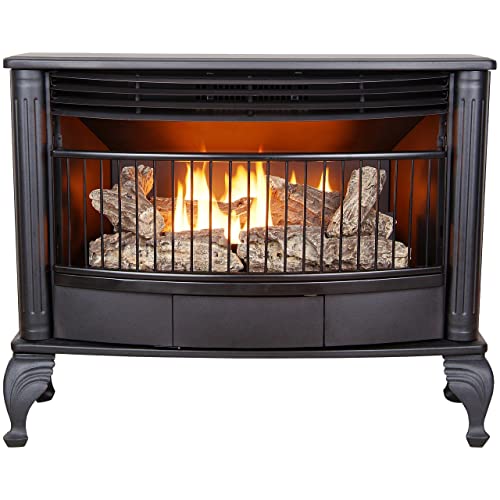
The ProCom freestanding model is a ventless heater offering 25,000 BTU output, suitable for rooms up to approximately 1,100 sq ft. Its design features hand-painted, cast concrete logs and refractory ceramics for durability and visual detail.
Call 888-896-7031 for Free Local HVAC Quotes – Compare and Save Today!
Functionally, the unit includes a thermostat-operated control with variable heat settings, enabling automated cycling to maintain desired room temperature. As a freestanding option, it may be easier to position in a room compared to built-in inserts, but verify clearance and combustible surface requirements for safe operation.
Duluth Forge Dual Fuel Ventless Gas Fireplace Insert, 32,000 BTU

This Duluth Forge insert uses ventless dual fuel technology to operate with natural gas or liquid propane. With a higher 32,000 BTU output, it is rated to heat up to ~1,500 sq ft and reports >99% combustion efficiency typical of vent-free systems.
Features include a remote with an LCD screen, manual flame adjustment, and a standing pilot enabling remote on/off. The 6 hand-painted ceramic fiber logs and mesh double doors enhance aesthetics. This model suits larger spaces where high-output, ventless heating is desired, but confirm local regulations on ventless appliances before purchase.
Comfort Glow Vent Free Gas Fireplace Log Insert, 24″ Black Forest Logs

Another Comfort Glow vent-free option, this 24″ Black Forest log set includes 6 deep-textured oak-style logs and an adjustable thermostat. Like the Highland Ember version, it supports both natural gas and propane and provides an electronic ignition system for convenience.
Call 888-896-7031 for Free Local HVAC Quotes – Compare and Save Today!
Rated to heat approximately 1,250 sq ft, this unit emphasizes visual realism and straightforward installation into standard fireboxes. Its ventless configuration offers easy installation where no chimney or flue is available, subject to local building and safety codes.
Duluth Forge Dual Fuel Ventless Gas Fireplace System With Mantle

This package combines a ventless 32,000 BTU insert with a furniture-grade mantle and decorative elements like sprayed brick liner. The system supports natural gas or propane and includes a remote control with options for thermostat or manual operation.
The addition of a mantle provides a finished look for rooms where you want an integrated focal point. As with other ventless systems, it offers near-complete indoor heat delivery; be mindful of ventilation, humidity effects, and any local restrictions on vent-free appliances.
Buying Guide: How To Choose A Gas Heater For A Fireplace Insert
Selecting the right gas heater for a fireplace insert involves several technical and practical considerations. Below are the key factors to evaluate in order to match a product to your space and requirements.
1. Fuel Type And Availability
- Natural Gas vs Propane: Confirm which fuel is available in your home. Many inserts are dual fuel and accept both, but conversion kits or professional hookup may be needed.
- Supply Pressure And Lines: Verify that existing gas lines can supply the chosen BTU load; high-BTU units may require larger pipes or upgrades by a licensed technician.
2. Venting: Ventless (Vent-Free) Versus Vented
- Ventless models deliver almost all heat into the room and are easier to install since no chimney or flue is required. Check local codes—some jurisdictions restrict or disallow ventless appliances in bedrooms or whole-home use.
- Vented or direct-vent inserts exhaust combustion gases outdoors, improving indoor air quality but often reducing room heat output. Consider your air-exchange needs and installation constraints.
3. Heating Capacity And Room Size
- Match BTU output to the square footage you want to heat. Manufacturers often provide coverage estimates—use these as a baseline but adjust for ceiling height, insulation quality, and climate.
- Higher BTU units like 32,000 are suited for larger rooms or open floor plans; smaller units offer finer control for compact spaces.
4. Controls And Convenience
- Thermostat control enables automatic cycling to maintain set temperature and often improves comfort and efficiency.
- Remote controls and programmable features add convenience; confirm whether remotes require standing pilots or electronic ignition setups.
5. Aesthetics And Log/Flame Realism
- Hand-painted ceramic or refractory logs vary in realism; choose styles that complement your décor.
- Look for adjustable flame settings, ember beds, and decorative liners or mantles if visual appearance matters.
6. Efficiency, Emissions, And Air Quality
- Ventless appliances have high combustion efficiency but release combustion byproducts into the room; ensure proper ventilation and consider CO and combustion air concerns.
- Install carbon monoxide detectors and follow manufacturer ventilation recommendations.
7. Installation And Safety
- Many units require professional installation, including gas line hookup, pressure testing, and compliance with local codes.
- Review clearance requirements from combustible materials, floor protection, and screen or door recommendations.
8. Maintenance And Longevity
- Inspect burners, ignition systems, and logs periodically. Ceramic fiber logs can degrade over time under high heat.
- Consider the availability of replacement parts such as pilot assemblies, remotes, and log sets.
9. Comparison Perspectives
- Performance vs Appearance: Higher BTU inserts (Duluth Forge 32,000 BTU) prioritize heat delivery, while some Comfort Glow models focus on realistic log aesthetics at modest BTU levels.
- Built-In vs Freestanding: Freestanding units (ProCom 25,000 BTU) provide installation flexibility, whereas inserts and mantle systems deliver a more integrated look.
- Control Options: Units with thermostatic remote control offer automated comfort management; simpler models may rely on manual knobs or standing pilots.
Before purchasing, verify product specifications against local building codes and consult a licensed gas technician for in-home suitability and safe installation. Prioritizing the factors above will help you choose a gas heater that aligns with your heating needs, installation constraints, and safety requirements.
Tips for Getting the Best HVAC Prices
- Prioritize Quality Over Cost
The most critical factor in any HVAC project is the quality of the installation. Don’t compromise on contractor expertise just to save money. - Check for Rebates
Always research current rebates and incentives — they can significantly reduce your overall cost. - Compare Multiple Quotes
Request at least three estimates before making your choice. You can click here to get three free quotes from local professionals. These quotes include available rebates and tax credits and automatically exclude unqualified contractors. - Negotiate Smartly
Once you've chosen a contractor, use the proven strategies from our guide — How Homeowners Can Negotiate with HVAC Dealers — to get the best possible final price.