
Quick Overview: This guide compares five natural gas garage heaters suited to different garage sizes, mounting types, and heat outputs. Below is a compact summary table to help you scan options quickly.
| Product | Type | BTU | Coverage / Notes |
|---|---|---|---|
| Mr. Heater Big Maxx MHU80NG | Unit Heater (Natural Gas) | 80,000 | Up To 2,000 Sq. Ft., Category 1/3 Venting |
| Modine Hot Dawg HD45AS0111 | Unit Heater (Natural Gas) | 45,000 | Quiet, Residential/Commercial Certified |
| Dyna-Glo IR30NMDG-1 | Infrared Wall Heater (Natural Gas) | 30,000 | Radiant Heat, Up To 1,000 Sq. Ft. |
| Reznor UDXC-45 | Indoor Ceiling/Wall Unit (Natural Gas) | 45,000 (two output levels) | 83% Efficiency, Ceiling Mount Capable |
| Comfort Glow 17,000 BTU Wall Heater | Direct Vent Wall Heater (Natural Gas) | 17,000 | Sealed Burn, Up To ~570 Sq. Ft. |
Content Navigation
- Mr. Heater Big Maxx MHU80NG – 80,000 BTU
- Modine Hot Dawg HD45AS0111 – 45,000 BTU
- Dyna-Glo IR30NMDG-1 – 30,000 BTU Infrared
- Reznor UDXC-45 – 45,000 BTU Indoor Unit
- Comfort Glow 17,000 BTU Direct Vent Wall Heater
- Buying Guide: Choosing The Right Gas Heater For Your Garage
- 1. Heat Output (BTU) And Coverage
- 2. Heat Type: Convective Vs. Radiant
- 3. Fuel And Conversion
- 4. Venting And Installation Constraints
- 5. Efficiency And Operating Cost
- 6. Noise And Duty Cycle
- 7. Safety Features And Indoor Air Quality
- 8. Mounting And Space Constraints
- 9. Controls And Thermostat Compatibility
- 10. Local Codes, Permits, And Professional Installation
- Comparison Perspectives
Mr. Heater Big Maxx MHU80NG – 80,000 BTU
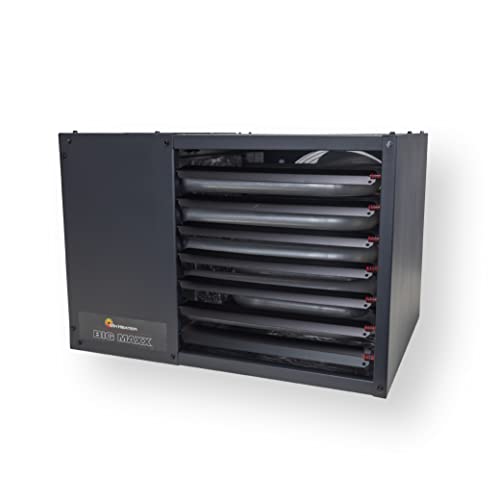
The Mr. Heater Big Maxx MHU80NG is a high-output natural gas unit heater intended for large garages and workshops. It delivers 80,000 BTU and lists a coverage rating up to 2,000 sq. ft.
- Included Items: Heater unit, two angle brackets, and a liquid propane conversion kit.
- Venting: Category 1 vertical or category 3 horizontal venting options for flexible installation.
- Installation Notes: Requires separate thermostat, hose, and regulator; maintain minimum 8 ft. clearance from floor to base.
- Electrical: 120 V, 2.3 amps for fan and controls.
This model is suited to larger, open garages or shops that need fast, high-volume warm-up. Venting options and conversion kit increase versatility for different fuel setups and installation constraints.
Modine Hot Dawg HD45AS0111 – 45,000 BTU
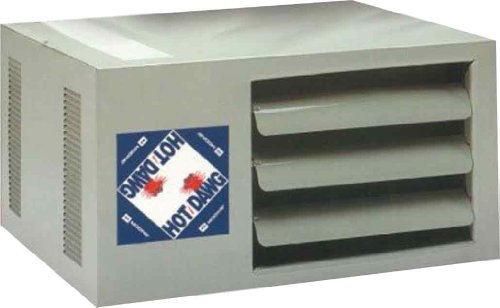
The Modine Hot Dawg HD45AS0111 is a compact, low-profile natural gas unit heater engineered for quiet operation in residential and commercial spaces.
Call 888-896-7031 for Free Local HVAC Quotes – Compare and Save Today!
- Noise & Certification: Marketed for quiet operation and certified for residential, commercial, and industrial use.
- Design: Low-profile housing and neutral finish blend into typical garage interiors.
- Output: 45,000 BTU suitable for medium-sized garages or attached workshops with moderate insulation.
The Hot Dawg series is frequently chosen for attached garages and shops where balanced heat output and quieter operation are priorities. Confirm venting and clearance requirements before installation.
Dyna-Glo IR30NMDG-1 – 30,000 BTU Infrared

The Dyna-Glo IR30NMDG-1 is a natural gas infrared wall heater that uses radiant heat to warm objects and people rather than only heating room air.
- Heat Type: Infrared radiation — warms surfaces directly, effective in drafty or high-ceiling areas.
- Coverage: Up to 1,000 sq. ft. with a 30,000 BTU output.
- Fuel: Natural gas ready; conversion to other fuels not permitted.
Infrared heaters can feel warmer at lower ambient air temperatures because they heat objects directly. This model suits garages where targeted warmth near work areas is preferred over whole-room convection heating.
Reznor UDXC-45 – 45,000 BTU Indoor Unit

The Reznor UDXC-45 is an indoor-rated natural gas heater offering dual output levels and higher thermal efficiency for consistent shop heating.
Call 888-896-7031 for Free Local HVAC Quotes – Compare and Save Today!
- Output Levels: Two heating outputs—low fire ~26,145 BTU and high fire ~37,350 BTU on certain modes, rated 45,000 BTU nominal.
- Efficiency: Approximately 83% thermal efficiency for improved fuel utilization.
- Mounting: Designed for ceiling suspension; threaded-nut retainers provided for hanging installations (mounting hardware sold separately).
Reznor units are often used in workshops and light industrial spaces where energy efficiency and configurable mounting options are important. Confirm whether included outputs match your local model variant and required clearances.
Comfort Glow 17,000 BTU Direct Vent Wall Heater

The Comfort Glow 17,000 BTU direct vent wall heater is a sealed-burn unit designed for smaller garages or zone heating needs.
- Ventilation: Direct vented with sealed combustion to minimize indoor air exchange and increase safety.
- Safety Features: Matchless piezo ignition and a safety pilot with a built-in pressure regulator to stop gas flow if the pilot is extinguished.
- Coverage: Rated to heat up to ~570 sq. ft., suitable for small garages or adjacent rooms.
Direct vent wall heaters provide a sealed combustion system that reduces intake of indoor air for combustion, which can be beneficial where indoor air quality or venting routes are constrained.
Buying Guide: Choosing The Right Gas Heater For Your Garage
Selecting the appropriate gas heater depends on garage size, insulation, mounting preferences, venting constraints, and usage patterns. Below are the key considerations to compare models objectively.
1. Heat Output (BTU) And Coverage
Estimate your garage’s heat loss using square footage, ceiling height, and insulation quality. As a rough guide:
- Small/Well-Insulated Garages: 10,000–25,000 BTU may suffice.
- Medium Garages: 25,000–45,000 BTU for typical single- to two-car spaces.
- Large Or Poorly Insulated Workshops: 45,000–80,000+ BTU for rapid warm-up and sustained temps.
2. Heat Type: Convective Vs. Radiant
Convective/Unit Heaters (forced-air) warm the air and provide broader distribution—good for whole-space heating. Infrared/Radiant units heat people and objects directly, which can feel warmer faster in drafty or high-ceiling areas.
3. Fuel And Conversion
Confirm fuel type compatibility. Some heaters ship for natural gas but include conversion kits for propane. Others are fuel-specific and do not permit conversion. Verify local gas supply and any required conversion licensing.
4. Venting And Installation Constraints
Venting options (direct vent, category 1/3 venting, sealed) affect where you can install the heater. Direct vent or sealed-combustion units reduce impact on indoor air, while unit heaters may require more elaborate venting and clearances. Check minimum clearance requirements and whether ceiling suspension, wall mount, or floor placement is needed.
5. Efficiency And Operating Cost
Higher thermal efficiency ratings mean more heat produced per unit of gas. Efficiency matters for long-term operating cost. Compare AFUE or thermal efficiency figures when available, and consider two-stage outputs for modulating performance.
6. Noise And Duty Cycle
If you spend long hours in the garage or have attached living spaces, noise level matters. Unit heaters with quiet fans or low-profile designs reduce audible impact. Consider duty cycle and continuous operation tolerances for continuous workshop use.
7. Safety Features And Indoor Air Quality
Look for sealed combustion, safety pilots, and built-in pressure regulators. Sealed or direct vent systems limit indoor air exchange. Ensure CO detectors are installed per local codes and follow all venting and clearance instructions.
8. Mounting And Space Constraints
Ceiling-hung units free floor space but require structural support and hanging hardware. Wall-mounted and freestanding options may be easier to install but occupy wall or floor space. Confirm included mounting brackets and whether additional hardware is sold separately.
9. Controls And Thermostat Compatibility
Decide whether you need an integrated thermostat, remote control, or compatibility with a wall thermostat. Some units ship without thermostats and require separate controls for temperature regulation.
10. Local Codes, Permits, And Professional Installation
Gas heater installation often requires adherence to local building codes and may need permits. Professional installation ensures proper venting, gas line sizing, and safety compliance. Verify local requirements before purchase.
Comparison Perspectives
When comparing heaters, weigh these perspectives:
- Performance-Focused: Prioritize BTU and efficiency for large or poorly insulated spaces (e.g., Mr. Heater 80,000 BTU).
- Efficiency & Modulation: Choose models with multiple output levels or higher thermal efficiency for balanced fuel consumption (e.g., Reznor UDXC series).
- Targeted Comfort: Use infrared units for workbench or zone heating where radiant warmth is preferred (e.g., Dyna-Glo).
- Sealed Combustion / Indoor Air Concerns: Pick direct vent wall heaters when indoor air quality or sealed combustion is a priority (e.g., Comfort Glow).
- Noise & Aesthetics: Low-profile, quiet models like the Modine Hot Dawg suit attached garages or shared walls.
Review the detailed specs, venting requirements, and installation notes of any model you consider. For larger installations or where safety and code compliance are critical, consult a licensed HVAC professional before purchase and installation.
Tips for Getting the Best HVAC Prices
- Prioritize Quality Over Cost
The most critical factor in any HVAC project is the quality of the installation. Don’t compromise on contractor expertise just to save money. - Check for Rebates
Always research current rebates and incentives — they can significantly reduce your overall cost. - Compare Multiple Quotes
Request at least three estimates before making your choice. You can click here to get three free quotes from local professionals. These quotes include available rebates and tax credits and automatically exclude unqualified contractors. - Negotiate Smartly
Once you've chosen a contractor, use the proven strategies from our guide — How Homeowners Can Negotiate with HVAC Dealers — to get the best possible final price.