
Choosing a hanging heater for a garage requires balancing heat output, installation type, durability, and safety. The table below summarizes selected hanging heaters that suit garages, workshops, and similar spaces. Each product review below links to the Amazon listing and highlights the key features relevant to garage use.
| Product | Type | Best For |
|---|---|---|
| DR Infrared Heater DR-238 | Electric Infrared (Plug-In) | Small To Medium Garages, Quick Spot Heating |
| ALORAIR HydroX H100A | Hydronic Water-To-Air Hanging Unit | Large Garages, Workshops, Integration With Boilers |
| Danluke 1500W Hanging Patio Heater | Electric Infrared (Hard-Mount/Water-Resistant) | Covered Garages, Porches, Semi-Outdoor Spaces |
| Comfort Zone CZ230ER | Hard-Wired Fan-Forced Ceiling Heater | Large Garages, Continuous Area Heating |
| American Royal 50,000 BTU Hydronic Heater | Hydronic Hanging Unit | Very Large Garages, Wood Boiler Systems |
Content Navigation
- DR Infrared Heater DR-238 Carbon Infrared Outdoor Heater
- ALORAIR 100,000 BTU Hydronic Hanging Heater HydroX H100A
- Patio Heater 1500W Electric Infrared Hanging Heater (Danluke)
- Comfort Zone Hard-Wired Ceiling Mount Garage Heater CZ230ER
- American Royal 50,000 BTU Hydronic 2-Speed Garage Hanging Heater
- Buying Guide: How To Choose A Hanging Garage Heater
DR Infrared Heater DR-238 Carbon Infrared Outdoor Heater
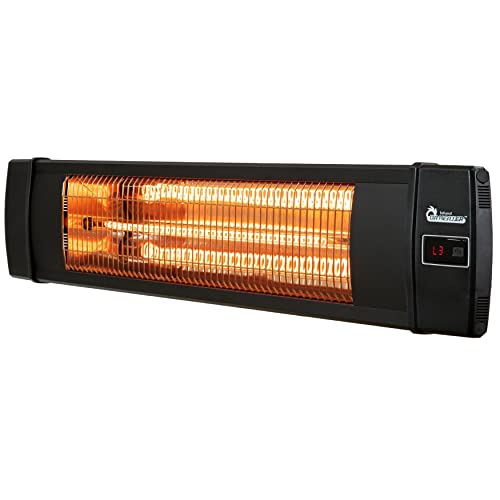
The DR-238 is an infrared carbon heater designed for both indoor and outdoor use, rated IP55. It uses standard 120V power and provides three selectable power settings: 900W, 1200W, and 1500W. The unit offers instant, odorless infrared heat that targets objects and people instead of solely warming air, making it effective for spot heating in a garage.
Key features relevant to garages include IP55 certification for protected outdoor operation, plug-and-go installation on standard circuits, and a remote control for convenient operation. Because it is infrared, it is best suited for localized heating rather than trying to heat large, poorly insulated spaces continuously.
ALORAIR 100,000 BTU Hydronic Hanging Heater HydroX H100A

The ALORAIR HydroX H100A is a heavy-duty water-to-air hydronic hanging heater intended for workshop and garage environments where a boiler or outdoor wood furnace supplies hot water. It is built with galvanized steel housing and corrosion-resistant copper piping to withstand demanding conditions.
Call 888-896-7031 for Free Local HVAC Quotes – Compare and Save Today!
The unit offers auto-temperature control that starts the blower when water reaches set temperatures for efficient operation. A centrifugal blower delivers high airflow (up to about 1000 CFM at quiet levels), and adjustable louvers allow directional heat. The reusable filter protects internal components, and a 3-year commercial warranty supports long-term use.
Hydronic hanging heaters like this one are appropriate when you have an existing hot-water heat source or want a centralized heat distribution approach that minimizes on-site combustion and electrical load.
Patio Heater 1500W Electric Infrared Hanging Heater (Danluke)

This 1500W infrared hanging heater is designed for outdoor-rated, ceiling-mounted use with an IP34 waterproof rating. It provides near-instant infrared warmth and 360° radiant coverage. Built-in safety features include overheat and tip-over protection, and it comes with a dust cover for storage protection.
The unit suits covered garages, carports, or partially enclosed workspaces where occasional exposure to moisture is possible. As with other infrared heaters, it excels at spot heating and fast comfort for people close to the unit rather than uniformly heating poorly insulated spaces.
Comfort Zone Hard-Wired Ceiling Mount Garage Heater CZ230ER

Call 888-896-7031 for Free Local HVAC Quotes – Compare and Save Today!
The Comfort Zone CZ230ER is a hard-wired, fan-forced ceiling heater designed specifically for garages, workshops, and similar spaces. It offers up to 7,500 watts (240V) and is intended to heat broad areas up to a large square footage. The unit mounts to the ceiling to maximize floor space and includes a digital thermostat, remote, and a 12-hour timer.
Its heavy-gauge steel construction makes it suitable for tougher environments. Adjustable louvers and variable mounting angle provide targeted airflow. This style is best for users needing a continuous, distributed heating solution for entire garages, particularly when adequate electrical service (240V) is available.
American Royal 50,000 BTU Hydronic 2-Speed Garage Hanging Heater

The American Royal 50,000 BTU is a hydronic hanging unit heater tailored for hydronic (hot water) heating systems, including wood boiler setups. It provides a high BTU output with a 2-speed fan, enabling modulation of airflow and heat distribution. Being hydronic, it converts boiler-supplied hot water into warm air via a heat exchanger and fan assembly.
This heater is intended for very large garages or shop spaces where robust continuous heating is required and an existing hydronic source is present. It provides a direct integration path for wood boilers or central boilers, with the advantage of lower on-site electrical consumption compared to large electric heaters.
Buying Guide: How To Choose A Hanging Garage Heater
Selecting the right hanging garage heater depends on several technical and practical factors. Use the following checklist to match a heater to your garage needs.
1. Heater Type And Heat Delivery
- Electric Infrared: Heats objects and people directly. Best for spot heating and covered garages; faster to heat but less effective for whole-building heating in poorly insulated spaces.
- Fan-Forced Electric (Hard-Wired): Distributes warm air across a larger area. Good for whole-garage heating when adequate electrical service (240V) is available.
- Hydronic Hanging Units: Use hot water from a boiler or wood furnace. Efficient for large spaces and continuous heating; requires plumbing and a heat source.
2. Heating Capacity And Coverage
- Match heater capacity (watts or BTU) to garage size. Small garages benefit from 900–1500W infrared units. Large garages often require several kW or tens of thousands of BTU in hydronic/fan-forced units.
- Consider insulation and desired temperature rise—poorly insulated garages need higher capacity.
3. Power Supply And Installation
- Plug-In Units: Easy to install; limited to available outlet capacity (120V commonly). Ideal for temporary or spot heating.
- Hard-Wired Units: Require professional electrical installation (often 240V). Better for high-capacity continuous use.
- Hydronic Units: Require plumbing integration with a boiler or wood furnace. Installation complexity higher but operational costs can be lower with existing systems.
4. Durability And Weather Resistance
- If the heater will be installed in an unconditioned or semi-outdoor garage, choose units with appropriate ingress protection (IP ratings) and corrosion-resistant materials.
- Commercial-grade galvanized or heavy-gauge steel housings last longer in challenging environments.
5. Safety Features
- Look for overheat protection, tip-over shutoff (for portable/hanging options), and certified electrical safety listings.
- Hard-wired and hydronic units should include thermal cutouts and accessible filters for maintenance.
6. Control And Convenience
- Thermostat control is important for maintaining target temperatures and energy efficiency. Digital thermostats, timers, and remote or Wi‑Fi control add convenience.
- Adjustable louvers or directional mounts help aim heat where it’s needed.
7. Noise And Air Movement
- Fan-forced heaters and hydronic units with blowers move more air and can be noisier than infrared units. Consider noise limits if the garage is used as a workspace.
8. Integration With Existing Systems
- Hydronic heaters integrate with boilers or wood furnaces. Verify water temperature compatibility and plumbing connections.
- Electric hard-wired units depend on circuit capacity—confirm the electrical panel can support the load.
9. Maintenance And Filter Access
- Choose units with accessible filters or simple cleaning procedures, especially for dusty workshop environments.
- Regular maintenance extends heater lifespan and maintains performance.
10. Cost To Operate
- Estimate operating cost by comparing wattage or BTU output, local energy prices, and expected run hours. Hydronic systems may offer lower fuel costs if tied to an efficient boiler or wood furnace.
Comparing multiple perspectives—installation complexity, initial equipment durability, operating cost, and the required heat distribution—helps identify the best hanging heater for a given garage. Match heater type to space size, insulation level, and whether you need spot vs. whole-space heating.
Tips for Getting the Best HVAC Prices
- Prioritize Quality Over Cost
The most critical factor in any HVAC project is the quality of the installation. Don’t compromise on contractor expertise just to save money. - Check for Rebates
Always research current rebates and incentives — they can significantly reduce your overall cost. - Compare Multiple Quotes
Request at least three estimates before making your choice. You can click here to get three free quotes from local professionals. These quotes include available rebates and tax credits and automatically exclude unqualified contractors. - Negotiate Smartly
Once you've chosen a contractor, use the proven strategies from our guide — How Homeowners Can Negotiate with HVAC Dealers — to get the best possible final price.