
Choosing the right hanging heater for a garage depends on garage size, insulation, power source, and whether you need indoor-only or weather-resistant units. The table below summarizes the five selected heaters covered in this guide to help you compare key features at a glance.
| Product | Type | Power/Output | Weather Rating / Use | Notable Features |
|---|---|---|---|---|
| DR Infrared DR-238 | Carbon Infrared Hanging | 900W / 1200W / 1500W | IP55 — Indoor & Outdoor | Remote, plug-in, 3 power settings |
| Danluke 1500W Hanging Patio Heater | Electric Infrared Hanging | 1500W | IP34 — Weather-Resistant | Instant heat, tip-over & overheat protection |
| ALORAIR HydroX H100A | Hydronic Hanging Heater | 100,000 BTU (Water-to-Air) | Indoor / Workshop | Durable steel, auto temp control, 1000 CFM |
| Danluke 1500W Adjustable Hanging | Electric Infrared Hanging | 1500W | IP34 — Weather-Resistant | 360° coverage, adjustable mounting height |
| Comfort Zone CZ230ER | Hard-Wired Ceiling Fan-Forced | 7,500W (240V) | Indoor — Garage/Workshop | Digital thermostat, remote, 1250 sq ft coverage |
Content Navigation
Dr Infrared DR-238 Carbon Infrared Heater
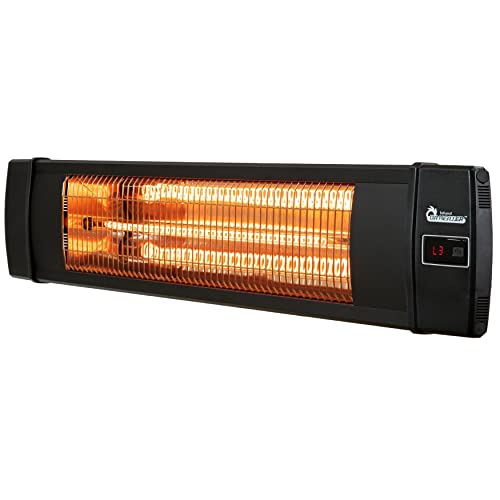
The DR Infrared DR-238 is a carbon infrared hanging heater designed for both indoor and outdoor settings. It carries an IP55 rating, indicating protection against dust and splashing water, which makes it suitable for garages with occasional exposure to moisture.
Key operational features include three power settings (900W, 1200W, 1500W) and a plug-and-play 120V power design. The heater provides instant, odorless infrared heat and comes with a remote for convenient control from across the garage.
For garage use, this unit is useful where quick, directed warmth is needed without extensive installation. Infrared heating warms objects and people directly, which helps in spaces with limited insulation. The IP55 rating and remote operation cater to versatile installation and simple daily control.
Danluke 1500W Infrared Hanging Heater

Call 888-896-7031 for Free Local HVAC Quotes – Compare and Save Today!
This Danluke 1500W hanging infrared heater is aimed at patio and garage applications. It features an IP34 weather-resistant rating, offering protection against splashing water, which supports installation in semi-exposed garages or covered carports.
The heater claims instant heating with 360° radiant coverage to deliver warmth quickly across a working area. Built-in safety includes tip-over and overheat protection, which adds a layer of automatic shutdown if mounting becomes compromised or internal temperatures exceed safe thresholds.
Installation options typically include ceiling mounting and hanging brackets. The unit is suited to smaller to medium garage spaces where infrared radiant heat can be directed to workspaces, benches, or seating areas without heating the entire volume of the garage air.
ALORAIR HydroX H100A Hydronic Hanging Heater

The ALORAIR HydroX H100A is a heavy-duty hydronic (water-to-air) hanging heater designed for larger garages, workshops, and warehouses. It uses hot water from an external source (for example, an outdoor wood furnace or boiler) to transfer heat into the workspace via a heat exchanger.
Built with galvanized steel housing and corrosion-resistant copper piping, this unit emphasizes industrial durability. It includes a reusable air filter and a control panel with remote functionality. The fan delivers up to 1000 CFM airflow while maintaining low noise levels around 60 dBA.
Call 888-896-7031 for Free Local HVAC Quotes – Compare and Save Today!
Smart features include auto-temperature control that engages the blower when water reaches the preset temperature. Hydronic heaters are efficient for large-volume spaces with an existing hot-water heat source and are appropriate when even, circulating warmth and robust performance are required.
Danluke 1500W Adjustable Hanging Heater

A second Danluke model emphasizes adjustability and all-weather performance. This 1500W ceiling-mounted infrared heater features an IP34 waterproof and dustproof rating and includes a dust cover for off-season protection.
The heater provides fast 360° infrared coverage and lists safety protections such as tip-over and overheat shutoffs. Adjustable mounting height and included mounting hardware enable targeted placement above work benches or vehicle bays.
This unit is designed for users who want a simple electric solution that responds quickly to intermittent use and can withstand occasional dampness in semi-exposed garage environments. It is suitable for garages where spot heating is needed without hardwiring.
Comfort Zone Hard-Wired Ceiling Heater

The Comfort Zone CZ230ER is a hard-wired, ceiling-mounted fan-forced heater designed specifically for garages and workshops. It operates on 240V with up to 7,500 watts of power and coverage claims up to approximately 1,250 sq ft in suitable conditions.
Built from heavy gauge steel, the unit is intended for permanent installation. It includes a digital thermostat, remote control, 12-hour timer, adjustable louvers, and overheat protection. The fan-forced design moves warm air across the space rather than relying on radiant heat alone.
This heater is most applicable when a higher continuous output is required to maintain ambient air temperature in a larger or less insulated garage. Hard-wired installation may require an electrician but delivers higher sustained heat for frequent or whole-space heating needs.
Buying Guide: Choosing A Hanging Heater For Your Garage
Selecting the right hanging heater involves evaluating heating needs, installation constraints, and safety considerations. The sections below break down major factors to compare when choosing a garage hanging heater.
1. Heat Type: Infrared vs Fan-Forced vs Hydronic
- Infrared (Electric) Heaters: Heat objects and people directly; fast warm-up; efficient for spot heating and workbenches; lower running cost for intermittent use. Ideal for garages that are not fully insulated.
- Fan-Forced Electric Heaters: Heat ambient air and distribute it with a blower; better for whole-space heating in insulated garages; requires higher wattage and often hard-wiring.
- Hydronic (Water-to-Air) Heaters: Use hot water from boiler or furnace; efficient for large spaces and continuous heating; more complex installation but good for workshops and commercial garages.
2. Power And Coverage
- Match heater output to garage size. Small garages can be served by 900–1500W infrared units for spot heating.
- Larger or poorly insulated garages often require higher wattage or hydronic solutions; fan-forced units in the 5,000–7,500W range better maintain ambient temperature.
- Consider ceiling height: radiant heaters work best when mounted within recommended height ranges to maintain effectiveness.
3. Mounting And Installation
- Hanging/Ceiling Mount: Easier installation for plug-in or bracket-mounted models. Ensure ceiling joists or mounting points can support the unit.
- Hard-Wired: Provides higher power and permanent installation but likely requires an electrical contractor and 240V circuit.
- Confirm clearances for combustible materials and follow manufacturer mounting height and angle guidelines to maintain warranty and safety.
4. Weather Rating And Location
- For garages with occasional moisture, look for IP-rated units (IP34, IP55, IP65) to resist dust and splashes.
- Fully enclosed indoor garages can use indoor-rated units, while semi-open garages or carports benefit from weather-resistant heaters.
5. Safety Features
- Prioritize models with overheat protection and automatic shutoff.
- Tip-over protection is important for freestanding or low-hung models; ensure hanging fixtures and fasteners are secure for ceiling-mounted units.
- For hydronic or hard-wired systems, ensure proper pressure, temperature controls, and professional installation to reduce risks.
6. Controls And Convenience
- Remote controls, digital thermostats, timers, and Wi‑Fi enable scheduled operation and better energy management.
- Programmable thermostats or auto-temp control (hydronic models) reduce energy usage by cycling only when needed.
7. Noise And Air Movement
- Infrared units are usually quiet, as they lack blowers.
- Fan-forced heaters move air and can produce noticeable sound; verify decibel ratings if noise is a concern for workshop work.
8. Durability And Maintenance
- Look for robust housings (steel, corrosion-resistant components) if the garage is humid or subject to chemical exposure.
- Replaceable filters, dust covers, and accessible components make maintenance easier and extend product life.
9. Cost Of Operation
- Infrared heaters often cost less to operate for spot/short-duration heating because they warm surfaces rather than the entire air volume.
- Fan-forced and hydronic systems with higher continuous output may cost more but can maintain consistent ambient temps for frequent use.
10. Use Cases And Matching Heater Type
- If you need quick warmth at a workbench: Choose a ceiling-hung infrared unit (900–1500W).
- For whole-garage heating and frequent use: Consider a hard-wired fan-forced or high-output hydronic unit.
- For mixed indoor/outdoor garages or semi-exposed bays: Choose a weather-resistant model with an IP rating.
When comparing models, weigh installation complexity against heating performance and operating cost. For spot heating and simple installs, plug-in or ceiling-hung infrared units provide reliable warmth. For sustained whole-space heating, hard-wired fan-forced or hydronic systems deliver continuous, even heat.
Tips for Getting the Best HVAC Prices
- Prioritize Quality Over Cost
The most critical factor in any HVAC project is the quality of the installation. Don’t compromise on contractor expertise just to save money. - Check for Rebates
Always research current rebates and incentives — they can significantly reduce your overall cost. - Compare Multiple Quotes
Request at least three estimates before making your choice. You can click here to get three free quotes from local professionals. These quotes include available rebates and tax credits and automatically exclude unqualified contractors. - Negotiate Smartly
Once you've chosen a contractor, use the proven strategies from our guide — How Homeowners Can Negotiate with HVAC Dealers — to get the best possible final price.