
Parabolic and dish-style heaters are designed to deliver focused radiant warmth for satellite dishes, patios, garages, and compact rooms. Below is a quick comparison of selected models that match the term heat dish heater, followed by product reviews and a practical buying guide.
| Product | Primary Use | Notable Feature |
|---|---|---|
| Presto Heat Dish Plus Parabolic Electric Heater | Parabolic radiant heating | Parabolic reflector design |
| EZ-HEAT 1,000-Watt Parabolic Dish Space Heater | Indoor radiant heating / oscillation | 70° wide oscillation, dual heat settings |
| HotShot Satellite Dish Heater – 28″x20″ | Satellite dish de-icing | 24 VAC low-voltage safe heater |
| Optimus 14″ Oscil Pedestal Digital Dish Remote Heater | Oscillating pedestal dish heater | Digital thermostat and timer |
| BLACK+DECKER Portable Oscillating Heater | Small-room space heater | Multiple heat settings, oscillation |
Content Navigation
- Presto Heat Dish Plus Parabolic Electric Heater
- EZ-HEAT 1,000-Watt Parabolic Dish Space Heater
- HotShot Satellite Dish Heater – 28″x 20″
- Optimus 14″ Oscil Pedestal Digital Dish Remote Heater
- BLACK+DECKER Portable Oscillating Space Heater
- Buying Guide: How To Choose A Heat Dish Heater
- 1. Intended Use: Dish De-Icing vs. Personal/Room Heating
- 2. Heating Technology: Radiant vs. Convection vs. Low-Voltage Surface
- 3. Power, Coverage, And Settings
- 4. Safety Features And Certifications
- 5. Control Options And Thermostatic Management
- 6. Installation, Mounting, And Portability
- 7. Environmental And Use-Case Considerations
- 8. Comparative Perspectives: Matching Features To Priorities
- 9. Maintenance And Longevity
- 10. Final Selection Checklist
Presto Heat Dish Plus Parabolic Electric Heater

The Presto Heat Dish Plus is a parabolic-style electric heater that focuses radiant heat using a curved reflector. This design enhances directional warmth, making it suitable for targeted heating tasks such as warming a work area or supplementing a small room.
Key details referenced from the product listing include the unit’s parabolic reflector which concentrates heat forward, increasing perceived warmth at the target area. Parabolic heaters typically provide rapid radiant heat without needing to warm the entire room air volume.
Consider its intended application when selecting placement: parabolic units work best when aimed at people or objects rather than for whole-room convection heating.
EZ-HEAT 1,000-Watt Parabolic Dish Space Heater

Call 888-896-7031 for Free Local HVAC Quotes – Compare and Save Today!
The EZ-HEAT 1,000-Watt parabolic heater combines a 14″ dish reflector with oscillation and tilt features for adjustable coverage. The listing highlights dual heat settings and heating coverage up to 300 square feet, providing flexibility between targeted and broader warming.
Notable functional features include 70-degree wide oscillation for distributing radiant heat across a wider area and an adjustable tilt to change the aim. Safety items noted are a tip-over switch and an overheat protection sensor, which are relevant for indoor use and near-flammable surfaces.
Because this model emphasizes customizable warmth and distribution, it suits users who want a single device capable of focused spot heating and some room coverage via oscillation.
HotShot Satellite Dish Heater – 28″x 20″

The HotShot Satellite Dish Heater is specifically designed to prevent ice and snow buildup on satellite dishes. It fits a range of satellite dish models and operates on 24 VAC low-voltage, which allows installation without hiring a licensed electrician in many cases.
Listing features emphasize compatibility (DIRECTV Slimline, DTV66E, Wildblue, HughesNet) and the unit’s purpose-built nature: safe low-voltage heating to keep signal surfaces clear. This product is a maintenance and signal reliability solution rather than a personal-space heater.
Call 888-896-7031 for Free Local HVAC Quotes – Compare and Save Today!
When evaluating dish de-icing options, prioritize compatibility with your dish model, low-voltage safety, and whether the heater can be powered and controlled conveniently during winter conditions.
Optimus 14″ Oscil Pedestal Digital Dish Remote Heater

The Optimus 14″ pedestal dish-style heater combines oscillation with digital controls. Key features from the listing include two heat settings (800 and 1200 watts), an LCD room temperature readout, and a digital thermostat with timer settings from 30 minutes to 8 hours.
Digital feedback and timer capability give more precise temperature management compared to basic radiant dishes. The oscillating pedestal design offers a hybrid approach: localized radiant heat with some motion to improve distribution.
This model is appropriate for users who value programmable control and want a dish-style aesthetic coupled with modern thermostat functions for improved comfort management.
BLACK+DECKER Portable Oscillating Space Heater
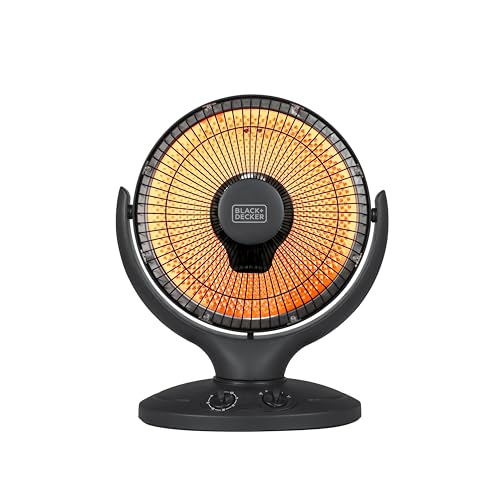
The BLACK+DECKER Portable Heater is a compact oscillating space heater intended for small rooms up to about 161 sq. ft. The product listing highlights four heat settings with 400-watt and 800-watt outputs and integrated overheat protection.
While not a parabolic dish, this unit is included for comparative purposes as a common small-room heating solution. It emphasizes multi-setting versatility and safe operation, useful when comparing directional dish heaters versus small convection/oscillating units for room comfort.
Choose this style when preference is for even ambient warming in a small space rather than directional radiant heating or dish-targeted warmth.
Buying Guide: How To Choose A Heat Dish Heater
Choosing the right heat dish heater requires matching heater type to your intended use. Below are key considerations and comparative perspectives to help identify the best option.
Tips for Getting the Best HVAC Prices
- Prioritize Quality Over Cost
The most critical factor in any HVAC project is the quality of the installation. Don’t compromise on contractor expertise just to save money. - Check for Rebates
Always research current rebates and incentives — they can significantly reduce your overall cost. - Compare Multiple Quotes
Request at least three estimates before making your choice. You can click here to get three free quotes from local professionals. These quotes include available rebates and tax credits and automatically exclude unqualified contractors. - Negotiate Smartly
Once you've chosen a contractor, use the proven strategies from our guide — How Homeowners Can Negotiate with HVAC Dealers — to get the best possible final price.
1. Intended Use: Dish De-Icing vs. Personal/Room Heating
- Satellite Dish De-icing: Use a low-voltage, weather-rated dish heater like the HotShot model. Focus on compatibility, mounting method, and power source availability.
- Spot Heating or Patio/Workshop Use: Parabolic dish heaters (Presto, EZ-HEAT) are strong at directing radiant heat to a person or specific zone without heating all the air.
- Whole Small-Room Heating: Oscillating convection units (BLACK+DECKER, Optimus with pedestal) provide more even ambient warmth.
2. Heating Technology: Radiant vs. Convection vs. Low-Voltage Surface
- Radiant (Parabolic/Dish): Heats objects and people directly; efficient for targeted warmth and outdoor/garage use where air exchange reduces convection effectiveness.
- Convection (Fan/Oscillating): Circulates warm air to raise overall room temperature; better for enclosed spaces.
- Low-Voltage Surface Heaters: Intended for de-icing and surface warming; prioritize compatibility and safety certifications for outdoor use.
3. Power, Coverage, And Settings
- Wattage: Higher wattage increases heat output but requires adequate electrical circuit capacity. Compare 800–1200W parabolic units versus lower-watt small-room heaters.
- Coverage: Look for manufacturer guidelines for effective square-foot coverage, noting that radiant heaters’ effective area depends on distance and aim.
- Adjustability: Oscillation, tilt, and multiple heat settings increase versatility for different scenarios.
4. Safety Features And Certifications
- Tip-Over Switch And Overheat Protection: Important for indoor pedestal and parabolic units that could be knocked over or placed near combustibles.
- Weatherproofing: For outdoor dish heaters, ensure the unit is designed for exterior exposure and low-temperature operation.
- Voltage And Installation Safety: For satellite heaters, low-voltage (24 VAC) options reduce installation risk; check local codes for permanent wiring.
5. Control Options And Thermostatic Management
- Manual Controls: Simple, reliable, and often lower cost; suitable for focused spot heat.
- Digital Thermostat/Timer: Provides precise temperature control and programmable operation; useful for maintaining comfort without continuous monitoring.
- Oscillation Control: Useful to alternate between concentrated beam and wider coverage.
6. Installation, Mounting, And Portability
- Mounting Requirements: Satellite dish heaters often require secure mounting to dish hardware; verify fit for your dish model.
- Portability: Freestanding pedestal or compact parabolic heaters allow repositioning; hardwired or permanently mounted dish heaters are less portable.
- Power Access: Ensure access to an appropriate outlet or transformer for outdoor models; consider extension cords rated for outdoor use when necessary.
7. Environmental And Use-Case Considerations
- Indoor Vs Outdoor: Confirm whether the unit is rated for outdoor exposure if used on dishes or patios.
- Drafts And Airflow: Radiant heaters perform better in drafty areas compared with convection heaters that rely on stable air to build room temperature.
- Noise: Oscillating and fan-assisted units may produce audible noise; consider if quiet operation is required.
8. Comparative Perspectives: Matching Features To Priorities
- Safety Priority: Choose models with tip-over and overheat protections; for outdoor dish heating choose low-voltage units like HotShot.
- Precise Comfort: Digital thermostats and timers (e.g., Optimus) are better when maintaining a set temperature matters.
- Maximizing Directional Heat: Parabolic reflectors (Presto, EZ-HEAT) concentrate heat to a target—ideal for workshops or outdoor seating.
- Even Ambient Warmth: Oscillating convection models (BLACK+DECKER) work well in enclosed small rooms or offices.
9. Maintenance And Longevity
- Cleaning: Keep reflectors and heating elements free of dust and debris for consistent performance.
- Outdoor Exposure: Inspect weather seals and wiring regularly for dish heaters used in winter conditions.
- Replacement Parts: Check availability of replacement parts or compatible mounting hardware for long-term service.
10. Final Selection Checklist
- Confirm primary use (de-icing vs. spot heating vs. room heating).
- Verify power requirement and outlet availability.
- Look for essential safety features for the intended environment.
- Decide between precise digital control or simple manual operation.
- Match coverage and design (parabolic vs. convection) to where and how heat is needed.