
Choosing the right gas heater depends on space size, fuel type, ventilation, and safety features. Below is a quick comparison of five selected gas heaters to help you match needs to performance. Detailed reviews follow.
| Product | Fuel Type | BTU | Coverage | Key Feature |
|---|---|---|---|---|
| Mr. Heater Big Maxx MHU80NG | Natural Gas | 80,000 | Up To 2,000 Sq. Ft. | High-output unit heater, venting options |
| Dyna-Glo IR30NMDG-1 Wall Heater | Natural Gas | 30,000 | Up To 1,000 Sq. Ft. | Infrared radiant heating |
| Mr. Heater Portable Buddy MH9BX | Propane | 4,000–9,000 | Up To 225 Sq. Ft. | Portable radiant heater with tip-over safety |
| ProCom MN300HBA-B Ventless Blue Flame | Natural Gas | 30,000 | Up To 1,400 Sq. Ft. | Ventless operation, no electricity required |
| Mr. Heater F260560 Big Maxx MHU80NG | Natural Gas | 80,000 | Up To 2,000 Sq. Ft. | Ceiling/Wall mount unit heater |
Content Navigation
- Mr. Heater Big Maxx MHU80NG Natural Gas Unit Heater
- Dyna-Glo IR30NMDG-1 Natural Gas Infrared Wall Heater
- Mr. Heater Portable Buddy MH9BX Indoor-Safe Propane Heater
- ProCom MN300HBA-B Natural Gas Ventless Blue Flame Heater
- Mr. Heater MHVFBF30NGT 30,000 BTU Vent Free Blue Flame Wall Heater
- Buying Guide: How To Choose The Right Gas Heater
Mr. Heater Big Maxx MHU80NG Natural Gas Unit Heater
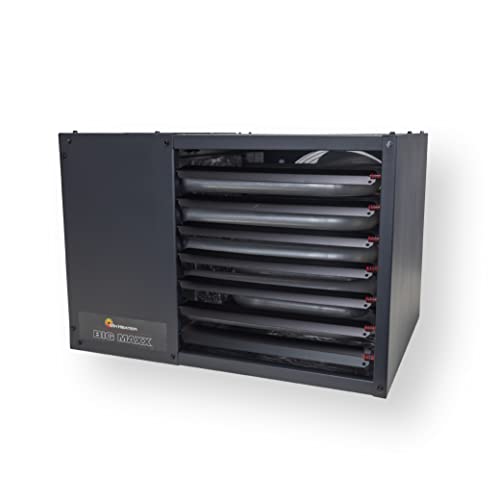
This natural gas unit heater is designed for large garages, workshops, and commercial spaces. It delivers 80,000 BTU and is rated to heat up to 2,000 sq. ft. The package includes two angle brackets and a liquid propane conversion kit, though the unit is intended for natural gas out of the box.
- Installation: Mountable on wall or ceiling; requires clearances (minimum 8 ft. from floor to base).
- Venting: Category 1 vertical or category 3 horizontal venting options; appropriate venting is essential for indoor air safety.
- Power: Requires 120 V for the fan and controls; low amperage draw (2.3 A).
- What’s Not Included: Thermostat, hose, and regulator are not included and must be sourced separately.
Suitable for users needing high-output, ductless heating with professional installation and adequate venting. Consider fuel hookups and clearance when planning placement.
Dyna-Glo IR30NMDG-1 Natural Gas Infrared Wall Heater

The Dyna-Glo infrared wall heater uses radiant heat to warm objects and people directly, similar to sunlight. It produces up to 30,000 BTU/hr and is sized for spaces up to 1,000 sq. ft.
Call 888-896-7031 for Free Local HVAC Quotes – Compare and Save Today!
- Heating Method: Infrared radiation heats surfaces first, delivering fast perceived warmth.
- Fuel: Natural gas ready; conversion to other fuels is not permitted.
- Application: Effective for garages, workrooms, or additions where targeted wall-mounted heating is desired.
Infrared wall units are efficient in spaces where convection losses occur; ensure adequate wall mounting and gas supply. Radiant heat may feel warmer at lower air temperatures because it heats surfaces directly.
Mr. Heater Portable Buddy MH9BX Indoor-Safe Propane Heater
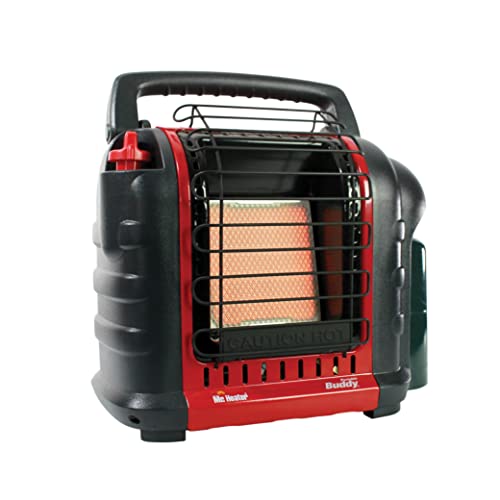
The Portable Buddy MH9BX is a compact LP radiant heater offering 4,000–9,000 BTU for enclosed or semi-enclosed spaces up to 225 sq. ft. It’s a common choice for campers, small workshops, and utility rooms.
- Safety: Built-in tip-over switch and oxygen depletion sensor improve indoor safety when used per instructions.
- Ignition: Piezo igniter provides easy, battery-free startup.
- Portability: Designed for use with portable propane cylinders; dual-tank connection available for extended run times.
Ideal for users who need a portable, radiant heat source with reliable safety cutoffs. Follow indoor ventilation and propane storage recommendations for safe operation.
ProCom MN300HBA-B Natural Gas Ventless Blue Flame Heater

This ventless blue flame heater operates without electricity and provides up to 30,000 BTU, covering as much as 1,400 sq. ft. It uses convection-style heat with three manual settings and a push-button piezo ignition.
Call 888-896-7031 for Free Local HVAC Quotes – Compare and Save Today!
- Ventless Operation: No venting required, but room ventilation and code compliance must be verified.
- Safety: Equipped with an oxygen depletion sensor (ODS) that shuts the unit off if oxygen levels fall.
- Control: Manual low/medium/high settings provide simple temperature control without thermostat dependency.
Ventless blue flame heaters offer installation flexibility where venting is difficult but demand careful consideration of indoor air quality, room size, and local regulations.
Mr. Heater MHVFBF30NGT 30,000 BTU Vent Free Blue Flame Wall Heater
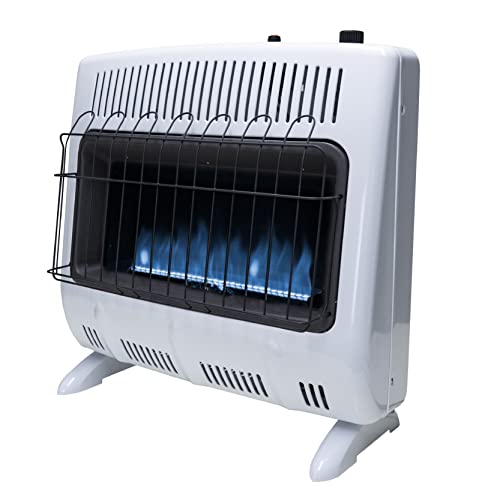
The MHVFBF30NGT is a wall-mounted vent-free blue flame heater designed to heat spaces up to 1,000 sq. ft. It includes a built-in thermostat and electric ignition (battery included) for convenient temperature control.
- Thermostat Control: Precise temperature adjustment helps maintain steady comfort.
- Fuel Efficiency: Blue flame burner provides even convection heat and efficient natural gas consumption.
- Altitude: Effective up to 4,500 feet elevation; check installation specs if located at higher altitudes.
Vent-free wall heaters work well for finished rooms and additions where outlet and venting options are limited. Ensure installation meets local gas appliance codes.
Buying Guide: How To Choose The Right Gas Heater
Selecting a gas heater requires balancing space size, fuel type, ventilation, safety, and installation. Below are core considerations to compare models effectively.
Fuel Type And Availability
Natural gas units require a fixed gas line and appropriate venting or ventless certification. Propane units are portable but need cylinder storage and refills. Choose based on existing gas supply and mobility needs.
BTU Output And Coverage
Match BTU rating to the heated area. Higher BTUs suit larger, less-insulated spaces. Consider insulation, ceiling height, and typical outdoor temperature when determining required BTUs.
Vented Versus Ventless
- Vented (Direct Vent/Flue): Exhausts combustion byproducts outdoors; preferred for enclosed spaces and higher outputs.
- Ventless (Blue Flame): No external venting; offers flexible placement but increases indoor moisture and requires proper ventilation and adherence to local codes.
Heating Method: Radiant vs Convection
Radiant (infrared) heaters warm objects and people directly and often feel warmer at lower air temps. Convection heaters warm the air and are better for whole-room uniform heat. Choose based on use case: task heating (radiant) vs ambient heating (convection).
Safety Features
- Oxygen Depletion Sensor (ODS): Shuts down unit if oxygen levels fall; essential for indoor gas appliances.
- Tip-Over Switch: Important for portable propane units.
- Automatic Shutoff: Protects against overheat or flame loss.
Controls And Comfort
Consider thermostatic control for steady comfort and energy savings. Manual settings work for simple applications, while integrated thermostats and fan controls improve usability in living spaces.
Installation And Clearance
Follow manufacturer clearances from combustible materials and minimum mounting heights. High-output or vented units may require professional installation and specific venting components. Check whether components like thermostats, regulators, or hoses are included.
Indoor Air Quality And Code Compliance
Ventless units increase indoor humidity and require carbon monoxide and combustion ventilation awareness. Confirm local building codes and manufacturer instructions regarding room size, ventilation, and altitude limitations.
Portability And Use Case
Portable propane heaters are ideal for temporary heating, job sites, or outdoor use under covered areas. Fixed natural gas heaters suit permanent installations in finished or semi-finished spaces.
Energy Efficiency And Operating Cost
Compare BTU output against fuel consumption and expected run hours. Efficient burners and thermostatic controls reduce wasted fuel. For water heating or multi-fixture needs, consider condensing tankless units designed for water rather than space heating.
Comparison Perspectives
- Performance: High-BTU unit heaters (like the Big Maxx) deliver rapid volume heating for large spaces.
- Flexibility: Portable models and wall-mounted infrareds offer targeted solutions for smaller or variable spaces.
- Installation Complexity: Ventless options reduce venting needs but require strict indoor air management; vented units often need professional setup.
- Safety: Integrated sensors and reliable ignition systems are key differentiators for indoor use.
Use the guide above to weigh trade-offs between output, ventilation, portability, and safety based on the space you intend to heat. Always follow manufacturer installation instructions and local regulations for gas appliance safety.
Tips for Getting the Best HVAC Prices
- Prioritize Quality Over Cost
The most critical factor in any HVAC project is the quality of the installation. Don’t compromise on contractor expertise just to save money. - Check for Rebates
Always research current rebates and incentives — they can significantly reduce your overall cost. - Compare Multiple Quotes
Request at least three estimates before making your choice. You can click here to get three free quotes from local professionals. These quotes include available rebates and tax credits and automatically exclude unqualified contractors. - Negotiate Smartly
Once you've chosen a contractor, use the proven strategies from our guide — How Homeowners Can Negotiate with HVAC Dealers — to get the best possible final price.