
Choosing the right heater for a shed depends on size, insulation, power source, safety features, and intended use (workshop, storage, or greenhouse). The table below summarizes five well-suited options selected for different shed setups including hard-wired ceiling units, portable electric, infrared, propane, and greenhouse-style heaters.
| Product | Type | Best For |
|---|---|---|
| Comfort Zone Hard-Wired Ceiling Mount CZ230ER | Ceiling-Mount Electric | Large, Permanent Shed Or Workshop |
| NewAir 5600W Portable Electric Garage Heater | High-Power Portable Electric | Large Uninsulated Sheds, Two-Car Garages |
| Dr Infrared Heater DR-238 Carbon Infrared | Infrared (Indoor/Outdoor) | Covered Sheds, Patio-Style Sheds |
| Mr. Heater MHVFBF20LPT 20,000 BTU Propane Heater | Vent-Free Propane | Off-Grid, Poorly Insulated Sheds |
| Buyplus Greenhouse Heater 1500W | Electric Greenhouse/Space | Small Sheds, Greenhouses, Plant Rooms |
Content Navigation
Comfort Zone Hard-Wired Ceiling Mount Heater

This ceiling-mounted, hard-wired heater frees floor space and is designed for larger sheds or workshops. It features a fan-forced design that distributes warm air and adjustable louvers for directional heating. The manufacturer rates coverage up to 1250 sq. ft., which is suitable for spacious or partially insulated sheds.
Construction uses heavy gauge steel for durability in workshop environments. Built-in controls include a digital thermostat, 12-hour timer, and remote control for convenient temperature management. Overheat protection is included for safety. Installation requires hard-wiring and ceiling mounting, so professional electrical work may be necessary for compliance with local codes.
NewAir 5600W Portable Garage Heater

The NewAir 5600W is a high-power portable electric heater designed to heat large spaces up to about 600 sq. ft. It uses fan-forced heating and a robust steel body with a powder-coated finish for workshop durability. A carrying handle and cord wrap aid repositioning and storage.
Call 888-896-7031 for Free Local HVAC Quotes – Compare and Save Today!
Integrated features include a thermostat and auto-fan temperature control to maintain set temperatures. The unit’s output is strong enough for uninsulated or lightly insulated sheds, though continuous high output can demand significant electrical capacity—verify circuit capability before use. The design aims for heavy-duty garage or workshop use where portability and power are priorities.
Dr Infrared Heater DR-238 Carbon Infrared
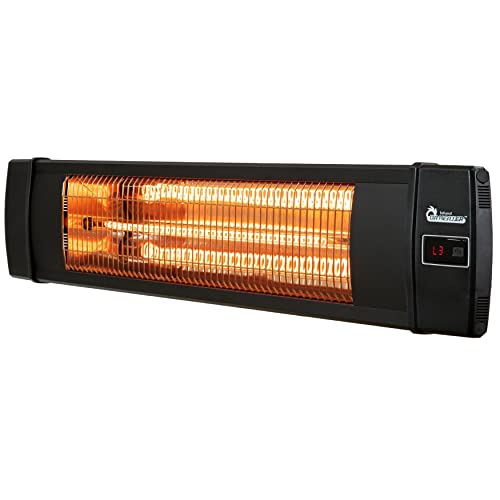
The Dr Infrared DR-238 is an IP55-rated infrared heater built for indoor and covered outdoor use. It delivers clean, instant infrared heat that warms objects and people directly rather than heating all air, which can be more efficient in drafty or partially open sheds.
It operates on standard 120V with three power settings (900W, 1200W, 1500W) and includes remote control. The plug-and-go design makes setup simple. Infrared is useful for sheds with openings where convective heat escapes easily, since it provides targeted warmth to occupants and work surfaces.
Mr. Heater 20,000 BTU Blue Flame Propane Heater
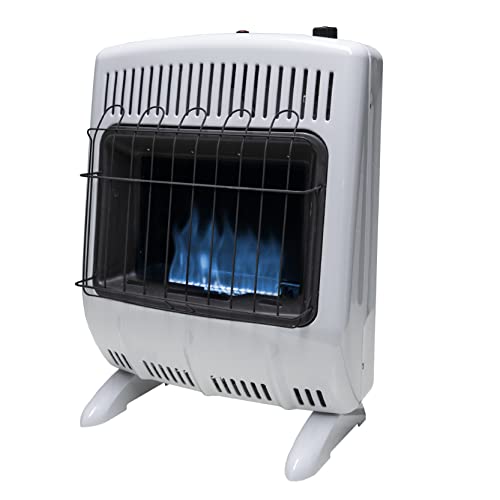
This vent-free propane wall heater produces substantial heat output—listed at 20,000 BTU—suitable for large, cold sheds or cabins up to several hundred square feet. It includes an electronic ignition and a built-in thermostat for temperature control.
Call 888-896-7031 for Free Local HVAC Quotes – Compare and Save Today!
Safety features include an Oxygen Depletion Sensor (ODS) that shuts the unit off if oxygen levels fall below safe thresholds. Propane heaters are a practical option for off-grid sheds or locations without sufficient electrical service, but they require proper ventilation, fuel management, and adherence to local building and fuel codes.
Buyplus Greenhouse Heater With Digital Thermostat

The Buyplus 1500W heater is marketed for greenhouses and small spaces, offering a digital thermostat with an external waterproof probe. It provides rapid heating and an adjustable range to protect plants or create a stable environment in small sheds.
Safety protections include overheat protection and a self-resetting thermal protector. Rated to warm spaces around 215 sq. ft. depending on insulation, it can be appropriate for small hobby sheds, grow rooms, or sheds used to overwinter plants. The digital probe allows for more precise ambient control than basic built-in thermostats.
Buying Guide: How To Choose The Right Shed Heater
Selecting a heater for a shed requires matching heat output, fuel type, safety features, installation needs, and control options to your specific shed and use case.
Tips for Getting the Best HVAC Prices
- Prioritize Quality Over Cost
The most critical factor in any HVAC project is the quality of the installation. Don’t compromise on contractor expertise just to save money. - Check for Rebates
Always research current rebates and incentives — they can significantly reduce your overall cost. - Compare Multiple Quotes
Request at least three estimates before making your choice. You can click here to get three free quotes from local professionals. These quotes include available rebates and tax credits and automatically exclude unqualified contractors. - Negotiate Smartly
Once you've chosen a contractor, use the proven strategies from our guide — How Homeowners Can Negotiate with HVAC Dealers — to get the best possible final price.
1. Determine Shed Size And Insulation
- Shed Volume: Calculate square footage and ceiling height to estimate the required output (electric wattage or BTU). Larger or taller sheds need more capacity.
- Insulation Level: Well-insulated sheds retain heat and allow smaller heaters; uninsulated or poorly sealed sheds require higher-output heaters or continuous operation.
2. Choose Fuel Type And Power Availability
- Electric Heaters: Plug-in or hard-wired options are cleaner and often safer indoors. Ensure your circuit can handle the heater’s wattage—high-power units may need dedicated circuits.
- Propane: Useful for off-grid or high-output needs. Provides high BTU output but requires safe installation, proper ventilation, and fuel supply management.
- Infrared: Efficient for spot heating or partially open sheds because they warm objects and people directly rather than air.
3. Safety Features To Look For
- Overheat Protection and automatic shut-off prevent fires and damage.
- Tilt-Over Protection for portable units helps prevent uncontrolled heat events.
- Oxygen Depletion Sensors (ODS) are essential with fuel-burning appliances indoors.
- Cool-To-Touch Bodies reduce burn risk in small spaces.
4. Installation And Placement Considerations
- Ceiling-Mount vs. Portable: Ceiling units save floor space and deliver broad coverage but need wiring and secure mounting. Portable units offer flexibility and seasonal use.
- Clearance Requirements: Check manufacturer clearance distances from walls, ceilings, and combustibles to ensure safe placement.
- Ventilation: Fuel-powered heaters require consideration of exhaust or make-up air even when labeled vent-free—follow local codes.
5. Control, Efficiency, And Comfort
- Thermostat Control saves energy by maintaining setpoints rather than running continuously.
- Timers, Remote Controls, Wi‑Fi provide convenience and allow pre-heating before use.
- Fan-Forced vs. Radiant: Fan-forced units move warm air quickly and work well for whole-shed heating. Radiant or infrared units provide direct warmth to people and objects and can be more efficient in drafty spaces.
6. Noise, Durability, And Use Case
- Noise Level: Fan-forced heaters and high-output blowers can be louder, important if the shed doubles as a workspace.
- Durability: Metal housings and industrial designs resist damage in workshop environments.
- Specific Uses: Choose greenhouse-rated models for plant protection, infrared for spot heating where doors open frequently, and hard-wired ceiling units for permanent, unobtrusive heating.
7. Electrical Considerations And Code Compliance
- Circuit Capacity: Confirm available amperage and whether a dedicated circuit is required for high-wattage units.
- Hard-Wired Installations: Use licensed electricians for permanent installations to meet code and ensure safe operation.
- Outdoor/Indoor Ratings: Verify IP or outdoor ratings for heaters used in partially exposed sheds.
Comparison Perspectives
- Cost To Run: Electric resistance heaters convert electricity to heat efficiently but can cost more to operate than gas/propane depending on local rates.
- Heat Distribution: Ceiling-mounted fan-forced units and powerful portable units provide evenroom heating; infrared targets occupants and surfaces.
- Convenience: Plug-and-play units are easiest to deploy; hard-wired and wall/ceiling-mounted systems are more permanent and space-saving.
- Safety Tradeoffs: Fuel-based heaters offer high output but require rigorous safety and ventilation practices; electric units reduce combustion risks but can trip circuits if oversized.