
Choosing the best heater for wall depends on room size, installation, controls, and energy preferences. The table below summarizes five relevant wall heater options selected for indoor use, smart control, safety features, and quiet operation.
| Product | Type | Key Features |
|---|---|---|
| Dreo Smart Wall Heater WH719S | Electric PTC Wall Heater | 120° oscillation, Smart app, 1°F accuracy |
| Dreo IP24 Wall Heater | Electric PTC Wall Heater | IP24 splash protection, 30° oscillation, Alexa |
| Cadet Com-Pak CSC151TW | Hardwired Electric Wall Heater | Built-in thermostat, 1500W, proven contractor brand |
| Heat Storm HS-1500-PHX-WIFI | Infrared Wi‑Fi Wall Heater | Wi‑Fi control, infrared element, slim wall-mount |
| ENVI Plug-In Electric Panel Heater | Plug-In Panel Wall Heater | Low-wattage, fan-less quiet convection, safety sensor |
Content Navigation
Dreo Smart Wall Heater WH719S

The Dreo WH719S is an electric PTC wall-mounted unit designed for steady, even heat distribution. Its 120° vertical oscillation moves warm air from top to bottom for broader coverage than fixed-direction units. The heater supports smart control via the Dreo app and integrates with Alexa and Google Home for voice commands.
Temperature control ranges from 41°F to 95°F with claimed 1°F accuracy, and the PTC ceramic element offers rapid, stable output. The unit also includes a remote control and 24-hour timer for scheduled use. Suitable for bedrooms and small living areas, this model emphasizes even spread and smart scheduling.
Dreo IP24 Wall Heater

This Dreo wall heater emphasizes compact performance and safety. The IP24 rating indicates splash resistance for safer placement in moisture-prone spaces like bathrooms if local electrical codes allow wall-mounting there. Manual 30° oscillation directs heat to a focused zone while maintaining low audible output.
Call 888-896-7031 for Free Local HVAC Quotes – Compare and Save Today!
Like the WH719S, it supports multiple control modes, including remote, app, and voice. The product highlights an ECO mode and temperature calibration via the app for long-term accuracy. The design targets bedrooms, home offices, and bathrooms where targeted, quiet heat and smart controls are priorities.
Cadet Com-Pak CSC151TW Wall Heater

The Cadet Com-Pak CSC151TW is a hardwired electric wall heater with an integrated mechanical thermostat. Rated at 1500W and 5120 BTU, it is a common choice for supplemental heating in rooms up to roughly 150–200 sq ft depending on insulation and climate.
Cadet units are known for straightforward wiring and durable coil elements. This model installs into a standard wall can and provides consistent forced-air warmth via an internal fan. The built-in thermostat simplifies temperature control without third-party apps.
Heat Storm HS-1500-PHX-WIFI Infrared Wall Heater

The Heat Storm HS-1500-PHX is an infrared wall-mounted heater with Wi‑Fi control, offering smartphone and remote access. Infrared technology delivers radiant heat that warms objects and people directly rather than just heating air, which can feel efficient in smaller or drafty spaces.
Call 888-896-7031 for Free Local HVAC Quotes – Compare and Save Today!
Safety features include a tip-over shutoff (for portable versions), a touch digital thermostat, and remote control. The slim design is space-saving, and Wi‑Fi connectivity enables scheduling or remote activation to preheat a room before arrival.
ENVI Plug-In Electric Panel Heater
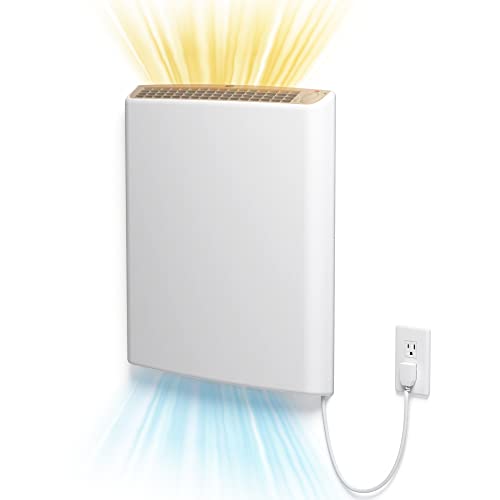
The ENVI plug-in panel heater is designed for low-wattage, continuous operation. Its fan-less, convection-based “Stack Convection” design produces silent, gentle heat suitable for bedrooms and spaces where noise is a concern.
Key safety elements include a wall-sense sensor that cuts power if the unit is removed and an operational surface temperature around 90°F, reducing burn risk. The unit is intended for 24/7 supplemental heating and aims to minimize dust circulation and dryness compared with fan-based heaters.
Buying Guide: How To Choose The Right Wall Heater
Selecting the appropriate wall heater requires balancing heating method, installation, control, safety, and energy use. Below are practical considerations to compare options across multiple perspectives.
Tips for Getting the Best HVAC Prices
- Prioritize Quality Over Cost
The most critical factor in any HVAC project is the quality of the installation. Don’t compromise on contractor expertise just to save money. - Check for Rebates
Always research current rebates and incentives — they can significantly reduce your overall cost. - Compare Multiple Quotes
Request at least three estimates before making your choice. You can click here to get three free quotes from local professionals. These quotes include available rebates and tax credits and automatically exclude unqualified contractors. - Negotiate Smartly
Once you've chosen a contractor, use the proven strategies from our guide — How Homeowners Can Negotiate with HVAC Dealers — to get the best possible final price.
Heating Method And Comfort
- Convection (PTC/Ceramic, Coil): Heats air; best for whole-room warmth and smoother temperature maintenance.
- Infrared (Radiant): Heats people and objects directly; feels fast and efficient in small spaces or for spot heating.
- Fan vs Fan-less: Fan units distribute heat faster but can make noise and circulate dust. Fan-less panel heaters are quieter and gentler.
Installation And Power Requirements
- Hardwired Units (Cadet): Require electrical work and a wall can; suited for long-term permanent installation and higher power capacity.
- Plug-in Units (ENVI, some Dreo models): Easier to install and replace; check outlet rating and local code for permanent use.
- Voltage/Watts: Confirm the heater’s wattage and whether the circuit can handle continuous load; multi-watt models offer flexibility if properly wired.
Smart Features And Controls
- Wi‑Fi/App/Voice: Allow remote scheduling and energy management. Useful for preheating or integrating with home automation.
- Onboard Thermostats: Digital thermostats provide precise setpoints; mechanical dials are simpler but less accurate.
- Timers And ECO Modes: Help reduce energy use by limiting runtime or maintaining efficient temperature bands.
Safety And Placement
- IP Ratings: IP24-rated units are protected from splashing water, expanding options for bathrooms if local code permits.
- Overheat/Wall-Sense Protection: Look for thermal cutoffs and sensors that disable the unit if improperly mounted or overheated.
- Surface Temperature: Lower surface temps reduce burn risk and improve safety around children and pets.
Energy Efficiency And Operating Costs
- Match Heater Size To Room: Oversized units waste energy; undersized units run constantly. Use room area, insulation quality, and climate to estimate needed output.
- Use Zoned Heating: Wall heaters can supplement central systems to heat only occupied rooms, reducing total energy use.
- ECO and Thermostat Accuracy: Precise thermostats and ECO modes reduce cycling and total runtime, improving efficiency.
Noise, Air Quality, And Comfort Preferences
- Noise Sensitivity: Choose fan-less or low-dB models for bedrooms or quiet home offices.
- Allergy Concerns: Fan-less convection and infrared models minimize dust circulation compared with forced-air units.
- Humidity Considerations: Some heaters dry air more than others; fan-less panels tend to preserve more humidity.
Comparing The Featured Models
- Dreo WH719S: Best for even distribution and smart scheduling with wide oscillation and high temperature accuracy.
- Dreo IP24: Best for targeted indoor use where splash resistance and quiet operation are desired.
- Cadet Com-Pak CSC151TW: Best for permanent, hardwired installations and proven basic mechanical thermostat reliability.
- Heat Storm HS-1500-PHX: Best for quick radiant warmth and Wi‑Fi convenience for remote preheating.
- ENVI Plug-In Panel: Best for silent, continuous low-watt supplemental heating with built-in safety sensor.
Final Selection Checklist
- Measure room square footage and note ceiling height and insulation quality.
- Decide between permanent hardwired installation or plug-in portability.
- Choose preferred heating method: convection for whole-room, infrared for spot heating.
- Prioritize safety features and local electrical code compliance.
- Consider control needs: app/Wi‑Fi, remote, or simple thermostat.