
Choosing the best heater for a garage depends on garage size, insulation, power source, and safety requirements. The table below summarizes five relevant heater types selected for garage use, including hard-wired ceiling units, portable electric fan-forced heaters, infrared units, and a portable propane option.
| Product | Type | Key Strength |
|---|---|---|
| Comfort Zone CZ230ER | Hard-Wired Ceiling Fan-Forced | Ceiling mount saves floor space, broad coverage |
| TEMPWARE 7500W | Hard-Wired Ceiling Fan-Forced | Adjustable angle, ECO mode, timer |
| NewAir 5600W Portable | Portable Fan-Forced Electric | High output, built for garages up to ~600 sq ft |
| Dr Infrared DR-238 | Infrared Electric (Indoor/Outdoor) | Infrared radiant heat, IP55 rated for versatile use |
| Mr. Heater Portable Buddy MH9BX | Portable Propane Radiant | Direct radiant heat, portable for unpowered spaces |
Content Navigation
- Comfort Zone Hard-Wired Ceiling Mount Garage Space Heater CZ230ER
- TEMPWARE Electric Garage Heater 7500-Watt Ceiling Mount
- NewAir 5600W Portable Electric Garage Heater
- Dr Infrared Heater DR-238 Carbon Infrared Outdoor Heater
- Mr. Heater Portable Buddy MH9BX Propane Radiant Heater
- Buying Guide: How To Choose The Right Garage Heater
- 1. Heater Type And How It Heats
- 2. Garage Size And Insulation
- 3. Power Source And Electrical Capacity
- 4. Installation And Placement
- 5. Safety Features
- 6. Controls, Thermostats, And Energy Management
- 7. Durability And Intended Environment
- 8. Noise And Air Movement
- 9. Maintenance And Longevity
- 10. Compliance And Codes
Comfort Zone Hard-Wired Ceiling Mount Garage Space Heater CZ230ER

The Comfort Zone CZ230ER is a ceiling-mounted, fan-forced heater designed to clear floor space and heat larger garages. It is specified for hard-wired installation at 240 volts and 7,500 watts, with a stated coverage up to around 1,250 sq. ft. The heavy gauge steel body aims to deliver ruggedness in workshop conditions.
Key listed features include adjustable louvers and mounting angle for directed airflow, a digital thermostat for temperature control, a 12-hour timer, overheat protection, and remote control. The design emphasizes optimal space utilization by mounting to the ceiling, which is useful when floor footprint is limited.
As a hard-wired unit, this heater is intended for permanent mounting and typically requires professional wiring. Its fan-forced design can move warm air across the space, and adjustable louvers help place heat where it’s needed most.
TEMPWARE Electric Garage Heater 7500-Watt Ceiling Mount
Call 888-896-7031 for Free Local HVAC Quotes – Compare and Save Today!
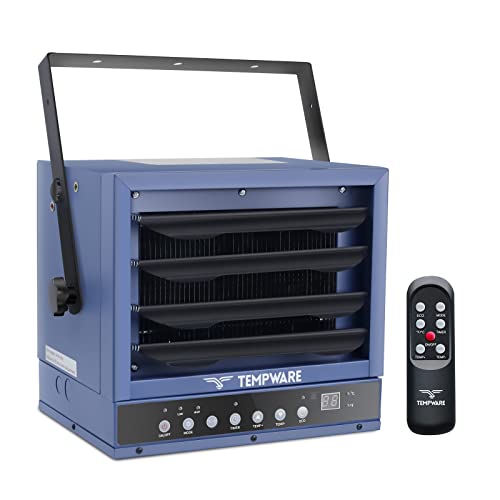
The TEMPWARE 7500W garage heater is another hard-wired, ceiling-mounted fan-forced option rated to heat up to roughly 1,250 sq. ft. It lists variable power ranges (6,250–7,500 watts) and claims a maximum BTU output equivalent to about 25,590 BTU for stronger heat delivery.
Notable features include adjustable louvers and mounting angle, two heat settings, a built-in thermostat with an adjustable range (45°F–95°F), an ECO mode that adapts operation to ambient temperature, a 12-hour timer, and overheat protection. The ECO mode and precise temperature sensing aim to balance comfort with energy use.
This model is suited for workshop environments where ceiling mounting is preferred and advanced control (timer, ECO) is desirable. As with other hard-wired heaters, consider installation requirements and electrical capacity of the garage panel.
NewAir 5600W Portable Electric Garage Heater

The NewAir 5600W model is a portable fan-forced electric heater built with a steel body and intended for garages and workshops up to around 600 sq. ft. It emphasizes robust construction and a high heat output appropriate for two-car garages or similar spaces.
Features listed include powerful fan-forced heating, a thermostat with auto-fan temperature control, a 6-foot cord wrap, and a carrying handle. The durable black powder-coated finish is noted for protecting against scratches and scuffs in work environments.
Call 888-896-7031 for Free Local HVAC Quotes – Compare and Save Today!
Because it is portable and plugs into a proper high-amperage outlet, it provides flexible placement without permanent mounting. The thermostat and auto-fan control help maintain a set temperature while the unit cycles to manage energy use.
Dr Infrared Heater DR-238 Carbon Infrared Outdoor Heater
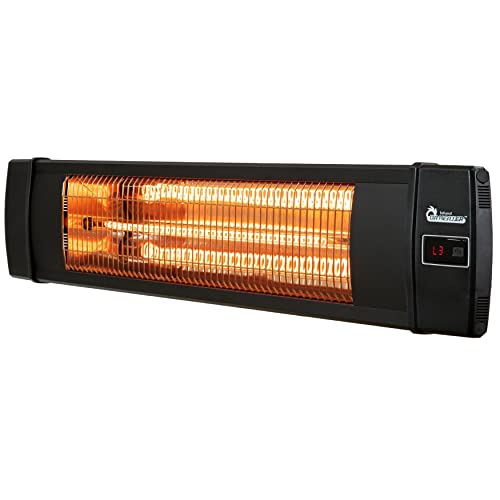
The Dr Infrared DR-238 is a carbon infrared heater intended for both indoor and outdoor use with an IP55 rating. It offers radiant heat that warms objects and people directly, which can feel different from convective fan-forced heat.
Core features include three power settings (900W, 1200W, 1500W), remote control operation, and plug-and-go convenience on standard 120V circuits. The product describes clean, instant, odorless infrared heat and an IP55 rating for greater environmental tolerance.
Infrared heaters can be effective in partially open garages or spaces where warming surfaces and occupants is preferable to heating all the air. Its multiple power settings allow scaling output to match need and electrical availability.
Mr. Heater Portable Buddy MH9BX Propane Radiant Heater
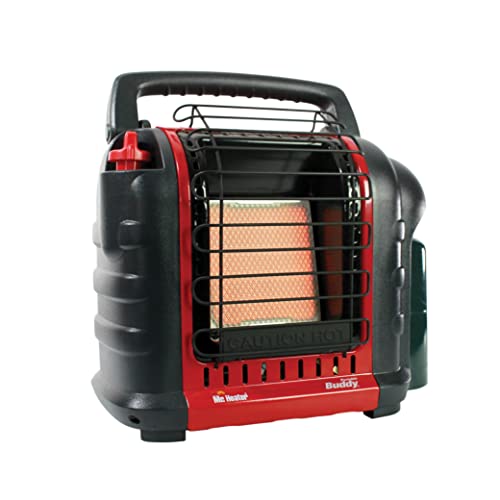
The Mr. Heater MH9BX is a portable propane radiant heater that provides direct, sun-like warmth using infrared technology. Listed output ranges from 4,000 to 9,000 BTU, and it is positioned for smaller areas up to about 225 sq. ft.
Manufacturer-listed safety features include a tip-over switch and improved safety mechanisms. The unit uses a piezo igniter for matchless start-up and is designed for portability to job sites, patios, and unpowered garages.
Propane radiant heaters are useful where electric service is limited or when direct radiant heat is preferred. Users should be attentive to ventilation requirements and follow manufacturer safety guidance for indoor use.
Buying Guide: How To Choose The Right Garage Heater
Selecting the best garage heater requires matching heater type to your garage size, insulation, power availability, and intended use. Below are key considerations and comparison perspectives to guide a purchase.
1. Heater Type And How It Heats
- Fan-Forced Electric (Hard-Wired Or Portable) — Heats air and circulates it with a fan. Good for uniformly raising ambient temperature in insulated garages. Hard-wired ceiling units save floor space and can cover larger areas.
- Infrared / Radiant — Warms people and objects directly without needing to heat all the air. Useful for partially open garages or targeted spot heating.
- Propane Or Diesel — Provides heat where electricity may be limited. Portable propane units deliver radiant heat quickly but require attention to ventilation and fuel supply. Diesel heaters can be efficient for larger, off-grid garages but may need more complex installation.
2. Garage Size And Insulation
- Estimate heated square footage and ceiling height. Electric fan-forced heaters specify coverage—verify matches your space.
- Insulation level drastically changes heating load. Poorly insulated garages need higher output and may benefit from ceiling-mounted heavy-duty units or supplemental infrared/radiant heat.
3. Power Source And Electrical Capacity
- High-wattage electric heaters (5,000–7,500W) often require dedicated 240V circuits and professional wiring. Confirm your garage panel can support the heater without tripping breakers.
- Lower-wattage or infrared units may run on 120V outlets, offering simpler installation.
- Propane and diesel options avoid electric requirements but involve fuel storage and ventilation considerations.
4. Installation And Placement
- Ceiling-Mounted Units free floor space and are ideal for permanent, centralized heating. They typically require hard-wiring.
- Portable Units allow repositioning and seasonal use—consider cord length and plug type.
- Position heaters to avoid obstructions and to direct heated air where people work or where vehicles are stored.
5. Safety Features
- Look for overheat protection, tip-over switches, automatic shut-off, and cool-to-the-touch surfaces, especially for portable units used near flammable materials.
- Propane and combustion heaters require carbon monoxide precautions and adequate ventilation. Follow manufacturer guidelines and local codes.
6. Controls, Thermostats, And Energy Management
- Digital thermostats and timers allow temperature scheduling and help reduce energy use during idle hours.
- ECO modes and adjustable power settings can optimize energy use for fluctuating conditions.
- Remote control or built-in sensors add convenience for repeated adjustments.
7. Durability And Intended Environment
- Look for rugged construction (steel bodies, protective coatings) in workshop environments where impacts and abrasion are possible.
- For semi-outdoor garages or open doors, consider IP-rated or outdoor-capable infrared models to withstand moisture and dust exposure.
8. Noise And Air Movement
- Fan-forced heaters create airflow and some noise; infrared and radiant units run quieter. Consider whether noise affects workshop tasks.
- Directed louvers and adjustable angles can concentrate airflow away from sensitive areas.
9. Maintenance And Longevity
- Routine cleaning of fans and filters (if applicable) prolongs service life. Check access panels for maintenance.
- Hard-wired units may require professional servicing for electrical or internal component work.
10. Compliance And Codes
- Verify local building and electrical codes for hard-wired heater installations. Use licensed electricians for installations requiring new circuits.
- For combustion heaters, ensure compliance with ventilation and indoor-use guidelines to maintain safety.
Use these criteria to compare features such as coverage area, power configuration, safety systems, and installation complexity when deciding which heater best matches a particular garage environment.
Tips for Getting the Best HVAC Prices
- Prioritize Quality Over Cost
The most critical factor in any HVAC project is the quality of the installation. Don’t compromise on contractor expertise just to save money. - Check for Rebates
Always research current rebates and incentives — they can significantly reduce your overall cost. - Compare Multiple Quotes
Request at least three estimates before making your choice. You can click here to get three free quotes from local professionals. These quotes include available rebates and tax credits and automatically exclude unqualified contractors. - Negotiate Smartly
Once you've chosen a contractor, use the proven strategies from our guide — How Homeowners Can Negotiate with HVAC Dealers — to get the best possible final price.