
Finding a high output space heater means balancing power, coverage, safety, and efficiency. The table below summarizes the five selected heaters from the provided list that deliver the most heat or are designed for high-output applications across homes, garages, and large rooms.
| Product | Type | Key Output / Strength |
|---|---|---|
| Dreo Space Heater Large Room, 30″ Electric Heaters | Ceramic Tower (30″) | Wide oscillation, large PTC element for up to 300 ft² coverage |
| Dreo Space Heater for Indoor Use, 25″ 11.5ft/s Fast Electric Heater | Ceramic Tower (25″) | High-velocity airflow design for fast heat distribution |
| Dreo Space Heater, Portable Electric Heaters, 1500W PTC Ceramic | Compact PTC Ceramic (1500W) | PTC system with precise thermostat and fast warm-up |
| Dura Heat EUH1465 Electric Forced Air Heater | Forced-Air Electric (1500W) | Rugged steel body for workshops, strong hot air circulation |
| Mr. Heater MH60QFAV 60,000 BTU Portable Propane Forced Air Heater | Propane Forced-Air (60,000 BTU) | Extremely high output for large open spaces and job sites |
Content Navigation
- Dreo Space Heater Large Room, 30″ Electric Heater
- Dreo Space Heater For Indoor Use, 25″ Fast Electric Heater
- Dreo Space Heater, Portable Electric Heater 1500W PTC
- Dura Heat EUH1465 Electric Forced Air Heater
- Mr. Heater MH60QFAV 60,000 BTU Portable Propane Forced Air Heater
- Buying Guide: Choosing A High Output Space Heater
Dreo Space Heater Large Room, 30″ Electric Heater

This 30″ Dreo ceramic tower is built around a large 308mm PTC element plus an upgraded Hyperamics thermal design to maximize heat output and distribution. It offers adjustable oscillation up to 120°, multiple heat levels (5 heat + ECO), and 3 fan speeds allowing users to tune output for rooms up to roughly 300 ft² when conditions are typical.
Safety features include V0 flame-retardant housing, tip-over and overheat protection, cool-touch surfaces, and an ETL certification. Controls include a remote, digital interface, programmable timer (1–12H), and multiple comfort levels. The combination of a large heating element and wide oscillation targets widespread coverage rather than a highly concentrated heat beam.
Use cases: large living rooms, open-plan spaces, or offices where distributed, steady warmth is preferred. Consideration: optimal performance assumes stable home voltage and reasonable insulation.
Dreo Space Heater For Indoor Use, 25″ Fast Electric Heater

Call 888-896-7031 for Free Local HVAC Quotes – Compare and Save Today!
The 25″ Dreo ceramic heater emphasizes high-speed airflow with its hyperamics thermal design and extended impeller to double heat range compared to traditional towers. It claims an airflow up to 11.5 ft/s and lowered noise as low as 32 dB for quieter operation in bedrooms or offices.
Features include remote control, thermostat, multiple modes, and standard safety layers: ETL certification, 45° tip-over detection, overheat protection, reinforced plug, and a child lock option. The design targets faster warm-up and directional range rather than sheer BTU output; it’s suited for large rooms that benefit from rapid airflow-driven warming.
Use cases: rooms needing quicker initial warm-up, quiet bedroom use, or offices where lower noise and fast circulation help comfort. Consider that directional range and airflow speed are central to its effectiveness.
Dreo Space Heater, Portable Electric Heater 1500W PTC

This compact Dreo model uses a 1500W PTC ceramic element with a heat funnel design to accelerate warm-air delivery. The unit emphasizes precise temperature control with a wide thermostat range (41–95°F in 1°F increments) and an enhanced NTC chipset for tighter regulation and potential energy savings.
Safety and convenience: ETL-certified overheat and tip-over protections, V0 flame-retardant components, and an accurate digital display with a 12-hour timer. Modes and a remote provide flexible use in bedrooms, small living rooms, or offices where a 1500W output is the standard high-output limit for indoor electric heaters.
Call 888-896-7031 for Free Local HVAC Quotes – Compare and Save Today!
Use cases: smaller rooms or close-zone heating where precise thermostat control and quick warm-up matter. Keep in mind that the fixed 1500W electrical limit is typical for indoor electric heaters on household circuits.
Dura Heat EUH1465 Electric Forced Air Heater
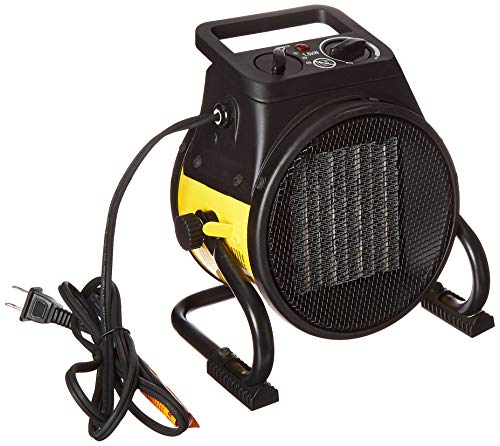
The Dura Heat EUH1465 is a compact forced-air electric heater delivering 1500W PTC heat through a robust steel shell. Designed for garages, workshops, and tougher spaces, the pivoting base helps direct hot air where needed while providing a durable construction for rougher environments.
Key features include heat and fan-only modes, making it usable as a hot air circulator in work areas. The steel construction emphasizes ruggedness rather than premium home aesthetics. The forced-air design concentrates hot airflow for faster spot heating compared to broad oscillating towers.
Use cases: workshops, utility rooms, garages, and small job sites where focused, durable electric forced air heat is preferred. Consider that this style is optimized for spot heating and may be noisier than tower-style ceramic heaters in living spaces.
Mr. Heater MH60QFAV 60,000 BTU Portable Propane Forced Air Heater

The Mr. Heater MH60QFAV is a high-capacity portable propane forced-air heater rated up to 60,000 BTU, designed for large open spaces, construction sites, or well-ventilated work areas. It offers variable output from 30,000 to 60,000 BTU and uses QBT technology to operate quieter than many comparable propane units.
This heater is intended for well-ventilated or outdoor use where high BTU output is required. It can run for extended periods on a standard 20 lb propane tank at lower settings. Key considerations include fuel handling, ventilation requirements, and safety protocols for combustion-based heaters.
Use cases: large garages with adequate ventilation, open construction spaces, and outdoor job sites. This is not suitable for enclosed living spaces without strict ventilation and carbon monoxide monitoring.
Buying Guide: Choosing A High Output Space Heater
When prioritizing high output, consider heat delivery method, coverage area, energy source, safety features, and practical constraints. Below are the key factors and comparison perspectives to inform a purchase.
1. Heat Output And Type
- Electric Ceramic/PTC (1500W): Common indoor limit on standard circuits. Effective for rooms up to ~300 ft² with tower designs or focused spot heating with forced-air models.
- Oil-Filled Radiant: Slower to heat but provides even, sustained radiant warmth and high thermal mass; good for long-term background heating.
- Forced-Air Electric: Delivers quicker, concentrated hot air. Useful for spot heating in garages and workshops.
- Propane/Combustion (BTU-rated): Massive output (tens of thousands of BTU) for large open areas and outdoor or well-ventilated sites. Requires fuel and ventilation.
2. Coverage Area And Distribution
- Oscillation And Element Size: Wider oscillation angles and larger PTC elements improve even distribution in bigger rooms.
- Airflow Speed vs. Heat Concentration: High-velocity fans move heat quickly across a room, while radiant and oil-filled units concentrate heat locally but maintain it longer.
3. Power Limits And Energy Considerations
- Most indoor electric units top out around 1500W due to household circuit limits; dual-circuit or hardwired electric systems enable higher electric outputs but require electrician changes.
- Propane and fuel-based heaters bypass electrical limits but introduce fuel logistics and ventilation requirements.
- Thermostat precision and ECO modes help reduce runtime and overall energy cost by maintaining target temps instead of running full power continuously.
4. Safety And Certifications
- Look for ETL/UL certification, tip-over protection, overheat shutoff, cool-touch housings, and child locks for household use.
- Fuel-burning units require carbon monoxide monitoring, proper ventilation, and adherence to local codes. Never use combustion heaters in tightly sealed living spaces without ventilation.
5. Durability And Intended Environment
- Home Use: Tower ceramic, oil-filled radiators, and quiet forced-air models with aesthetic finishes and remote controls.
- Worksite/Garage: Steel-bodied forced-air electric heaters or portable propane units built for rugged conditions.
- Match build quality to environment: weather-resistant or metal housings for shops; plastic and insulated housings for indoor living spaces.
6. Noise And Comfort
- Quiet operation matters for bedrooms and offices — look for dB ratings near 30–40 dB for minimal disturbance.
- Forced-air and workshop heaters can be louder but provide faster spot heating.
7. Controls, Timers, And Smart Features
- Precise digital thermostats with 1°F increments, programmable timers, and remote control aid convenience and energy savings.
- Some models include ECO modes that modulate output to maintain temperature with lower energy consumption.
8. Installation, Mobility, And Fuel Logistics
- Consider portability: wheels, handles, and pivoting bases aid positioning. Bulky oil radiators are less portable but excellent for sustained heat.
- Fuel-based units need propane supply planning; electric models require only a compatible outlet and correct circuit.
9. Comparison Perspectives
- Best For Large Homes/Even Distribution: Larger oscillating towers with wide-angle oscillation and large heating elements.
- Best For Quick Spot Heating: Forced-air electric heaters or high-velocity ceramic models.
- Best For Workshops/Job Sites: Rugged forced-air electric or propane units with high BTU capacity.
- Best For Quiet, Long-Lasting Warmth: Oil-filled radiators or low-noise ceramic towers with larger elements.
Final purchase choices should weigh the required heat output, space size, available power or fuel, and safety requirements. Matching heater type to the intended environment ensures the best balance of performance and safety.
Tips for Getting the Best HVAC Prices
- Prioritize Quality Over Cost
The most critical factor in any HVAC project is the quality of the installation. Don’t compromise on contractor expertise just to save money. - Check for Rebates
Always research current rebates and incentives — they can significantly reduce your overall cost. - Compare Multiple Quotes
Request at least three estimates before making your choice. You can click here to get three free quotes from local professionals. These quotes include available rebates and tax credits and automatically exclude unqualified contractors. - Negotiate Smartly
Once you've chosen a contractor, use the proven strategies from our guide — How Homeowners Can Negotiate with HVAC Dealers — to get the best possible final price.