
Quick Overview: Below is a concise comparison of five high-power space heaters chosen for strong output, safety features, and coverage. These models are suitable for large rooms, garages, and areas that need rapid, reliable warmth.
| Product | Type | Power / Output | Notable Feature |
|---|---|---|---|
| Dreo Space Heater (Digital Display) | PTC Ceramic | 1500W | Precise Thermostat 41–95°F, 1°F increments |
| Dreo 25″ Fast Electric Heater | Ceramic Tower | 1500W | Extended Impeller, 11.5 ft/s Fast Heat |
| Dura Heat EUH1465 | Forced Air / Shop Heater | 1500W (5,120 BTU) | Rugged Steel Construction for Workshops |
| Lasko Oscillating Digital Tower | Ceramic Tower | 1500W | Oscillation + Adjustable Thermostat + Remote |
| Dreo 70° Oscillation Heater | PTC Ceramic Oscillating | 1500W | 70° Oscillation, 8 Safety Protections |
This article examines each heater’s features, intended use cases, and safety and performance details to help you choose a high-power unit for larger spaces.
Content Navigation
Dreo Space Heater, Portable Electric Heaters

This compact PTC ceramic heater delivers 1500W of fast heat and uses an upgraded Hyperamics PTC system with a heat funnel design to move warm air quickly and extend circulation up to 200% farther than traditional units. The digital display and advanced NTC chipset provide precise thermostat control across a range of 41–95°F in 1°F increments for energy-conscious operation.
Safety features include a tilt-detection sensor, overheat protection, V0 flame-retardant materials, and an ETL-certified safety plug. The combination of rapid heat delivery and multiple safety systems makes this model suitable for bedrooms, offices, and small-to-medium living areas where precise temperature control is desired.
Dreo 25 Inch Fast Electric Heater For Large Rooms

Call 888-896-7031 for Free Local HVAC Quotes – Compare and Save Today!
This 25″ ceramic tower combines a Hyperamics thermal design with an extended impeller to increase airflow and heat reach, producing fast warm air at approximately 11.5 ft/s. The extended range is aimed at warming larger rooms more effectively than compact heaters.
Safety is emphasized with V0 flame-retardant materials, a reinforced plug, ETL-certified 45° tip-over and overheat protection, and a child lock setting for added security. Noise reduction design yields sound levels as low as 32 dB, making it appropriate for bedrooms where quieter operation is important.
Dura Heat EUH1465 Forced Air Heater With Pivoting Base
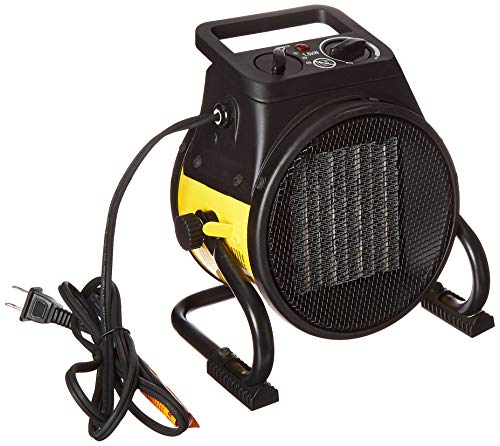
The Dura Heat EUH1465 is a forced air heater that provides 1500W of PTC heating, marketed with a 5,120 BTU equivalent output and a pivoting base for directional heat. Built with a rugged steel body, it’s designed for garages, workshops, and commercial spaces where durability is preferred over design aesthetics.
Its heat and fan-only settings provide versatility for year-round use as a heater or air circulator. The robust construction and direct forced-air delivery suit environments that demand durability and targeted heat rather than wide-area quiet operation.
Lasko Oscillating Digital Ceramic Tower Heater

Call 888-896-7031 for Free Local HVAC Quotes – Compare and Save Today!
The Lasko digital tower heater combines 1500W ceramic heating with adjustable thermostat control, oscillation for even distribution, and a remote for convenience. It offers two quiet heat settings and an adjustable timer up to 8 hours, with a remote storage compartment to keep controls handy.
Oscillation helps spread warmth across larger floor areas, and the adjustable thermostat allows the unit to maintain a set room temperature. These features make the Lasko model a practical choice for living rooms and offices where consistent, evenly distributed warmth and user convenience are priorities.
Dreo 1500W Oscillating Heater With 8 Protections

This model is a 1500W PTC ceramic heater with 70° oscillation and multi-layered safety: smart tip-over protection, overheat protection, 12-hour timer, and automatic power-off features. It is ETL-certified and built from V0 flame-retardant materials with a sturdy flat power cord.
Rated for coverage up to about 200 sq. ft., its oblique airflow design reduces noise to around 34 dB while claiming faster warm-up. The combination of oscillation and quiet operation targets larger bedrooms, open-plan areas, and offices where both coverage and low acoustic impact matter.
Buying Guide: How To Choose A High Power Space Heater
Selecting the right high power space heater involves evaluating performance, safety, and practical fit for the room. Below are key considerations and comparison perspectives to guide your choice.
1. Output And Room Size
Heating Capacity: Most consumer electric space heaters top out at 1500W. Effective coverage depends on insulation and ceiling height; a quality 1500W PTC or ceramic heater typically heats rooms up to about 150–250 sq. ft. For garages or poorly insulated spaces, consider forced-air shop heaters or multiple units.
Airflow Design: Tower heaters with oscillation and extended impellers increase distribution, benefiting larger open areas. Forced-air units provide more directional heat for workspaces.
2. Heating Technology
- PTC Ceramic: Fast warm-up, self-regulating element, common in portable units for safety and efficiency.
- Forced-Air / Fan Heaters: Deliver rapid directional warmth; useful in workshops but can be louder.
- Infrared / Radiant: Not covered in this list, but effective for spot heating people and objects rather than air.
3. Safety Features
Key safety systems include tip-over shutoff, overheat protection, flame-retardant housings, and ETL/UL certification. For homes with children or pets, look for child locks and reinforced plugs. Avoid using extension cords unless specified as safe by the manufacturer.
4. Controls And Thermostat Accuracy
Precise thermostats (1°F increments) and digital displays improve temperature maintenance and energy efficiency. Remote control and programmable timers add convenience and allow scheduled operation to reduce energy use.
5. Noise And Comfort
Noise levels vary by design: tower ceramic units with oblique airflow can be as quiet as low 30 dB, suitable for bedrooms. Forced-air units can be louder but provide rapid wake-up warmth for garages or utility spaces.
6. Durability And Build
Metal-bodied forced-air heaters provide rugged durability for workshops. Plastic-bodied PTC ceramic towers are lighter and more portable for home use; check material ratings (e.g., V0 flame retardant) and cord quality.
7. Energy Use And Efficiency
Most high-power portable heaters run at 1500W; thermostat control and timed operation are the main levers for efficiency. Using a heater to supplement central heating for occupied rooms can reduce overall energy consumption compared to heating the entire house.
8. Placement And Coverage Strategy
Place heaters near cold spots and on stable, level surfaces. For large or open rooms, an oscillating tower or a heater with an extended impeller improves distribution. For directed heat in garages or work areas, a forced-air pivoting unit is often more effective.
9. Safety Usage Practices
- Plug heaters directly into a wall outlet unless the manual explicitly allows an extension cord.
- Keep at least three feet of clearance from combustibles.
- Turn off when unattended for extended periods or use timers/auto-off functions.
- Inspect cords and plugs regularly for wear.
10. Comparison Perspectives
Home Bedrooms / Offices: Prioritize quiet operation, precise thermostat control, and safety features (Dreo digital models and Lasko tower).
Large Living Rooms / Open Areas: Look for oscillation and extended airflow range to distribute heat evenly (Dreo 25″ and oscillating models).
Garages / Workshops: Favor rugged construction and directional forced air for rapid spot heating (Dura Heat EUH1465).
Energy-Conscious Users: Choose units with accurate thermostats and timers to maintain set temperatures and reduce run time.
Use the above criteria to match heater type to your space, prioritize safety certifications and thermostat precision, and consider noise and physical construction relative to intended placement.
Tips for Getting the Best HVAC Prices
- Prioritize Quality Over Cost
The most critical factor in any HVAC project is the quality of the installation. Don’t compromise on contractor expertise just to save money. - Check for Rebates
Always research current rebates and incentives — they can significantly reduce your overall cost. - Compare Multiple Quotes
Request at least three estimates before making your choice. You can click here to get three free quotes from local professionals. These quotes include available rebates and tax credits and automatically exclude unqualified contractors. - Negotiate Smartly
Once you've chosen a contractor, use the proven strategies from our guide — How Homeowners Can Negotiate with HVAC Dealers — to get the best possible final price.