
Finding the right home comfort heater means balancing safety, efficiency, and the type of warmth you need. The table below summarizes five top heaters suitable for bedrooms, offices, and living rooms, highlighting their core strengths for quick comparison.
| Product | Type | Key Strength |
|---|---|---|
| Comfort Zone CZ35E | Fan-Forced Portable | Compact, Adjustable Thermostat, Energy-Save Tech |
| Comfort Zone CZ600 | Baseboard Convection | Quiet, Convection Heating For Medium Rooms |
| Lasko FH515 | Tower Fan & Ceramic Heater | All-Season Use, Oscillation, Space-Saving |
| Comfort Zone CZ7007J | Oil-Filled Radiator | Silent Operation, Sustained Radiant Heat |
| Comfort Zone CZ45E | Fan-Forced Portable | Energy-Efficient Fan Heater With Multiple Settings |
Content Navigation
Comfort Zone Indoor Space Heater, CZ35E
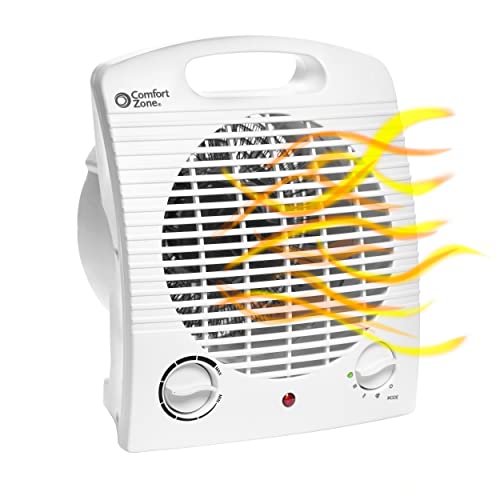
This compact fan-forced portable heater provides two power settings (600/1500W) and an adjustable thermostat to control room temperature. The unit uses updated Energy Save Technology to reduce power draw by about 30% compared to the prior model, making it appropriate for small rooms or personal workspaces.
Safety features include an overheat sensor and a tip-over switch, along with a stay-cool housing design. The device is designed to deliver quick warm airflow and maintain a target temperature using the adjustable thermostat. Size and controls make it a contender for desktop or bedside use.
Best Suited For: Small bedrooms, offices, and cubicles where quick, directed warmth is preferred and portability matters.
Comfort Zone Electric Baseboard Heater, CZ600

Call 888-896-7031 for Free Local HVAC Quotes – Compare and Save Today!
The CZ600 is a convection baseboard heater designed for medium-sized rooms. It offers two heat settings and an adjustable thermostat to modulate output. Convection-style heating warms air as it passes over the heating element, providing even room temperature without blowing air.
Built-in safety measures include overheat protection, a tip-over switch, and a stay-cool body to reduce burn risk. The unit emphasizes whisper-quiet operation, which is useful for living rooms and bedrooms where noise sensitivity is a priority.
Best Suited For: Permanent or semi-permanent installation in medium rooms where quiet, even heat distribution is desired.
Lasko Oscillating Tower Fan And Heater, FH515

This tower fan with ceramic heater offers year-round functionality—four fan speeds for cooling and a 1500W ceramic heater for winter. The 42-inch, oscillating design improves whole-room circulation and aims to distribute heat or cool air efficiently.
Safety and convenience features include overheat protection, cool-touch housing, and a slim footprint ideal for apartments or small living spaces. The combination design reduces the need for separate heating and cooling devices and supports versatility across seasons.
Call 888-896-7031 for Free Local HVAC Quotes – Compare and Save Today!
Best Suited For: Rooms where both heating and supplemental cooling are useful and where space-saving vertical designs are preferred.
Comfort Zone Oil-Filled Radiator, CZ7007J

The CZ7007J is an oil-filled radiant radiator offering silent operation and gradual, sustained heat release. It has three heat settings (500W, 700W, 1200W) and an adjustable thermostat to match temperature needs while conserving energy compared to constant fan-forced units.
Radiators maintain warmth after the element cycles off, providing stable ambient temperatures with minimal noise. The unit’s compact dimensions and portability are intended for medium rooms where continuous low-noise heating is important, such as bedrooms or home offices.
Best Suited For: Users who prioritize quiet, long-lasting radiant heat and want steady temperatures without fan noise.
Comfort Zone Indoor Space Heater, CZ45E

The CZ45E is a fan-forced electric heater with three heat settings, an adjustable thermostat, and Energy Save technology that claims up to 30% reduced power use versus traditional models. It includes a fan-only mode for ventilation when heating isn’t needed.
Safety components include overheat protection and a tip-over switch, plus a stay-cool exterior. The unit is positioned as an all-around, energy-conscious heater for small spaces requiring easy temperature adjustments and portability.
Best Suited For: Users seeking a versatile, energy-aware portable heater for small rooms and flexible spot-heating.
Buying Guide: How To Choose The Right Home Comfort Heater
Selecting a heater depends on room size, desired warmth type, noise tolerance, and safety needs. Below are key factors to weigh when choosing a heater for home comfort.
Heating Type And What It Means
- Fan-Forced Heaters: Provide quick, directional warmth by pushing heated air. Best for rapid spot heating in small rooms. May produce audible fan noise.
- Ceramic Heaters: Use a ceramic heating element; typically safe and quick to warm up. Often integrated into tower units with oscillation for broader coverage.
- Oil-Filled Radiators: Radiant and convection heating combined. They emit steady, long-lasting heat with very low noise and are energy-efficient for maintaining temperature.
- Baseboard Convection: Installed along walls, they heat by rising warm air and provide steady, even room temperatures without a fan.
- Hybrid Fan/Tower Units: Combine heating and cooling modes for year-round versatility, saving space and avoiding the need for separate devices.
Room Size And Output
- Match wattage and heating type to room square footage. Portable 1500W units are effective for small to medium rooms; larger spaces may require multiple units or central heat.
- Convection and baseboard heaters distribute heat across a room but act slower than fan-based units.
Energy Efficiency Considerations
- Look for features labeled Energy Save or AutoEco that adjust output to maintain temperature while reducing consumption.
- Oil-filled radiators retain heat and may cycle less often, potentially lowering energy usage during steady-state operation.
Safety Features
- Essential features include overheat protection, tip-over switches, and cool-touch housing for safer operation around children and pets.
- Check ETL/UL listings as confirmation of independent safety testing where applicable.
Noise And Comfort
- If quiet operation matters for bedrooms or offices, consider oil-filled radiators or baseboard convection heaters over fan-forced models.
- Hybrid or tower units offer oscillation for even distribution but may introduce more operational noise at higher fan speeds.
Controls And Convenience
- Adjustable thermostats and multiple heat settings offer better temperature control and potential energy savings.
- Remote controls, timers, and oscillation functions increase usability for placement flexibility and convenience.
Placement, Portability, And Installation
- Portable heaters are ideal for temporary spot-heating and can be moved as needed. Consider weight and built-in handles for ease of relocation.
- Baseboard and permanently mounted units require planning for installation and placement for optimal convection flow.
Comparison Perspectives
- Speed vs. Steadiness: Fan-forced units warm quickly but may fluctuate; oil-filled radiators heat more slowly and provide steadier residual warmth.
- Noise vs. Silence: Convection and oil radiators are quiet. Fan-based and high-velocity modes are louder but provide faster temperature changes.
- Versatility vs. Specialization: Hybrid tower units cover heating and cooling seasons. Dedicated heaters may perform a narrower role but often excel within it.
When choosing, prioritize the combination of safety, appropriate heating method for the room, and energy-efficient features that match your daily usage patterns.
Tips for Getting the Best HVAC Prices
- Prioritize Quality Over Cost
The most critical factor in any HVAC project is the quality of the installation. Don’t compromise on contractor expertise just to save money. - Check for Rebates
Always research current rebates and incentives — they can significantly reduce your overall cost. - Compare Multiple Quotes
Request at least three estimates before making your choice. You can click here to get three free quotes from local professionals. These quotes include available rebates and tax credits and automatically exclude unqualified contractors. - Negotiate Smartly
Once you've chosen a contractor, use the proven strategies from our guide — How Homeowners Can Negotiate with HVAC Dealers — to get the best possible final price.