
Choosing the right hydronic or electric baseboard heater involves matching system type, voltage, thermostat compatibility, and room size. Below is a quick comparison of the selected products followed by focused product overviews and a detailed buying guide to help you decide.
| Product | Type / Key Feature | Primary Use |
|---|---|---|
| Cadet F Series 36″ (120V) | Electric baseboard, 750W, requires thermostat | Replacement for 120V baseboard circuits |
| KING 4K1210BW 4′ / 1000W | Hard-wired 120V baseboard, aluminum ribbon element | Standard electric baseboard heating |
| EZ-HEAT 1,500W Baseboard Heater | Portable/plug or hardwire style with safety features | Medium rooms, flexible install |
| Mysa Smart Thermostat (240V) | Smart high-voltage thermostat for electric baseboards | Wi‑Fi control, smart home integration |
| Caoooort Baseboard Heater Cover | Retractable galvanized steel cover, 2–4 ft | Protective and decorative cover for baseboards |
Content Navigation
- Cadet F Series 36″ Electric Baseboard Heater (120V)
- KING 4K1210BW K Series Baseboard Heater 4′
- EZ-HEAT 1,500 Watt Baseboard Space Heater
- Mysa Smart Thermostat For Electric Baseboard Heaters 240V
- Baseboard Heater Cover 2FT-4FT Retractable Galvanized Steel
- Buying Guide: How To Choose The Right Hydro Or Electric Baseboard Setup
- 1. System Type And Compatibility
- 2. Voltage, Wattage, And Room Sizing
- 3. Thermostat And Control Options
- 4. Safety Features
- 5. Installation And Electrical Requirements
- 6. Materials, Finish, And Durability
- 7. Airflow, Clearance, And Aesthetic Considerations
- 8. Energy Efficiency And Controls
- 9. Maintenance And Serviceability
- 10. Multiple Comparison Perspectives
Cadet F Series 36″ Electric Baseboard Heater (120V)
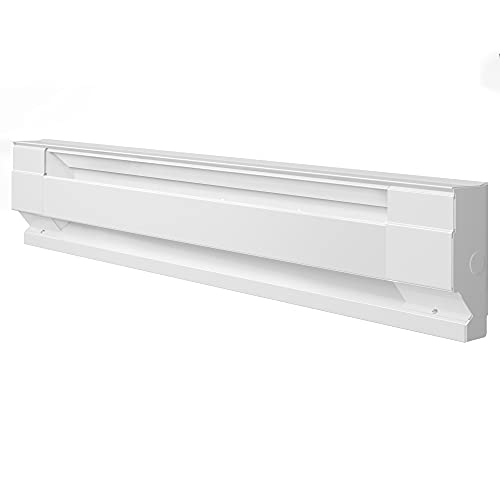
This Cadet F Series 36″ model is a 120V electric baseboard heater rated at 750 watts and designed to function with a separate thermostat. The unit is constructed from 25 gauge steel with a 20 gauge junction box and includes all-metal, powder-coated components.
- Key Features: Requires an external thermostat; durable steel construction; 750W output suitable for small rooms.
- Installation Notes: Intended for hard-wiring; follow local electrical codes and use a compatible line-voltage thermostat.
- Best For: Replacing older 120V baseboards where a wall thermostat controls multiple heaters or zones.
KING 4K1210BW K Series Baseboard Heater 4′

The KING 4K1210BW is a hard-wired 120V baseboard heater providing 1000W of heat output across a 4-foot length. It uses an aluminum ribbon fin element and includes a full-length safety cutout to protect against overheating.
- Key Features: 1000W output at 120V; aluminum ribbon fin for efficient heat transfer; safety cutout for long element protection.
- Installation Notes: Not a plug-in model; requires direct hard-wiring and appropriate circuit protection.
- Best For: Standard electric baseboard replacements where slightly higher output than 750W is required for moderate-size rooms.
EZ-HEAT 1,500 Watt Baseboard Space Heater

Call 888-896-7031 for Free Local HVAC Quotes – Compare and Save Today!
The EZ-HEAT CZ600 is a 1,500 watt convection baseboard heater intended for medium-sized rooms with two heat settings and an adjustable thermostat. It emphasizes safety with tip-over protection, overheat sensor, and a stay-cool exterior.
- Key Features: Two heat settings and adjustable thermostat; overheat protection and tip-over switch; whisper-quiet operation.
- Installation Notes: Designed for flexible placement; confirm local wiring and mounting requirements if hard-wiring is preferred.
- Best For: Users who need higher single-unit output and integrated safety switches for living rooms, bedrooms, or offices.
Mysa Smart Thermostat For Electric Baseboard Heaters 240V

The Mysa thermostat is a line-voltage smart controller built specifically for high-voltage electric heating systems, including baseboards at 120–240V. It supports smart home platforms like HomeKit, Alexa, and Google Home and can handle large loads.
- Key Features: Supports up to 1900W at 120V or 3800W at 240V; requires at least four wires including neutral or second live; Wi‑Fi and app control; adaptive brightness display.
- Compatibility Notes: Not compatible with low-voltage systems or two-wire baseboards. Verify wiring before purchase, particularly for older homes.
- Best For: Owners upgrading to smart control on electric baseboards or converting multi-zone setups to app-based schedules and remote control.
Baseboard Heater Cover 2FT-4FT Retractable Galvanized Steel
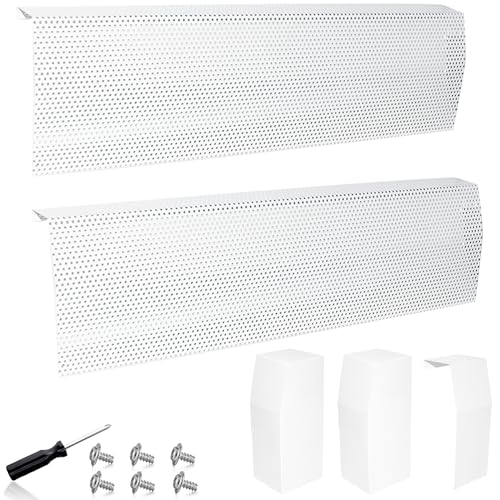
This retractable galvanized steel cover is a protective and decorative option for 2–4 foot baseboards, including hydronic and electric systems where a slip-on cover is suitable. It includes end covers and an installation kit.
- Key Features: Adjustable length from 2 ft to 4 ft; white powder-coated finish; rust-resistant galvanized steel construction.
- Installation Notes: Includes end caps and screws. Confirm clearances and airflow needs to avoid impeding heat output.
- Best For: Homeowners seeking a uniform look or added protection for baseboards in bathrooms and living areas.
Buying Guide: How To Choose The Right Hydro Or Electric Baseboard Setup
Baseboard heating systems fall into two primary categories: electric resistance baseboards and hydronic baseboards (hot water). Many product choices overlap as accessories and thermostats may serve either type when electrical compatibility is met. Below are essential factors to compare and verify.
Call 888-896-7031 for Free Local HVAC Quotes – Compare and Save Today!
1. System Type And Compatibility
Identify whether your system is line-voltage electric or hydronic (hot water). Electric baseboards require appropriate voltage and either a line-voltage thermostat or an inline control. Hydronic covers and cabinets are typically passive and allow piping access. Smart thermostats like Mysa work only with line-voltage electric units and require specific wiring.
2. Voltage, Wattage, And Room Sizing
Match the heater’s voltage (120V vs 240V) and wattage to your circuit capacity and room heating needs. General sizing guidance: 10 watts per square foot is a baseline for moderately insulated rooms; larger loads or colder climates require higher wattage. Check your breaker, wire gauge, and Mysa load limits before install.
3. Thermostat And Control Options
Decide between a local adjustable thermostat, a wall-mounted line-voltage thermostat, or a smart thermostat. Smart thermostats offer schedules, remote access, and integrations but require compatible wiring (neutral or second live wire). Traditional thermostats are simpler but might not enable zone scheduling.
4. Safety Features
Important safety elements include overheat sensors, tip-over switches for portable units, and full-length cutouts on fixed elements to interrupt power in case of failure. For hydronic systems, ensure piping and valve access for maintenance and pressure relief systems where applicable.
5. Installation And Electrical Requirements
Evaluate whether the unit is plug-in or hard-wired. Most built-in baseboards are hard-wired and should be installed by a qualified electrician to meet code. Smart thermostats often require multi-conductor cables; check for four-wire availability before ordering.
6. Materials, Finish, And Durability
Look for corrosion-resistant finishes and sturdy gauge steel or aluminum elements for long life. Ribbon fin elements, like those in KING units, improve heat transfer and reduce hot spots. Covers should be powder-coated and rated for high temperatures.
7. Airflow, Clearance, And Aesthetic Considerations
Baseboards rely on natural convection. Maintain manufacturer-recommended clearances (furniture, curtains). Covers must not block air paths; adjustable or perforated covers preserve heat flow while improving appearance.
8. Energy Efficiency And Controls
Efficiency is largely determined by control strategy. Zoned thermostats, programmable schedules, and occupancy-based smart controls reduce wasted run time. Hydronic systems retain heat longer and can be more stable, while electric units are faster to respond but require careful scheduling to avoid higher energy draw.
9. Maintenance And Serviceability
Choose units with accessible junction boxes and easy element replacement if possible. Hydronic systems require occasional bleeding and valve checks, while electric elements need periodic inspection for dust buildup and secure wiring connections.
10. Multiple Comparison Perspectives
- Performance vs. Cost: Higher wattage and smart controls increase upfront costs but can lower long-term energy use via better control.
- Hydronic vs. Electric: Hydronic systems are better for even heat and retention; electric baseboards simplify installation when hydronic infrastructure is unavailable.
- Integrated Safety vs. Aesthetics: Protective covers improve appearance but must balance with ventilation and safety requirements; choose perforated or adjustable covers.
- Smart Control vs. Simplicity: Smart thermostats offer efficiency gains but require modern wiring and network reliability; simple thermostats minimize compatibility issues.
Using the considerations above will help you match product specifications to room size, existing wiring, and long-term control needs. For upgrades, confirm wiring compatibility and code requirements before purchasing smart thermostats or hard-wired replacements.
Tips for Getting the Best HVAC Prices
- Prioritize Quality Over Cost
The most critical factor in any HVAC project is the quality of the installation. Don’t compromise on contractor expertise just to save money. - Check for Rebates
Always research current rebates and incentives — they can significantly reduce your overall cost. - Compare Multiple Quotes
Request at least three estimates before making your choice. You can click here to get three free quotes from local professionals. These quotes include available rebates and tax credits and automatically exclude unqualified contractors. - Negotiate Smartly
Once you've chosen a contractor, use the proven strategies from our guide — How Homeowners Can Negotiate with HVAC Dealers — to get the best possible final price.