
Hydronic ceiling heaters transfer heat from hot water or radiant panels into indoor spaces for efficient, even warmth. Below is a concise comparison of five relevant products that suit hydronic systems, hanging hot-water units, and a compact ceiling electric option for small rooms.
| Product | Type | Primary Use |
|---|---|---|
| American Royal 50,000 BTU 2 Speed Garage Heater | Hydronic Hanging Unit | Garages, Workshops |
| ALECOIL 100,000 BTU Hydronic Hot Water Hanging Unit Heater | Hydronic Hanging Unit | Garages, Warehouses, Outdoor Wood Furnace Systems |
| ALORAIR 100,000 BTU Hydronic Hanging Heater HydroX H100A | Hydronic Hanging Unit With Controls | Garages, Warehouses, Commercial Spaces |
| Hydronic Radiant Heat Control Panel – 3 Zone | Hydronic Distribution Panel | Underfloor Radiant, Multi-Zone Home Heating |
| Broan-NuTone 157 Low-Profile Fan-Forced Ceiling Heater | Electric Ceiling Heater | Bathrooms, Small Rooms, Supplemental Heat |
Content Navigation
- American Royal 50,000 BTU 2 Speed Garage Heater
- ALECOIL 100,000 BTU Hydronic Hot Water Hanging Unit Heater
- ALORAIR 100,000 BTU Hydronic Hanging Heater HydroX H100A
- Hydronic Radiant Heat Control Panel – 3 Zone
- Broan-NuTone 157 Low-Profile Fan-Forced Ceiling Heater
- Buying Guide For Hydronic Ceiling Heaters
- 1. Determine Heat Load And BTU Requirements
- 2. Water Temperature And Flow Compatibility
- 3. Fan Control And Automation
- 4. Airflow, Noise, And Distribution
- 5. Installation And Mounting Requirements
- 6. Materials And Corrosion Resistance
- 7. Filtration And Maintenance
- 8. Zoning And Controls
- 9. Warranty And Commercial Ratings
- 10. Alternative Options And Hybrid Approaches
- Comparison Perspectives
American Royal 50,000 BTU 2 Speed Garage Heater

Type: Hydronic Hot Water Hanging Unit Heater. This unit is designed to be integrated with a building’s hot water system, including wood boiler set-ups.
Key Features: 50,000 BTU output, 2-speed fan for airflow control, hanging design for overhead mounting, specified for hydronic (water) heat.
This heater is targeted at garages and workshops where a ceiling-mounted hydronic unit is preferred. The 2-speed fan allows basic airflow adjustment to balance noise and distribution. The hanging form factor makes it suitable for spaces with usable overhead clearance and existing hydronic hot water sources like wood boilers or boiler loops.
Installation Considerations: Requires plumbing connections to hot water piping and appropriate mounting anchors. Ensure the building’s hydronic system can supply sufficient water temperature and flow for 50,000 BTU output.
Call 888-896-7031 for Free Local HVAC Quotes – Compare and Save Today!
ALECOIL 100,000 BTU Hydronic Hot Water Hanging Unit Heater
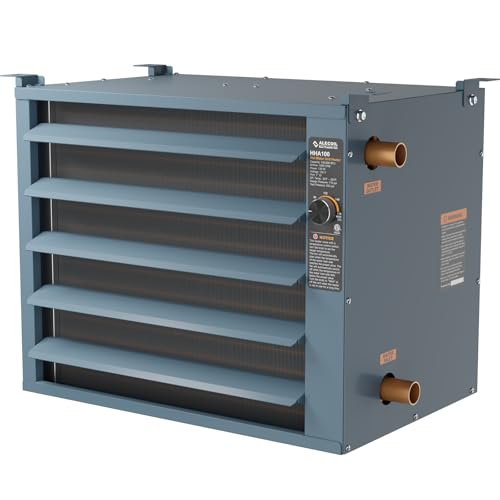
Type: Water-To-Air Heat Exchanger Hanging Unit. Built for high-output applications connected to outdoor wood furnaces or boiler systems.
Key Features: 100,000 BTU capacity, temperature control switch that senses inlet water temperature to automatically start/stop the fan, quiet centrifugal blower, and adjustable louver deflector.
The ALECOIL unit emphasizes automated fan control tied to water temperature, which improves energy efficiency by running the blower only when useful heat is available. The centrifugal blower design delivers higher pressure airflow with reduced noise, and adjustable louvers direct heated air where needed.
Use Cases: Larger garages, agricultural buildings, and warehouses served by outdoor wood furnaces or high-capacity boilers that can supply the necessary water flow and temperature for a 100k BTU exchanger.
ALORAIR 100,000 BTU Hydronic Hanging Heater HydroX H100A

Call 888-896-7031 for Free Local HVAC Quotes – Compare and Save Today!
Type: Industrial-Grade Water-To-Air Heat Exchanger With Controls. Constructed for commercial durability and automated control.
Key Features: 100,000 BTU capacity, heavy-duty galvanized steel housing, corrosion-resistant copper piping, reusable air filter, smart auto-temperature control, centrifugal blower delivering up to 1000 CFM at ~60 dBA, adjustable louvers, and a 3-year commercial warranty.
This model combines high airflow and automated fan activation based on water temperature, supporting energy-conscious operation. The reusable filter and robust construction target environments with dust or intermittent heavy use. The noise level and airflow specifications provide a balance between power and comfort for garages and medium-sized warehouses.
Installation Notes: Requires clearance for hanging installation and plumbing connections. Consider filter maintenance intervals in dusty environments to preserve heat exchanger efficiency.
Hydronic Radiant Heat Control Panel – 3 Zone

Type: Pre-Assembled Hydronic Distribution Panel For Radiant Heating. Designed to manage multiple zones for underfloor and space heating.
Key Features: Preassembled for convenience, supports 3 zones, designed for high-efficiency radiant heat distribution, and intended to simplify installation for home or commercial radiant systems.
The panel is not a ceiling-mounted air handler but an essential component for hydronic ceiling or floor radiant systems where distribution control matters. It enables multi-zone control, balancing, and integration with thermostats and pumps. This product is particularly relevant when planning a hydronic ceiling radiant installation that requires zone management.
System Integration: Use this panel to centralize mixing valves, zone valves, and circulating pump controls. Ensure compatibility with your heat source, piping size, and thermostat controls for effective multi-zone operation.
Broan-NuTone 157 Low-Profile Fan-Forced Ceiling Heater

Type: Electric Ceiling Fan-Forced Heater. A compact, low-profile unit for bathrooms, kitchens, and small rooms.
Key Features: 1250W at 120VAC, enclosed metal sheath heating element, low-profile housing, and durable aluminum grille in satin finish.
Although not hydronic, this ceiling-mounted electric heater can be a practical alternative where hydronic piping is not feasible. It provides instant, localized heat and a compact footprint that fits standard ceiling openings. The enclosed sheath element improves safety and reliability in humidity-prone spaces.
Considerations: Electric ceiling heaters are suited for supplemental heat or small rooms. They do not integrate with hot-water systems and may impact electrical load planning if used as primary heat in larger areas.
Buying Guide For Hydronic Ceiling Heaters
Choosing the right hydronic ceiling heater involves several technical and practical factors. Below are the primary considerations to weigh before selecting a unit or system.
1. Determine Heat Load And BTU Requirements
Calculate the space heat load (BTU/hr) based on room size, insulation, ceiling height, and heat loss. Match the heater capacity to the load with a margin for cold design conditions. Over- or undersizing can reduce efficiency and comfort.
2. Water Temperature And Flow Compatibility
Hydronic air handlers and exchangers depend on inlet water temperature and flow rate. Verify your boiler, outdoor wood furnace, or heat source can supply the required water temperature and sustained flow to meet the heater’s rated BTU output.
3. Fan Control And Automation
Look for temperature-controlled fan activation that starts the blower only when water reaches a preset temperature. This saves energy and limits unnecessary fan runtime. Variable speed or multi-speed fans allow better control of airflow and noise.
4. Airflow, Noise, And Distribution
Check CFM and noise ratings. Centrifugal blowers often provide higher static pressure and quieter operation. Adjustable louvers or diffusers help direct airflow to occupied zones and reduce cold spots.
5. Installation And Mounting Requirements
Consider available ceiling height, structural support for hanging units, and clearance for service. Hydronic hanging units need plumbing space for supply/return lines and sometimes condensate or drip considerations for cooler water systems.
6. Materials And Corrosion Resistance
Choose units with corrosion-resistant piping (e.g., copper) and durable housings (galvanized or heavy-gauge steel) for long life, especially in humid or dusty environments.
7. Filtration And Maintenance
Reusable or replaceable filters protect the heat exchanger and blower. Factor in maintenance intervals and access for cleaning to maintain efficiency and indoor air quality.
8. Zoning And Controls
For multi-room or multi-use buildings, a hydronic distribution panel with zone valves simplifies control and improves comfort. Panels also ease integration with thermostats and pump controls.
9. Warranty And Commercial Ratings
Commercial warranties and industrial-grade construction can indicate suitability for heavy-duty applications. Verify warranty coverage and replacement parts availability.
10. Alternative Options And Hybrid Approaches
Where hydronic piping is impractical, electric ceiling heaters or infrared units can supplement heat. For whole-home comfort, combine hydronic radiant panels with ceiling exchangers and a central distribution panel for the best blend of efficiency and control.
Comparison Perspectives
From a performance perspective, 100,000 BTU hanging exchangers like ALECOIL and ALORAIR are ideal for larger, poorly insulated spaces or high ceilings. The 50,000 BTU American Royal model suits medium-sized garages and provides a lower-capacity option where the heat source is smaller.
From a control and efficiency perspective, models with temperature-sensing fan controls (ALECOIL, ALORAIR) reduce energy use and improve responsiveness. From a system integration viewpoint, the hydronic radiant panel enables zone control and is essential when planning multi-zone ceiling radiant distribution.
From installation complexity, hanging water-to-air exchangers require plumbing and structural support, while electric ceiling units like the Broan-NuTone offer minimal plumbing work but are limited to smaller spaces.
Tips for Getting the Best HVAC Prices
- Prioritize Quality Over Cost
The most critical factor in any HVAC project is the quality of the installation. Don’t compromise on contractor expertise just to save money. - Check for Rebates
Always research current rebates and incentives — they can significantly reduce your overall cost. - Compare Multiple Quotes
Request at least three estimates before making your choice. You can click here to get three free quotes from local professionals. These quotes include available rebates and tax credits and automatically exclude unqualified contractors. - Negotiate Smartly
Once you've chosen a contractor, use the proven strategies from our guide — How Homeowners Can Negotiate with HVAC Dealers — to get the best possible final price.