
Hydronic garage heaters use hot water from a boiler or outdoor furnace to warm shop and garage spaces quietly and efficiently. Below is a concise comparison of top hydronic hanging unit heaters and a preassembled hydronic distribution panel to help you choose the right system for your workspace.
| Product | Capacity / Feature | Best For |
|---|---|---|
| American Royal 50,000 BTU 2 Speed Garage Heater | 50,000 BTU, 2-speed fan | Small-to-medium garages, wood boiler compatibility |
| ALORAIR HydroX H100A 100,000 BTU Hanging Heater | 100,000 BTU, 1000 CFM, auto temp control | Large garages, workshops, warehouses |
| ALECOIL HHA100 100,000 BTU Hydronic Heater | 100,000 BTU, temperature control switch, centrifugal blower | Garages with outdoor wood boilers, quiet operation |
| American Royal 50,000 BTU With Remote Thermostat | 50,000 BTU, remote thermostat, on/off/on switch | Garages where remote control is preferred |
| American Royal 150,000 BTU 2-Speed Hanging Heater | 150,000 BTU, 2-speed fan, remote thermostat option | Large workshops, production spaces, high-ceiling areas |
Content Navigation
- American Royal 50,000 BTU 2 Speed Garage Heater
- ALORAIR 100,000 BTU Hydronic Hanging Heater HydroX H100A
- ALECOIL 100,000 BTU Hot Water Hanging Unit Heater HHA100
- 50,000 BTU Hot Water Hanging Heater With Remote Thermostat
- 150,000 BTU Hot Water Hanging Heater 2 Speed
- Buying Guide: How To Choose A Hydronic Garage Heater
- Heat Output And Space Sizing
- Water Source Compatibility
- Airflow And Distribution
- Controls And Automation
- Noise Level And Occupied Comfort
- Durability And Corrosion Resistance
- Installation And Mounting
- Maintenance And Serviceability
- Energy Efficiency And Operating Strategy
- Safety And Code Considerations
- Comparison Perspectives
American Royal 50,000 BTU 2 Speed Garage Heater

This hydronic hanging unit is specified as a 50,000 BTU air handler that runs on hot water from a boiler or wood furnace. It includes a new 2-speed fan and is designed for hydronic (water) heat sources, making it compatible with common outdoor wood boiler setups. The hanging configuration is suited to garages with limited floor space.
Key features listed by the manufacturer include the 50K BTU output and a 2-speed fan for basic airflow control. The unit is positioned as a durable, straightforward option for garages and small workshops that need a hydronic heat source without complex controls. It is primarily an air handler that depends on an external hot water system for heat generation.
ALORAIR 100,000 BTU Hydronic Hanging Heater HydroX H100A

The ALORAIR HydroX H100A is an industrial-grade hydronic heater built for larger spaces. With a listed 100,000 BTU capacity, heavy-gauge galvanized steel housing, and corrosion-resistant copper piping, this model emphasizes durability for workshop or warehouse use.
Call 888-896-7031 for Free Local HVAC Quotes – Compare and Save Today!
Notable feature highlights include a reusable air filter, a smart auto-temperature control that starts and stops the fan based on water temperature, and a centrifugal blower capable of approximately 1000 CFM at around 60 dBA. The unit’s adjustable louvers provide directional airflow control. ALORAIR also notes a multi-year warranty designed for commercial reliability. These attributes make the HydroX H100A a candidate where continuous reliable operation and corrosion resistance are priorities.
ALECOIL 100,000 BTU Hot Water Hanging Unit Heater HHA100
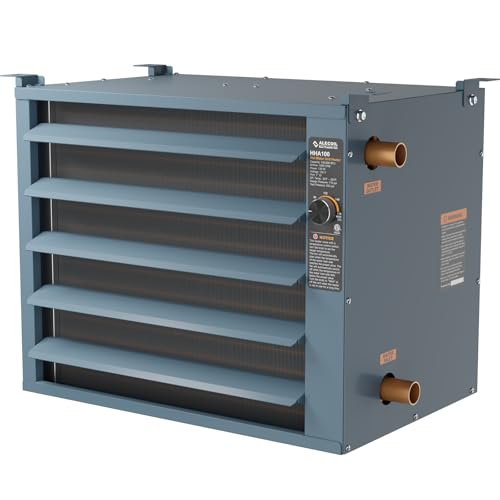
The ALECOIL HHA100 is a 100,000 BTU hydronic hanging heater that highlights a built-in temperature control switch. This switch senses the inlet water temperature and automatically turns the fan on or off at the set threshold, simplifying operation when tied to an outdoor wood furnace or boiler.
According to the product features, the unit uses a centrifugal blower offering quieter operation, higher static pressure, and low maintenance. The heater includes an adjustable louver deflector to direct airflow and is positioned as energy-efficient when matched with a hot water source. This model suits garage owners who want automatic fan control tied to water temperature without separate thermostatic wiring.
50,000 BTU Hot Water Hanging Heater With Remote Thermostat

This American Royal 50,000 BTU unit mirrors the smaller-capacity hydronic models but includes a remote thermostat and an On-Off-On switch for fan control. It’s designed for hydronic hot water heating and is often paired with wood boilers or other hot water sources common in residential and small commercial settings.
Call 888-896-7031 for Free Local HVAC Quotes – Compare and Save Today!
Features mention the 50K BTU output, two-speed fan control, and the convenience of remote thermostat management. The remote thermostat provides flexible setpoint control from within the garage, which can be helpful when precise temperature maintenance or convenient adjustments are needed without ladder access to the ceiling-mounted unit.
150,000 BTU Hot Water Hanging Heater 2 Speed
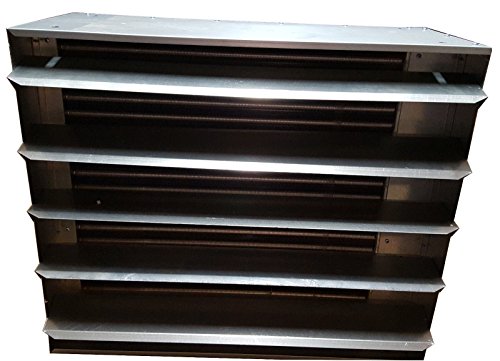
The American Royal 150,000 BTU hanging heater is the highest capacity unit in this selection. With 150K BTU output and a 2-speed fan, this model targets larger garages, workshops, or service bays with high ceilings or greater heat loss.
Product features highlight compatibility with hydronic systems such as wood boilers and include fan speed selection and optional remote thermostat control. The larger coil and fan assembly are intended to move higher volumes of warmed air, which helps maintain comfort in bigger spaces where lower-capacity units would struggle to keep temperatures consistent.
Buying Guide: How To Choose A Hydronic Garage Heater
Choosing the right hydronic garage heater requires matching heater capacity, airflow, control features, and installation considerations to your space and heat source. Below are the key factors to evaluate before purchasing.
Heat Output And Space Sizing
Determine the heating load of your garage or workshop. Consider square footage, ceiling height, insulation levels, door frequency, and local winter design temperatures. As a basic guide, well-insulated garage spaces generally require less BTU per square foot than uninsulated or high-ceiling shops.
- Small Garages (1-car, insulated): often 25k–50k BTU range.
- Medium Workshops (single bay, moderate height): 50k–100k BTU.
- Large Bays/Warehouses: 100k–150k+ BTU or multiple units for even coverage.
Water Source Compatibility
Hydronic heaters rely on a hot water supply. Verify compatibility with your boiler, outdoor wood furnace, or other hot water source. Check:
- Minimum and maximum supply temperatures the unit expects.
- Flow rate requirements and whether your pump can provide adequate circulation.
- Connections and plumbing fittings needed for installation.
Airflow And Distribution
CFM and blower type affect how heat distributes. Centrifugal blowers typically produce higher static pressure and can push air further; axial fans often move large volumes but with lower pressure. For directional heating and multi-zone coverage, consider units with adjustable louvers or install multiple smaller units for even distribution.
Controls And Automation
Control options range from simple on/off switches to thermostats and automatic temperature-activated fan switches. Features to weigh:
- Remote thermostat — convenient temperature adjustments without ceiling access.
- Automatic temperature control — fan starts/stops based on inlet water temperature, saving energy when source water is cool.
- Multiple fan speeds — allow airflow tuning for comfort and noise management.
Noise Level And Occupied Comfort
Noise is important if you spend long periods in the garage. Look for documented dBA ratings or references to whisper-quiet operation. Centrifugal blowers can be quieter at given pressure levels than some high-speed axial fans. Insulation and unit placement also affect perceived noise.
Durability And Corrosion Resistance
Materials matter when using outdoor boilers or in humid environments. Units with galvanized steel housings, corrosion-resistant copper piping, and reusable filters will generally withstand harsh conditions longer. Consider warranty length and commercial-grade construction if the heater will see heavy use.
Installation And Mounting
Hanging unit heaters require secure structural support and correct clearance from ceilings and combustible materials. Verify:
- Mounting hardware and weight specifications.
- Required clearances around the unit for airflow and maintenance.
- Plumbing route for inlet/outlet and compatibility with existing piping.
Maintenance And Serviceability
Look for accessible filters, removable panels, and replacement parts availability. Reusable air filters reduce ongoing costs, and straightforward fan or motor access simplifies repairs. Consider local service capability for hydronic coils should leaks or issues arise.
Energy Efficiency And Operating Strategy
Hydronic systems can be highly efficient when matched with a well-sized boiler and appropriate controls. Strategies to reduce operating costs:
- Use thermostatic controls or temperature-activated fans to run the unit only when water is hot enough to deliver efficient heat.
- Zone your workspace so you heat occupied areas only.
- Insulate the garage and seal drafts to reduce required BTU output.
Safety And Code Considerations
Ensure compliance with local mechanical and plumbing codes. Fuel-burning boilers and wood furnaces have venting and clearance requirements that impact how and where hydronic heaters are installed. Professional installation by a qualified HVAC/plumbing technician reduces code and safety risks.
Comparison Perspectives
When comparing units, consider these cross-cutting perspectives:
- Performance vs. Size — Larger BTU ratings are useful for big spaces, but multiple smaller units can provide better zonal control.
- Upfront Cost vs. Durability — Industrial-grade housings and corrosion-resistant coils cost more initially but reduce long-term maintenance.
- Automation vs. Simplicity — Auto-temp fans save energy and simplify use but add electronic components that may require service down the line.
- Noise vs. Airflow — High CFM often means more noise; centrifugal blowers can balance airflow with lower perceived noise.
Use the above considerations to match a hydronic garage heater to your specific garage size, heat source, and operational preferences. For installations involving boilers or outdoor wood furnaces, coordinate heater selection with the boiler output and circulation pump capacity to ensure reliable, efficient performance.
Tips for Getting the Best HVAC Prices
- Prioritize Quality Over Cost
The most critical factor in any HVAC project is the quality of the installation. Don’t compromise on contractor expertise just to save money. - Check for Rebates
Always research current rebates and incentives — they can significantly reduce your overall cost. - Compare Multiple Quotes
Request at least three estimates before making your choice. You can click here to get three free quotes from local professionals. These quotes include available rebates and tax credits and automatically exclude unqualified contractors. - Negotiate Smartly
Once you've chosen a contractor, use the proven strategies from our guide — How Homeowners Can Negotiate with HVAC Dealers — to get the best possible final price.