
Finding the right heater for an ice house, fish house, pump house, or small outbuilding requires deciding between propane radiant units and electric convection or infrared options. The table below summarizes five well-suited heaters from Amazon selected for safety features, heat output, thermostatic control, and suitability for enclosed cold spaces.
| Product | Type | Key Feature |
|---|---|---|
| Mr. Heater 10,000BTU Ice House Black Propane Garage Vent Free Heater | Propane Vent-Free | 10,000 BTU, Heats Up To 250 Sq. Ft. |
| Mr. Heater Portable Buddy Heater MH9BX | Portable Propane Radiant | 4,000–9,000 BTU, Infrared Radiant Heat |
| Dr Infrared Heater DR-268 Smart Greenhouse Heater | Electric Infrared/Outdoor Rated | IPX5 Water Resistance, Digital Thermostat |
| Comfort Zone Electric Portable Utility Space Heater CZ798BK | Electric Convection | 1,500W, Adjustable Thermostat |
| AEGONAN Utility Pump House Heater HPA600 | Electric Convection/Frost Protection | Built-In Thermostat, Specifically For Freeze Protection |
Content Navigation
- Mr. Heater 10,000BTU Ice House Black Propane Garage Vent Free Heater
- Mr. Heater Portable Buddy Heater MH9BX
- Dr Infrared Heater DR-268 Smart Greenhouse Heater
- Comfort Zone Electric Portable Utility Space Heater CZ798BK
- Utility Heater With Built-In Thermostat HPA600
- Buying Guide: Choosing An Ice House Heater
Mr. Heater 10,000BTU Ice House Black Propane Garage Vent Free Heater

This unit Is A vent-free liquid propane heater rated at 10,000 BTU per hour. The manufacturer lists coverage up to 250 sq. ft., making it appropriate for many ice houses or garages. Vent-free operation maximizes usable heat output because combustion products are introduced to the room and the unit uses oxygen depletion sensors on compliant models.
- Heat Output: 10,000 BTU, intended for small enclosed spaces.
- Fuel: Liquid Propane — suitable where electricity is unavailable.
- Use Case: Garage, ice house, enclosed workshop—check local codes for vent-free propane use.
Because this style produces combustion byproducts, proper ventilation and CO detection are essential. Users should confirm whether a vent-free propane heater is permitted in their jurisdiction and follow the manufacturer’s instructions for installation and clearance.
Mr. Heater Portable Buddy Heater MH9BX
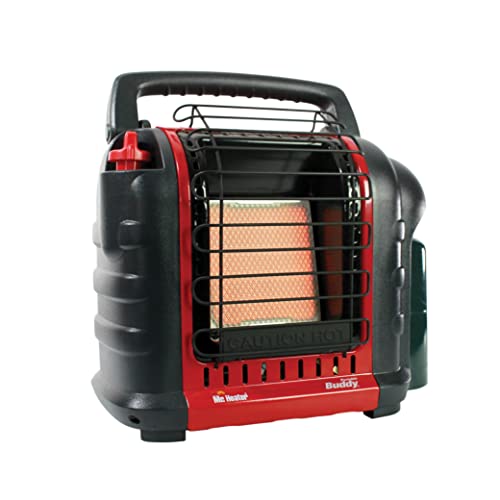
The Portable Buddy is a compact propane radiant heater offering adjustable output from 4,000 to 9,000 BTU. Its infrared-style radiant heating warms people and objects directly rather than relying solely on air temperature, which can feel effective in drafty or open-sided ice houses.
Call 888-896-7031 for Free Local HVAC Quotes – Compare and Save Today!
- Power Range: 4,000–9,000 BTU, suitable up to about 225 sq. ft.
- Safety: Tip-over safety switch and improved tip switch design to cut fuel if the unit is jostled.
- Ignition: Piezo igniter for reliable, battery-free startup.
This model provides portable, targeted warmth for anglers, small cabins, or temporary setups. Because it’s propane-powered and radiant, it is effective where electricity is limited. Observe manufacturer guidance about clearance, fuel connections, and indoor use.
Dr Infrared Heater DR-268 Smart Greenhouse Heater

This electric infrared heater is marketed for greenhouses and outdoor-rated spaces with an IPX5 water resistance rating and a corded temperature probe for accurate thermostatic control. It offers an auto mode and manual mode and includes multiple mounting options for walls, ceilings, or hanging.
- Weather Resistance: IP55/IPX5 indoor-outdoor rating—suitable for protected exterior structures.
- Control: Built-in digital display and corded thermal probe provide precise temperature regulation.
- Mounting: Wall, ceiling, or hanging chain options—flexible installation for many ice house layouts.
For ice houses where electricity is available and exposure to moisture is a concern, this model provides clean infrared heat without combustion. Use it in semi-protected shelters where the IP rating matches the environment and ensure wiring meets outdoor or damp-location codes.
Comfort Zone Electric Portable Utility Space Heater CZ798BK

This portable 1,500W electric convection heater is designed for garages and small enclosed spaces. It features three heat/fan settings and an adjustable rotary thermostat. The design emphasizes targeted, cost-effective heating for enclosed areas with available AC power.
Call 888-896-7031 for Free Local HVAC Quotes – Compare and Save Today!
- Power: 1,500W—typical plug-in heater for localized warmth.
- Controls: Rotary thermostat and multiple heat settings (low, high, fan-only).
- Safety: Overheat protection and tip-over switch included.
Electric convection heaters work well in well-insulated ice houses or pump rooms with reliable power. They provide clean, vent-free operation and simpler safety considerations compared to combustion units, but require adequate electrical supply and protection from moisture.
Utility Heater With Built-In Thermostat HPA600

Engineered for freeze protection, this 600W electric convection heater is targeted at pump houses, utility rooms, and remote enclosures where continuous low-level heat is needed. It has no moving parts and a built-in digital thermostat with a temperature range suitable for preventing equipment freeze.
- Purpose-Built: Designed for frost protection at remote sites—reliable continuous operation.
- Thermostat: Digital display and simple temperature setting from 40°F to 105°F.
- Construction: X-shaped aluminum fins improve convection and heat transfer.
For pump houses and equipment enclosures where the aim is preventing freezing rather than rapid comfort heating, this type offers efficient, low-maintenance protection and reduced fire risk due to lack of combustion and minimal moving parts.
Buying Guide: Choosing An Ice House Heater
Selecting the right heater for an ice house depends on heat requirement, fuel availability, ventilation, safety features, and installation constraints. Below are key considerations to evaluate before purchase.
Heat Type And Output
- BTU/Watts: Match output to space size. For rapid warmth in a small ice house, higher BTU (propane) or 1,500W electric units are common. Use manufacturer coverage estimates as starting points, then account for insulation and drafts.
- Radiant vs Convection: Radiant (infrared or propane radiant) heats people and gear directly and feels warmer in open or drafty spaces. Convection heaters warm air, which works better in well-insulated, enclosed spaces.
Fuel Source And Availability
- Propane: Portable and high-output for off-grid locations. Requires safe storage, leak checks, and CO monitoring.
- Electric: Clean and vent-free; needs reliable power and GFCI-protected circuits in damp conditions.
Safety Features
- Oxygen Depletion Sensor (ODS) for vent-free propane units and CO detectors are essential for indoor combustion devices.
- Tip-Over Switch and Overheat Protection reduce fire risk—important for portable units.
- Ingress Protection (IP rating) matters when a heater will be exposed to moisture or outdoor conditions.
Thermostatic Control And Sensing
- Digital Thermostats & Probes offer more precise temperature control and can reduce fuel or power usage by maintaining setpoints.
- Built-In vs External Sensors: External probes can read air temperature in specific locations; built-in sensors measure unit or adjacent air temperature and may differ from ambient.
Installation, Mounting, And Portability
- Portable Units (propane buddies) are easy to move but require safe placement and clearance.
- Wall/Ceiling Mountable electric or infrared units free floor space and can be installed to focus heat where needed.
- Electrical Requirements: Confirm circuit capacity for 1,500W devices and that wiring meets local codes for damp or outdoor locations.
Environment And Use Case
- Ice Fishing Houses: Portable propane radiant units are common due to off-grid capability and fast perceived warmth.
- Pump Houses/Equipment Enclosures: Electric frost-protection heaters designed for continuous low-output operation are preferred for equipment reliability.
- Moisture Exposure: Choose IP-rated or properly sheltered electric units to avoid corrosion and electrical hazards.
Code, Ventilation, And Detection
- Local Codes: Vent-free combustion appliances are restricted in some jurisdictions—verify before installing.
- Ventilation: Even with approved vent-free units, ensure adequate ventilation and install a CO detector nearby.
Comparison Perspectives
- Initial Warmth vs Continuous Protection: Propane radiant produces fast, comfortable warmth for people; low-watt electric heaters are better for continuous freeze prevention of equipment.
- Off-Grid Use: Propane units excel where electricity is not available, but require fuel handling and monitoring.
- Maintenance and Longevity: Electric heaters generally need less maintenance and have no combustion-related wear, while propane heaters require periodic inspection of hoses and fittings.
Weigh the priorities of portability, fuel supply, safety systems, and the type of warmth you need when selecting a heater for an ice house. Proper installation, monitoring, and adherence to local codes will ensure safe and effective operation.
Tips for Getting the Best HVAC Prices
- Prioritize Quality Over Cost
The most critical factor in any HVAC project is the quality of the installation. Don’t compromise on contractor expertise just to save money. - Check for Rebates
Always research current rebates and incentives — they can significantly reduce your overall cost. - Compare Multiple Quotes
Request at least three estimates before making your choice. You can click here to get three free quotes from local professionals. These quotes include available rebates and tax credits and automatically exclude unqualified contractors. - Negotiate Smartly
Once you've chosen a contractor, use the proven strategies from our guide — How Homeowners Can Negotiate with HVAC Dealers — to get the best possible final price.