
Finding the right heater for an ice shack requires balancing portability, fuel type, safety features, and heat output. Below is a concise comparison of five heaters suited to ice fishing shelters and similar small, cold-weather enclosures.
| Product | Type / Fuel | BTU / Power | Key Feature |
|---|---|---|---|
| Mr. Heater 4000–18000 Portable LP Gas Heater | Propane (LP) | 4,000 / 9,000 / 18,000 BTU | Dual tank connection, variable settings |
| Mr. Heater MH9BXRV Buddy | Propane (LP) | 4,000–9,000 BTU | Indoor-safe, auto shutoff sensors |
| Heat Hog 4,000 BTU Portable Propane Radiant Heater | Propane (1 lb. cylinder) | 4,000 BTU | Angled head for directional heat |
| Mr. Heater 10,000 BTU Ice House Garage Vent Free Heater | Propane (LP) | 10,000 BTU | Designed for small enclosed spaces |
| Mr. Heater MH15C 10,000–15,000 BTU Cooker | Propane (LP) | 8,000–15,000 BTU | Hi-med-low regulator, cooker-style |
Content Navigation
- Mr Heater 4000 To 18000 BTU 3 Setting Portable LP Gas Heater Unit
- Mr Heater F232017 MH9BXRV Buddy Grey Indoor-Safe Portable RV Radiant Heater
- Heat Hog 4,000 BTU Portable Propane Radiant Space Heater
- Mr Heater 10,000BTU Ice House Black Propane Garage Vent Free Heater
- Mr. Heater F242300 MH15C 10,000–15,000 BTU Cooker, Chrome
- Buying Guide: Choosing The Best Ice Shack Heater
- 1. Fuel Type And Availability
- 2. Heat Output And Coverage
- 3. Safety Features
- 4. Portability And Mounting
- 5. Runtime And Fuel Efficiency
- 6. Heating Type: Radiant Vs. Convection
- 7. Vent-Free Considerations
- 8. Environmental And Altitude Effects
- 9. Ease Of Use And Maintenance
- 10. Regulatory And Shelter Compatibility
Mr Heater 4000 To 18000 BTU 3 Setting Portable LP Gas Heater Unit
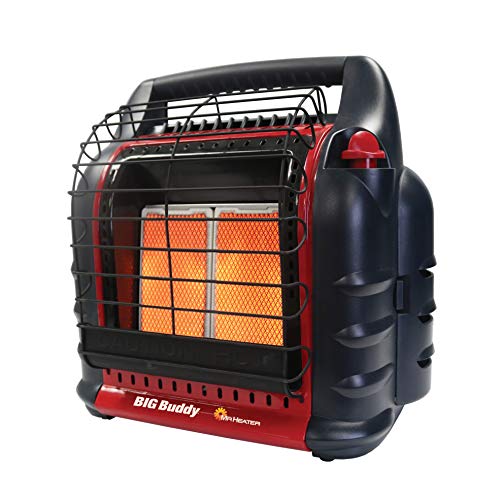
This propane tank heater offers three heat settings—4,000, 9,000, and 18,000 BTU—making it adaptable to different ice shack sizes and conditions. The manufacturer states a coverage range up to 450 square feet at higher output, though enclosed ice shacks typically require much less power.
Notable features include a dual tank connection option for extended runtime with larger tanks, a single control knob with piezo ignition for straightforward operation, and an automatic safety shutoff if the unit tips over. The design supports outdoor and semi-enclosed use, and it can run from larger propane tanks with an additional hose and filter.
Consider this model when you want variable BTU output and the flexibility to use different tank sizes. Verify ventilation and manufacturer guidelines for safe operation in small enclosed shelters.
Mr Heater F232017 MH9BXRV Buddy Grey Indoor-Safe Portable RV Radiant Heater
Call 888-896-7031 for Free Local HVAC Quotes – Compare and Save Today!
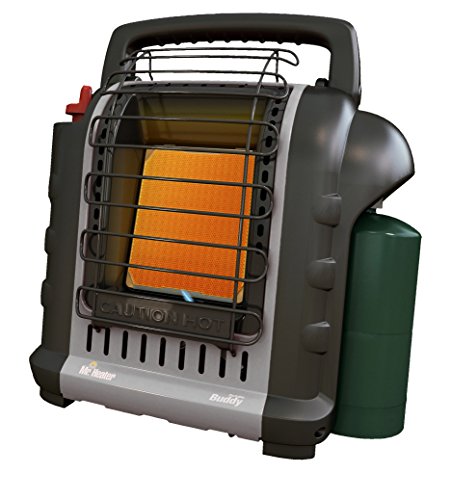
The MH9BXRV Buddy is a compact radiant propane heater with a 4,000–9,000 BTU range and approval for indoor/outdoor use. It is rated to heat spaces up to about 225 square feet, suitable for many ice shacks depending on insulation and occupancy.
Safety systems include automatic shutoff if tipped over, if the pilot light goes out, or if low oxygen is detected. The unit is nearly 100% efficient at burning propane cleanly, which reduces odors and soot inside small enclosures. The heater’s portability and integrated handles are convenient for moving between vehicles, shacks, and tents.
Choose this model when indoor-safe operation and built-in safety sensors are priorities for a small enclosed ice shack.
Heat Hog 4,000 BTU Portable Propane Radiant Space Heater

The Heat Hog is a small, propane-fueled radiant heater designed for compact spaces like ice shacks, garages, and tents. It runs on a 1 lb. LP cylinder and provides up to 4,000 BTU, stated to heat roughly 100 square feet. The angled head design directs warmth where needed.
Curved plaque technology claims to widen the heating area by about 33% compared to standard head designs, which helps deliver focused heat in a localized area. No electricity is required, which makes it useful for remote ice fishing shelters where power is not available.
Call 888-896-7031 for Free Local HVAC Quotes – Compare and Save Today!
This unit is appropriate when small footprint, directional heat, and non-electric operation are decisive factors for keeping anglers warm inside a compact ice shack.
Mr Heater 10,000BTU Ice House Black Propane Garage Vent Free Heater

This vent-free propane heater is designed for small enclosed spaces and produces 10,000 BTU per hour. The manufacturer lists suitability for areas up to about 250 square feet, which can match mid-size ice shacks or larger enclosed fishing shelters.
Vent-free units maximize in-room heat because combustion products are vented into the enclosure; therefore, careful attention to ventilation and CO monitoring is required. The unit is intended for liquid propane and emphasizes steady output for consistent interior warmth.
Consider this option for an ice shack when you want higher continuous BTU output in a vent-free configuration, and ensure appropriate safety measures and monitoring are in place.
Mr. Heater F242300 MH15C 10,000–15,000 BTU Cooker, Chrome

The MH15C Cooker is a higher-output propane cooker-style heater offering 8,000–15,000 BTU, with a hi-med-low regulator for adjustable heat. Its compact, durable chrome design was originally intended for cooking or multi-use heating, but it can serve as a powerful source of radiant heat in larger or poorly insulated ice shacks.
Features include an automatic safety shut-off and manual control settings for heat modulation. Because of the higher BTU range, attention to enclosure size, ventilation, and fuel storage is essential when used inside enclosed shelters.
This model is suitable when strong, adjustable heat output is needed and the operator ensures compliance with ventilation and safety guidelines for enclosed propane use.
Buying Guide: Choosing The Best Ice Shack Heater
Selecting the right ice shack heater requires assessing size, fuel logistics, safety, and usage patterns. Below are the core considerations to compare across models.
1. Fuel Type And Availability
Propane heaters are common for ice shacks due to portability and high BTU output without needing electricity. Consider cylinder size and connector options: 1 lb. disposable cylinders are easy for short trips; larger tanks extend runtime but need hoses and filters. Electric heaters require power access and are limited in remote locations.
2. Heat Output And Coverage
Match BTU to shack volume and insulation. Low-output (~4,000 BTU) units suit small single-occupant shacks. Mid-range (8,000–10,000 BTU) handles larger or less insulated shelters. Higher-output (15,000+ BTU) units deliver quick warmth but may be excessive for tiny enclosures and increase ventilation needs.
3. Safety Features
Critical safety systems include tip-over shutoff, low-oxygen (ODS) sensors, and flame failure protection. For enclosed spaces, prioritize models explicitly marked safe for indoor or RV use and always use a separate carbon monoxide monitor and proper ventilation practices.
4. Portability And Mounting
Consider weight, handle design, and whether the heater requires mounting or can sit on a floor/stand. Compact radiant units and buddy-style heaters are easier to position inside small shacks; cooker-style or larger tank-connected units may be less mobile.
5. Runtime And Fuel Efficiency
Compare the expected runtime on the fuel option you plan to use. Variable output models (multiple BTU settings) allow lower consumption and longer runtime. If you plan multi-day outings, larger tanks or the ability to connect to larger cylinders is helpful.
6. Heating Type: Radiant Vs. Convection
Radiant heaters warm people and objects directly and are efficient for localized warmth in small enclosures. Convection heaters heat the air and may provide more uniform room temperatures but can be slower to feel effective in an ice shack.
7. Vent-Free Considerations
Vent-free units deliver high apparent efficiency but produce combustion byproducts inside the shelter. Use only with strict adherence to ventilation recommendations, CO monitoring, and manufacturer guidance. For many anglers, vented or portable radiant units with ODS are safer choices.
8. Environmental And Altitude Effects
Cold temperatures and high altitude can affect ignition and performance. Some units may shut off above certain elevations. Check manufacturer specs when fishing at high-altitude lakes or in extreme cold.
9. Ease Of Use And Maintenance
Look for simple ignition systems, accessible controls, and clear instructions for connecting tanks or replacing cylinders. Regular maintenance—checking hoses, fittings, and cleaning—supports safe operation.
10. Regulatory And Shelter Compatibility
Ensure the heater complies with local regulations and is compatible with your specific ice shack construction. Some portable shelters may require specific clearance or mounting provisions for certain heater types.
Comparing across these perspectives—fuel logistics, BTU needs, safety features, and installation—will help identify the most appropriate heater for your ice shack use case. Always follow manufacturer instructions and use continuous CO monitoring when operating combustion heaters in enclosed spaces.
Tips for Getting the Best HVAC Prices
- Prioritize Quality Over Cost
The most critical factor in any HVAC project is the quality of the installation. Don’t compromise on contractor expertise just to save money. - Check for Rebates
Always research current rebates and incentives — they can significantly reduce your overall cost. - Compare Multiple Quotes
Request at least three estimates before making your choice. You can click here to get three free quotes from local professionals. These quotes include available rebates and tax credits and automatically exclude unqualified contractors. - Negotiate Smartly
Once you've chosen a contractor, use the proven strategies from our guide — How Homeowners Can Negotiate with HVAC Dealers — to get the best possible final price.