
The following guide reviews key components used with in-line coolant heaters: hoses, shut-off valves, control valves, and fittings. Each product summary focuses on specifications, compatibility, temperature and pressure ratings, and installation notes to help choose the right parts for auxiliary heater systems and coolant lines.
| Product | Key Feature |
|---|---|
| Boltigen 2Pack In-Line Shut Off Valve (5/8″) | Brass valve, -40°F to 230°F, 150 PSI steam / 600 PSI water |
| EVIL ENERGY 3/8″ Heater Hose (10FT), EPDM | Meets SAE J20R3, 100 PSI working, -40°F to 257°F |
| Boltigen 5/8″ Heater Hose (15FT), EPDM | 15 ft length, 100 PSI working, -40°F to 257°F |
| JEGS Inline Water Control Valve (5/8″) | Dash or wall mount, acts as temperature/flow control |
| Hirificing Heater Core T-Connector | OEM-size T-joint, upgraded plastic, leak-free replacement |
Content Navigation
- 2Pack In-Line Shut Off Valve For 5/8″ Heater Hose
- EVIL ENERGY 3/8″ Heater Hose 10FT Coolant Radiator Hose
- Boltigen 5/8inch Heater Hose 15 Feet Coolant Radiator Line
- JEGS Inline Water Control Valve 5/8″ Inlet/Outlet
- Hirificing Car Heater Core Hose Fitting Connector T-Connector
- Buying Guide: Choosing The Right Parts For An In-Line Coolant Heater
- Hose Size And Inner Diameter Matching
- Material Selection: EPDM Vs Silicone Vs Reinforced
- Temperature And Pressure Ratings
- Valve Type And Control Needs
- Fittings And OEM Compatibility
- Clamps And Connection Hardware
- Routing, Bend Radius, And Mounting
- Durability And Maintenance Considerations
- Multiple Comparison Perspectives
2Pack In-Line Shut Off Valve For 5/8″ Heater Hose

This Boltigen kit includes two 5/8″ brass inline shut-off valves and four stainless steel clamps. The valves use a plug-to-connect design for quick installation on heater lines and are intended for manual flow shutoff in auxiliary heater circuits.
- Materials And Ratings: Brass body with stainless clamps. Rated for -40°F to 230°F. Pressure ratings: 150 PSI for steam and 600 PSI for water, oil, and gas.
- Use Cases: Useful as an inline isolation point for heater cores, auxiliary diesel heaters, or coolant bypass loops where periodic shutoff is required.
- Installation Notes: Provides quick connections on both ends; ensure hose ID matches 5/8″ specification for a secure seal. Check clamp tightness and test for leaks under system pressure before finalizing.
EVIL ENERGY 3/8″ Heater Hose 10FT Coolant Radiator Hose
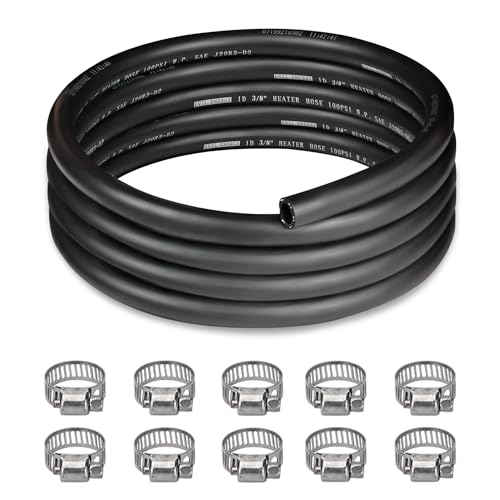
This EVIL ENERGY 3/8″ heater hose is made from EPDM rubber and meets SAE J20R3 class requirements. The 10-foot length and 100 PSI working pressure make it suitable for runs in passenger vehicles or light trucks connecting in-line heaters and heater cores.
- Dimensions & Material: 3/8″ ID (±0.4mm), OD ~5/8″. Constructed of EPDM rubber with reinforced wall meeting SAE 20R3 D-2 specifications.
- Temperature & Pressure: Operating range -40°F to 257°F. Working pressure 100 PSI, burst pressure 300 PSI. Suitable for typical automotive coolant environments.
- Durability: EPDM offers resistance to coolant and radiator additives; check compatibility if fluids other than standard antifreeze/water are used.
- Application: Good for rerouting or extending heater lines, and for use with inline shut-off or control valves where 3/8″ ID is required.
Boltigen 5/8inch Heater Hose 15 Feet Coolant Radiator Line
Call 888-896-7031 for Free Local HVAC Quotes – Compare and Save Today!
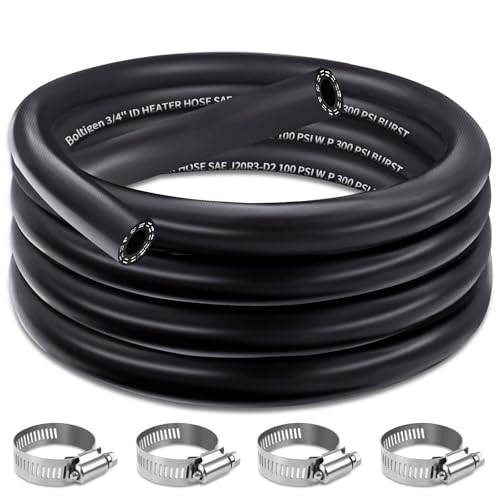
Boltigen’s 5/8″ heater hose provides a longer run suitable for larger vehicles or installations requiring extended routing. Constructed from EPDM with dual spiral layers for strength and flexibility.
- Size & Construction: ID 5/8″ (16mm), OD 0.94″ (24mm), 15 feet length. Two spiral layers enhance kink resistance and tensile strength.
- Temperature & Pressure: Rated -40°F to 257°F with a 100 PSI working pressure. Designed for standard water/antifreeze systems.
- Compatibility: Fits heater cores, auxiliary in-line heaters, and coolant bypass loops requiring 5/8″ lines. Use with compatible clamps or inline connectors.
- Installation Tips: Route away from high-heat exhaust surfaces and sharp edges. Maintain recommended bend radius to avoid premature wear.
JEGS Inline Water Control Valve 5/8″ Inlet/Outlet
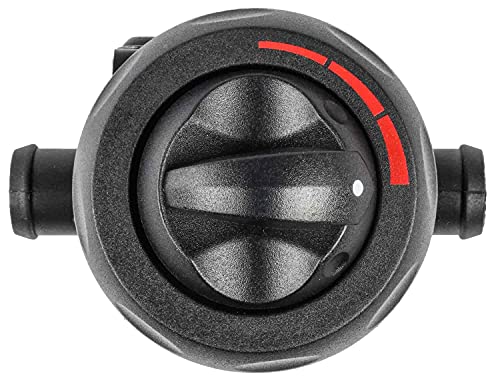
The JEGS valve is designed as a mechanical flow controller for auxiliary heater systems, acting as a temperature control by regulating hot coolant flow. It ships with a valve body, knob, and bezel for dash or wall mounting.
- Functionality: Manual valve that allows modulation of coolant flow to an auxiliary heater or heater core. Useful as a user-accessible control for cabin heat or aftermarket heater units.
- Fitment: 5/8″ inlet/outlet standard size matches common heater hoses. Intended for mounting on dash or bulkhead with included knob and bezel.
- Installation Guidance: Install with appropriate clamps and ensure valve orientation matches flow direction. Verify leak-tight connections at operating temperature.
- Operational Notes: Manual adjustment requires accessible mounting location. Not electrically actuated; consider if remote/automatic control is required.
Hirificing Car Heater Core Hose Fitting Connector T-Connector

This T-shaped heater hose junction is made to OEM dimensions for select Cadillac, Chevrolet, and GMC applications and serves as a replacement heater core inlet/outlet connector. It addresses leak points at firewall junctions and branching lines.
- Design & Material: Upgraded plastic material designed to withstand temperature cycling and resist cracking. Molded to fit factory hose sizes for a secure seal.
- Leak Prevention: Engineered sealing surfaces and accurate dimensions reduce chances of coolant leaks at critical firewall penetrations.
- Replacement Use: Suitable for replacing worn or cracked OEM fittings; verify part numbers for vehicle compatibility before purchase.
- Installation Tip: Use proper clamps and replace hoses if they show age. Inspect adjacent hoses and heater core connections when servicing.
Buying Guide: Choosing The Right Parts For An In-Line Coolant Heater
This buying guide covers critical considerations when selecting hoses, valves, and fittings for in-line coolant heater installations. Evaluate each category against your vehicle, heater type, and operating environment.
Call 888-896-7031 for Free Local HVAC Quotes – Compare and Save Today!
Hose Size And Inner Diameter Matching
Select hoses and valves with matching inner diameter (ID) to avoid bottlenecks or leaks. Common sizes in this list: 5/8″ and 3/8″. Confirm the heater inlet/outlet and existing heater core or pump plumbing before purchasing.
Material Selection: EPDM Vs Silicone Vs Reinforced
EPDM is standard for coolant with good resistance to antifreeze and heat; EPDM hoses (Boltigen, EVIL ENERGY EPDM models) meet SAE standards and are cost-effective. Silicone and reinforced designs offer broader temperature ranges and improved longevity but verify compatibility with your coolant type and pressure needs.
Temperature And Pressure Ratings
Match hoses and valves to expected system conditions. Typical automotive coolant ranges fall between -40°F and ~257°F for EPDM, with working pressures from 60–100 PSI. Kits with higher burst or working pressures provide additional safety margins for high-heat or pressurized systems.
Valve Type And Control Needs
Determine whether you need a simple isolation valve (shut-off) or a flow-control device. Shut-off valves like the Boltigen brass unit provide quick isolation; control valves like the JEGS unit allow manual modulation of flow and temperature. Consider mounting location and user access.
Fittings And OEM Compatibility
For firewall junctions and heater core interfaces, OEM-style connectors (Hirificing T-connector) ensure fit and seal. Verify part numbers or measure original connectors to confirm compatibility. Upgraded plastics can be durable but confirm temperature rating.
Clamps And Connection Hardware
Proper clamping prevents leaks. Stainless steel worm-drive clamps are common and corrosive-resistant. Some kits include clamps; otherwise, buy clamps sized to hose OD and avoid overtightening which can damage hose ends.
Routing, Bend Radius, And Mounting
Respect the minimum bend radius specified by the hose manufacturer to avoid kinking. Secure hoses away from exhaust, moving parts, and sharp edges. For valves, select a mounting location that allows access for operation and maintenance.
Durability And Maintenance Considerations
Inspect hoses and fittings periodically for cracks, swelling, or soft spots. When replacing one section, consider replacing adjacent aged components to prevent future failures. Reinforced hoses and higher-rated valves reduce maintenance frequency in demanding environments.
Tips for Getting the Best HVAC Prices
- Prioritize Quality Over Cost
The most critical factor in any HVAC project is the quality of the installation. Don’t compromise on contractor expertise just to save money. - Check for Rebates
Always research current rebates and incentives — they can significantly reduce your overall cost. - Compare Multiple Quotes
Request at least three estimates before making your choice. You can click here to get three free quotes from local professionals. These quotes include available rebates and tax credits and automatically exclude unqualified contractors. - Negotiate Smartly
Once you've chosen a contractor, use the proven strategies from our guide — How Homeowners Can Negotiate with HVAC Dealers — to get the best possible final price.
Multiple Comparison Perspectives
- Performance Perspective: Compare working and burst pressures and temperature ranges to expected system extremes.
- Compatibility Perspective: Match IDs and OEM dimensions; check fluid compatibility for non-standard coolants or additives.
- Installation Perspective: Consider included hardware, ease of installation (quick-connect vs. clamp), and mounting options for valves.
- Longevity Perspective: Evaluate material construction (EPDM vs silicone vs reinforced) and manufacturer standards (SAE J20R3 compliance).