
A functional garage heater keeps your workspace comfortable, protects tools and vehicles, and prevents pipes from freezing. Below is a concise comparison table of five top heaters suited for indoor garage use, followed by detailed product overviews and a practical buying guide to help you choose the right unit for your space.
| Heater | Type | Power / Key Feature |
|---|---|---|
| Dreo Space Heater | Portable Ceramic | 1500W, Quiet, Oscillation |
| GiveBest Electric Wall Heater | Wall / Floor Mount | 1500W, WiFi & Remote, Thermostat |
| Dr Infrared Carbon Heater | Infrared, Indoor/Outdoor | 900–1500W, IP55, Remote |
| Comfort Zone Ceiling Mount | Hard-Wired Ceiling Heater | 5000W, Fan-Forced, Durable Steel |
| Dr Infrared Portable Space Heater | Portable Infrared + PTC | 1500W, Dual Heating System |
Content Navigation
Dreo Space Heater 1500W Ceramic

This portable ceramic heater offers 1500W quick PTC heating suitable for smaller garage areas, workshops, or partially insulated spaces. It features 70° oscillation for wider distribution and a low noise level (~34dB) for uninterrupted work.
- Safety: ETL-certified; V0 flame-retardant materials, tip-over and overheat protections, 12-hour timer, and auto power-off features.
- Usability: Remote control, 5 heat modes, and compact portability for moving between garage and adjacent rooms.
- Coverage: Manufacturer suggests around 200 sq.ft. for effective warming; performance will vary with insulation and ceiling height.
For garages with moderate insulation or for supplemental spot heating near a workbench, this unit provides rapid, quiet warmth with multiple safety layers. Avoid using with extension cords as recommended.
GiveBest Electric Wall Heater WiFi

This wall or floor-mounted electric heater combines a slim profile with WiFi, remote, and touch control, making it flexible for garage layouts where floor space is limited.
Call 888-896-7031 for Free Local HVAC Quotes – Compare and Save Today!
- Mounting Options: Secure wall installation or use on the floor with retractable feet and handle for portability.
- Thermostat & ECO Mode: Precise thermostat with an ECO setting for energy-efficient maintenance of a set temperature.
- Smart Control: WiFi scheduling lets you preheat the garage before arriving at the space.
This heater is suited to garages where a mounted solution reduces trip hazards and provides a steady, controllable heat source. It’s helpful when you want programmable preheat or remote activation from a phone.
Dr Infrared Carbon Infrared Heater
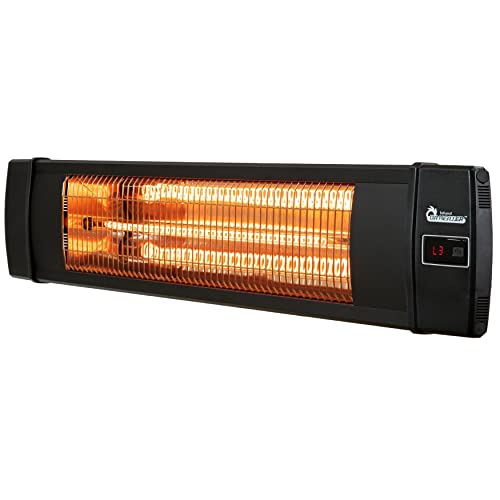
This carbon infrared heater is IP55-rated for both indoor and protected outdoor use, making it adaptable for garages with open doors or semi-exposed areas.
- Power Settings: Three power levels (900W, 1200W, 1500W) for variable output based on how much heat you need.
- Instant Infrared Heat: Infrared heating warms objects and people directly, which can feel more efficient in drafty or high-ceiling spaces.
- Plug-and-Play: Standard 120V operation and remote control simplify installation and day-to-day use.
Infrared units perform well when you need targeted warmth near a work area or when doors cycle open frequently, since radiant heat is less affected by air exchanges than convective systems.
Comfort Zone Ceiling Mount Garage Heater

This hard-wired ceiling-mounted heater is designed for workshops and garages that need a powerful, space-saving heat source. It delivers 5,000 watts on 240V circuits with fan-forced distribution.
Call 888-896-7031 for Free Local HVAC Quotes – Compare and Save Today!
- Space-Saving Design: Overhead installation frees floor area and minimizes obstruction in crowded garages.
- Durable Construction: Heavy-gauge steel housing and adjustable louvers allow targeted airflow and longevity in demanding environments.
- Safety Features: Includes thermal cut-out and overheat protection; ETL-compliant for commercial-style use.
For larger garages or uninsulated spaces where substantial continuous heat is needed, a hard-wired ceiling unit provides high output and even distribution, but professional electrical installation is required.
Dr Infrared Portable Space Heater 1500W
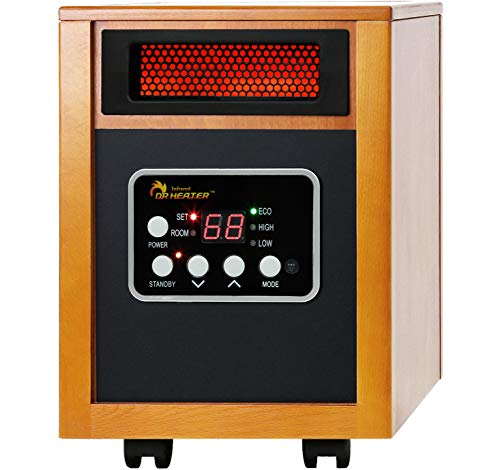
This portable unit combines infrared quartz tubing with a PTC element for a dual heating system that increases effective heat output compared to single-mode heaters.
- Dual Heating: Infrared plus PTC enhances perceived warmth and can heat a larger zone more effectively than PTC-only units.
- Safety & Controls: Tip-over and overheat protection, 12-hour timer, and remote control provide convenience and safety in garage settings.
- Quiet Operation: Low-noise blower and a 39 dB noise rating for use near workspace areas without disruptive sound.
As a portable option, this heater is useful for spot heating around a vehicle, bench, or specific work areas. It’s a versatile choice when you need a balance of power and mobility.
Buying Guide For Indoor Garage Heaters
Choosing the right garage heater depends on space, insulation, intended use, and safety priorities. Below are core factors to evaluate with practical comparisons.
Heat Type: Convective vs Radiant
Convective Heaters (ceramic, oil-filled, fan-forced) warm air, which is effective in enclosed, insulated garages for raising ambient temperature evenly.
Radiant/Infrared Heaters warm objects and people directly, offering faster perceived warmth in drafty or frequently opened-door garages. Infrared often feels more efficient for spot heating.
Power And Coverage
Match heater wattage to garage size. Portable 1500W units are common for smaller garages or spot heating. For larger or uninsulated garages, higher-output hard-wired units (e.g., 240V 5,000W) provide consistent warmth.
Mounting And Placement
Ceiling-Mounted heaters maximize floor space and distribute heat widely; ideal for workshops. Wall-Mounted units save floor space and offer centralized distribution. Portable units provide flexibility to move heat where needed but may be limited by cord length and safety considerations.
Installation And Electrical Requirements
Confirm required voltage and amperage. Large hard-wired units often require 240V dedicated circuits and professional installation. Plug-in 120V models are easier to deploy but limited in maximum output.
Safety Features
Look for ETL/UL listing, tip-over protection, overheat cutoff, thermal fuses, and robust housings. For garages with fuel or combustible storage, ensure proper clearance and consider units with low surface temps or guarded elements.
Controls And Smart Features
Thermostats, timers, and programmable schedules improve energy efficiency. WiFi or app control allows preheating before you arrive. For garages with intermittent use, ECO modes and precise thermostats reduce runtime and energy cost.
Durability And Environment
For partially exposed garages or carports, choose IP-rated or outdoor-capable heaters that tolerate moisture. Steel housings and corrosion-resistant components extend service life in harsher environments.
Noisy vs Quiet Operation
If you work on projects in the garage and need low noise, select units with low dB ratings or passive oil-filled models. Fan-forced units provide fast mixing but can be louder.
Cost Of Ownership
Consider both initial cost and operating expense. Higher wattage delivers faster heat but increases electrical use. Smart thermostats and programmable modes can lower long-term energy consumption.
Comparison Perspectives
- Small, Well-Insulated Garage: A 1500W ceramic or oil-filled heater provides adequate ambient warmth and lower runtime.
- Large Or Poorly Insulated Garage: Hard-wired 240V fan-forced heaters or multiple infrared units provide sustained heat and better coverage.
- Spot Heating For Workbench Or Vehicle: Infrared or portable dual-system heaters deliver targeted warmth quickly.
- Mixed-Use Garages With Frequent Door Openings: Infrared radiant heaters maintain worker comfort despite air exchanges.
- Smart Control Requirement: Choose units with WiFi or remote for preheat scheduling and improved convenience.
Use this guide to weigh heat type, output, installation needs, safety features, and control options when selecting an indoor garage heater that meets your functional requirements and safety standards.
Tips for Getting the Best HVAC Prices
- Prioritize Quality Over Cost
The most critical factor in any HVAC project is the quality of the installation. Don’t compromise on contractor expertise just to save money. - Check for Rebates
Always research current rebates and incentives — they can significantly reduce your overall cost. - Compare Multiple Quotes
Request at least three estimates before making your choice. You can click here to get three free quotes from local professionals. These quotes include available rebates and tax credits and automatically exclude unqualified contractors. - Negotiate Smartly
Once you've chosen a contractor, use the proven strategies from our guide — How Homeowners Can Negotiate with HVAC Dealers — to get the best possible final price.