
The following guide reviews five top-rated indoor/outdoor heaters suited for patios, garages, workshops, and commercial spaces. Each selection highlights heating type, safety features, power range, and installation options to help match heater performance with your space and use case.
| Product | Type | Heat Output | Best For |
|---|---|---|---|
| Mr. Heater Portable Buddy MH9BX | Propane Radiant | 4,000–9,000 BTU | Small enclosed spaces, campers |
| Dr Infrared Heater DR-238 | Electric Carbon Infrared | 900–1,500 W | Patio, garage, open-air dining |
| Mr Heater 4,000–18,000 BTU Dual Tank | Propane Radiant | 4,000–18,000 BTU | Larger patios, workshops |
| Dr. Infrared 10,260 BTU 3000W | Carbon Infrared (220–240V) | 10,260 BTU / 3000 W | Commercial patios, garages |
| Paraheeter Electric Infrared Patio Heater | Carbon Infrared Electric | 1,500 W | Wall/ceiling or tripod-mounted areas |
Content Navigation
Mr. Heater Portable Buddy MH9BX
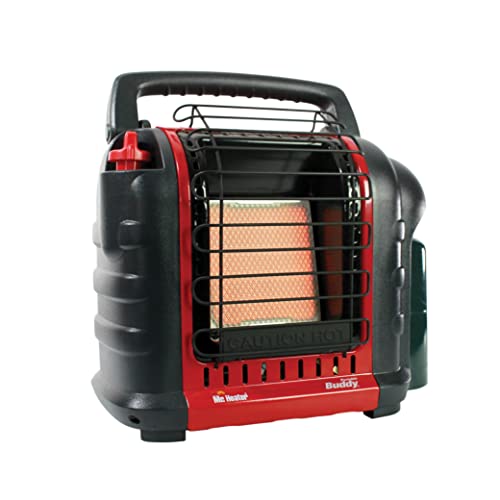
This portable propane radiant heater uses advanced infrared technology to heat objects and people rather than air, offering a sun-like warmth. It provides adjustable output from 4,000 to 9,000 BTUs and is rated to heat spaces up to about 225 sq. ft.
Safety is emphasized with an improved tip-over safety switch that audibly engages if the unit is shaken or tipped. Ignition is handled by a durable Piezo igniter, enabling match-free starts without batteries.
Ideal for campers, small workshops, and covered patios, this model delivers direct, focused heat that is efficient for spot warming. Its compact form factor favors portability and short-term heating tasks where ventilation meets safety requirements.
Dr Infrared Heater DR-238
Call 888-896-7031 for Free Local HVAC Quotes – Compare and Save Today!
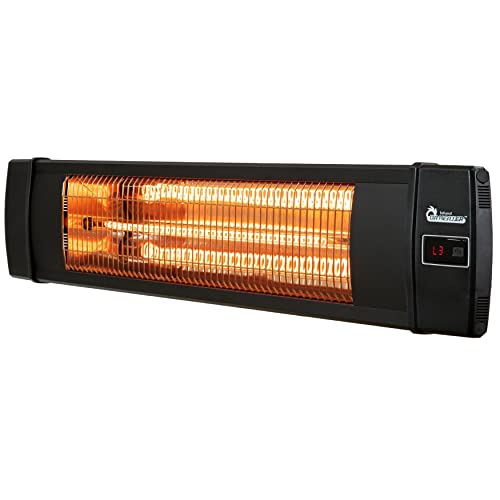
The DR-238 is an IP55-rated carbon infrared heater approved for both indoor and outdoor use, making it versatile for patios, garages, and open-air restaurants. It offers three power settings: 900W, 1200W, and 1500W.
Heat delivery is clean, instant, and odorless, suitable where combustion byproducts are undesirable. The unit plugs into a standard 120V outlet and includes a remote for convenient control.
Because it heats objects directly, this model is effective in partially open spaces where warming air is inefficient. The IP55 rating adds weather resistance, while multiple power levels support energy-conscious operation.
Mr Heater 4,000 To 18000 BTU Portable
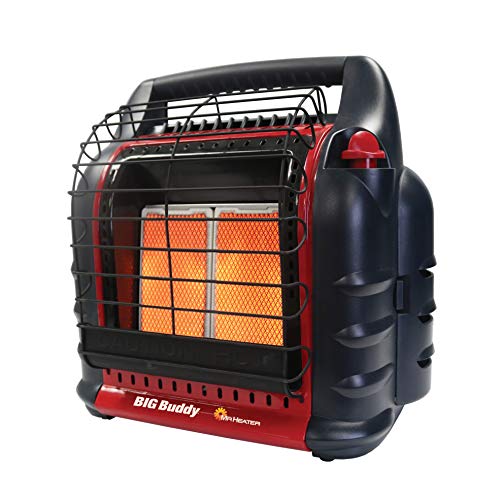
This model expands output options with 4,000, 9,000, or 18,000 BTU settings and supports connection to larger propane tanks (with an additional hose) for extended runtime. It claims coverage up to 450 sq. ft.
Operation uses a single control knob and a piezo sparking mechanism for reliable starts. Built-in automatic safety shutoff provides protection in tip-over events. The variable settings make it suitable for both small and larger outdoor-covered areas.
Call 888-896-7031 for Free Local HVAC Quotes – Compare and Save Today!
Its portability and higher max BTU make it appropriate when a flexible heat range is needed, such as moving between a shed, a screened porch, and a larger patio area that requires stronger output.
Dr. Infrared 10,260 BTU 3000W Heater
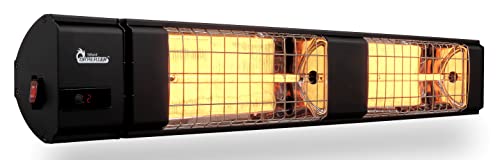
This high-output carbon infrared heater delivers 10,260 BTU / 3000 W and operates on 220–240V. The unit is IP55 weatherproof, intended for both commercial and residential patio setups.
Mounting options include ceiling or wall installation with provided hardware. A remote control simplifies switching between two power levels and engaging standby. The unit is described as odourless, making it suitable for enclosed garages and food-service outdoor spaces.
Higher power and a dedicated 220–240V supply align this heater for larger patios, restaurant outdoor areas, or workshops needing consistent, high-capacity infrared heating.
Paraheeter Electric Infrared Patio Heater

The Paraheeter offers a 1,500W carbon infrared element with multiple mounting options: wall, ceiling, or adjustable tripod. The design emphasizes easy assembly, a safety metal grille, and a grounded plug for electrical protection.
Infrared operation provides instant heating and efficiency by warming objects rather than air. The manufacturer highlights low operating cost compared with propane and no combustion fumes, which suits covered outdoor spaces and semi-enclosed areas.
Included safety features include tip-over automatic shutoff and a grille to reduce contact with hot surfaces. The tripod option increases placement flexibility when permanent mounting is not desired.
Buying Guide: How To Choose An Indoor/Outdoor Heater
Selecting the right indoor/outdoor heater depends on space size, mounting preferences, power source, safety requirements, and local codes. The following factors and comparison perspectives help narrow choices.
Tips for Getting the Best HVAC Prices
- Prioritize Quality Over Cost
The most critical factor in any HVAC project is the quality of the installation. Don’t compromise on contractor expertise just to save money. - Check for Rebates
Always research current rebates and incentives — they can significantly reduce your overall cost. - Compare Multiple Quotes
Request at least three estimates before making your choice. You can click here to get three free quotes from local professionals. These quotes include available rebates and tax credits and automatically exclude unqualified contractors. - Negotiate Smartly
Once you've chosen a contractor, use the proven strategies from our guide — How Homeowners Can Negotiate with HVAC Dealers — to get the best possible final price.
Heat Output And Coverage
- BTU vs Watts: Propane models are rated in BTU and tend to deliver higher short-term heat; electric infrared models are rated in watts. Match output to square footage—small enclosed areas typically need 4,000–9,000 BTU or 1,000–1,500W; larger patios and commercial spaces may need 10,000+ BTU or 3000W units.
- Infrared vs Convection: Infrared heaters heat objects and people directly, performing well in drafty or open-air conditions. Convection heaters warm air and are more efficient in fully enclosed spaces.
Power Source And Installation
- Propane: Offers portability and high BTU output without electrical dependency. Requires proper ventilation and propane tank handling. Check for safety features like ODS and tip-over shutoff.
- Electric (120V or 220–240V): Easier to install (plug-and-play for 120V) and cleaner for indoor-adjacent spaces. Higher-power electric units may require dedicated 220–240V circuits and professional installation for permanent mounts.
- Mounting Options: Wall or ceiling mounts save floor space and increase permanence. Tripods or portable stands provide flexibility but may need added safety consideration for tip-over protection.
Safety Features And Certifications
- Tip-Over Shutoff: Essential for portable units and tripod setups.
- Oxygen Depletion System (ODS): Important for propane heaters used in semi-enclosed areas to prevent hazardous atmospheres.
- IP Rating: For outdoor use, an IP55 or higher rating improves resistance to dust and water ingress.
- Grilles And Guards: Prevent accidental contact with heating elements, critical around children or pets.
Energy Use And Operating Cost
- Electric Infrared Efficiency: Often more efficient in open-air settings because infrared warms surfaces directly and wastes less energy heating moving air.
- Propane Runtime: Portable propane setups depend on tank size; dual-tank hookups extend runtime and reduce the need for frequent cylinder swaps.
- Multiple Power Settings: Adjustable output lets you balance warmth and energy consumption.
Use Case Comparisons
- Small Enclosed Spaces: Portable propane radiant heaters with safety shutoffs provide effective spot heat without electrical wiring.
- Partially Open Patios: Electric carbon infrared models with IP ratings are preferable for odorless, instant heat and simpler mounting.
- Large Commercial Areas: High-output 220–240V carbon infrared units deliver robust, continuous heat and can be ceiling-mounted for distributed coverage.
Maintenance And Longevity
- Propane Units: Inspect hoses, regulators, and connectors regularly. Replace worn parts and store tanks according to safety guidelines.
- Electric Units: Keep heating elements and grills free of debris. For mounted units, ensure fasteners remain tight and wiring intact.
- Warranty And Support: Check manufacturer warranty, replacement part availability, and support for installation guidance if needed.
Regulatory And Site Considerations
- Local Codes: Confirm local building and fire codes for propane and permanent electric installations, especially for commercial use.
- Ventilation: Any combustion heater requires adequate ventilation. Follow manufacturer clearances for safe operation.
- Insurance And Permits: For commercial venues, check insurance and permit requirements when installing fixed outdoor heating systems.