
Choosing an indoor-safe propane heater requires weighing heat output, safety features, and installation. Below is a quick comparison of five indoor-rated propane heaters selected for living rooms, garages, cabins, and small spaces. Use the table to match coverage and safety needs before reading detailed product summaries.
| Product | Type | BTU Range | Coverage | Key Safety Feature |
|---|---|---|---|---|
| Mr. Heater Portable Buddy MH9BX | Radiant Portable | 4,000–9,000 | Up To 225 Sq. Ft. | Tip-Over Safety Switch |
| Mr. Heater Little Buddy MH4B | Radiant Portable | 3,800 | Up To 95 Sq. Ft. | ODS & Tip-Over Protection |
| Mr. Heater MHVFBF20LPT | Blue Flame Vent Free Wall | 20,000 | Up To 700 Sq. Ft. | ODS (Oxygen Depletion Sensor) |
| ProCom ML100TBA-B | Ventless Blue Flame | 10,000 | Up To 500 Sq. Ft. | Thermostat Control |
| ProCom ML250TPA-B | Infrared Ventless | 25,000 | Up To 1,150 Sq. Ft. | Thermostat Control |
Content Navigation
- Mr. Heater Portable Buddy Heater MH9BX
- Mr. Heater Little Buddy MH4B 3800-BTU
- Mr. Heater MHVFBF20LPT 20,000 BTU Blue Flame
- ProCom ML100TBA-B Ventless Blue Flame 10,000 BTU
- ProCom ML250TPA-B Infrared Ventless 25,000 BTU
- Buying Guide: How To Choose An Indoor-Safe Propane Heater
- 1. Heat Output And Coverage
- 2. Heater Type: Radiant vs Blue Flame vs Infrared Ventless
- 3. Safety Features And Indoor Certification
- 4. Ventless vs Venting: Code And Ventilation Considerations
- 5. Ignition, Controls, And Thermostat Accuracy
- 6. Fuel Supply And Runtime
- 7. Installation And Mounting
- 8. Noise, Maintenance, And Durability
- 9. Indoor Air Quality And Monitoring
- 10. Comparison Perspectives
- Checklist Before Purchase
Mr. Heater Portable Buddy Heater MH9BX
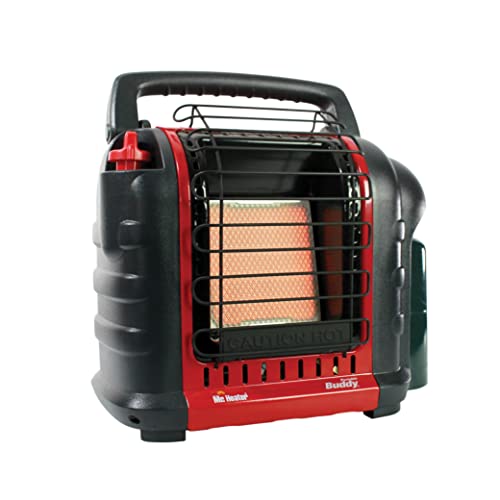
The Mr. Heater Portable Buddy MH9BX is a compact radiant propane unit offering adjustable settings from 4,000 to 9,000 BTU. Its infrared-style heat warms objects and people directly, providing coverage up to 225 sq. ft. The unit includes an improved tip-over safety switch that audibly engages when disturbed, supporting safer operation in workshops, garages, and RV spaces. Ignition uses a durable Piezo igniter for quick starts without matches or batteries. This model emphasizes portable radiant heat with enhanced mechanical safety and a straightforward control interface for variable warmth.
Mr. Heater Little Buddy MH4B 3800-BTU
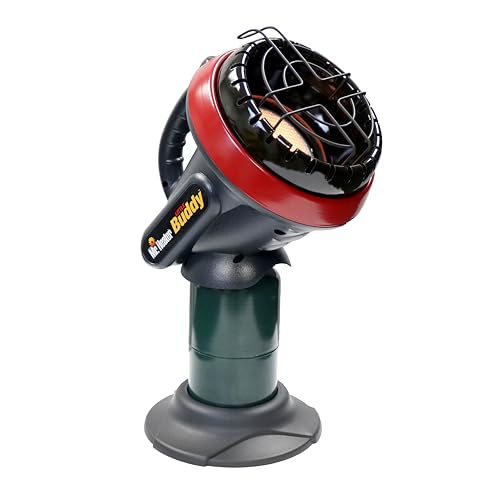
The Little Buddy MH4B is designed for small, enclosed spaces and outputs 3,800 BTU, covering about 95 sq. ft. It features a 45° heating angle for directional radiant warmth and operates effectively at elevations up to 7,000 feet. Safety systems include an automatic low oxygen shut-off (ODS), patented cross-thread protection, and an accidental tip-over shut-off. The unit is cordless and uses a one-pound cylinder runtime of roughly 5.6 hours at max BTU, making it suited for tents, small cabins, and compact rooms where certified indoor-safe operation is needed.
Mr. Heater MHVFBF20LPT 20,000 BTU Blue Flame
Call 888-896-7031 for Free Local HVAC Quotes – Compare and Save Today!
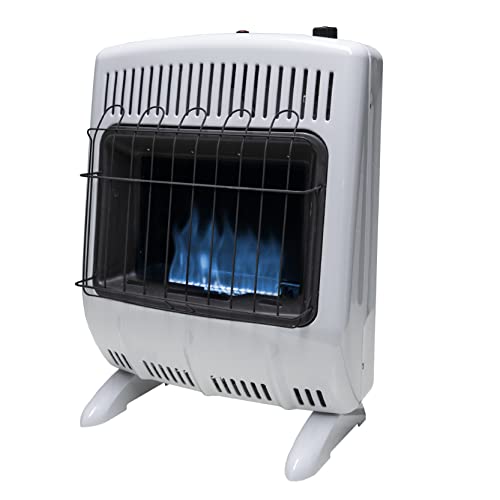
This vent-free blue flame wall heater delivers up to 20,000 BTU, warming rooms up to 700 sq. ft. It includes a built-in thermostat for fine temperature control and a battery-powered electronic ignition for simplified startup. Fuel consumption and runtime are managed with a listed consumption rate and this model is factory-equipped with an Oxygen Depletion Sensor (ODS), a standard safety measure for ventless indoor propane appliances. The heater is intended for permanent or semi-permanent wall installation in well-ventilated indoor spaces where vent-free appliances are permitted.
ProCom ML100TBA-B Ventless Blue Flame 10,000 BTU

The ProCom ML100TBA-B is a compact blue flame ventless space heater rated at 10,000 BTU, suitable for areas up to 500 sq. ft. It features thermostat-controlled High/Medium/Low settings and a slim profile for wall or floor placement using included hardware. The model is promoted for office and residential spaces where a discreet heat source is desired. Functionality centers on dependable thermostat control and flexible installation options with included mounting and base feet.
ProCom ML250TPA-B Infrared Ventless 25,000 BTU

The ProCom ML250TPA-B is a higher-output infrared ventless heater rated at 25,000 BTU, targeting spaces up to 1,150 sq. ft. Infrared heating radiates to objects and occupants, minimizing air temperature stratification. The unit offers thermostat control with multiple heat levels and a modern slim design for wall mounting or floor placement with the included feet. This heater emphasizes a balance of high-capacity infrared performance and indoor ventless convenience for larger rooms and open floor plans where vent-free appliances are allowed.
Buying Guide: How To Choose An Indoor-Safe Propane Heater
Selecting the right indoor-safe propane heater requires evaluating space size, safety features, fuel logistics, local codes, and installation needs. Below are key considerations and comparison perspectives to guide a balanced decision.
Call 888-896-7031 for Free Local HVAC Quotes – Compare and Save Today!
1. Heat Output And Coverage
BTU rating is the primary indicator of heating capacity. Match BTUs to room size: small rooms (3,800–9,000 BTU), medium rooms (10,000–20,000 BTU), and larger open areas or multiple rooms (20,000+ BTU). Manufacturers often provide square-foot coverage estimates—use them as starting points, and account for insulation, ceiling height, and drafts.
2. Heater Type: Radiant vs Blue Flame vs Infrared Ventless
- Radiant (portable): Directly warms people and objects; efficient for spot heating and outdoor-proximal use. Typically portable and uses piezo ignition.
- Blue Flame (ventless): Heats air more uniformly by warming the room air; often wall-mounted with thermostat control and suited for continuous indoor use where vent-free units are allowed.
- Infrared Ventless: Similar to radiant but designed for larger coverage; warms surfaces and occupants directly, reducing perceived lag in warmth in big spaces.
3. Safety Features And Indoor Certification
Prioritize units with Oxygen Depletion Sensors (ODS), tip-over shut-off, and certified indoor-safe labeling. ODS shuts off the appliance if oxygen levels drop to unsafe concentrations. Tip-over switches cut fuel when the unit is displaced. Check manufacturer specs and confirm compliance with local building or fire codes.
4. Ventless vs Venting: Code And Ventilation Considerations
Ventless (vent-free) appliances do not exhaust combustion byproducts outdoors. Many models are designed with safety systems for indoor use, but local jurisdictions may restrict ventless units in bedrooms, apartments, or certain building types. Confirm local regulations and consider mechanical ventilation or CO monitoring when using vent-free heaters.
5. Ignition, Controls, And Thermostat Accuracy
Piezo and electronic ignitions impact reliability. Thermostat control vs manual dial determines how stable room temperature remains. Look for precise thermostat control if maintaining a target temperature is important. Battery-powered electronic ignition can simplify restarts.
6. Fuel Supply And Runtime
Portable models commonly use 1 lb cylinders; stationary units often connect to larger cylinders or home propane. Check fuel consumption rates and estimated runtime at max BTU to plan cylinder swaps or line connections. If continuous heating is needed, assess compatibility with larger tanks or dual-tank hookups.
7. Installation And Mounting
Wall-mounted ventless models require secure installation and appropriate clearances. Portable radiant heaters offer plug-and-play flexibility but need stable surfaces and safe clearances from combustibles. Review manuals for required clearances, mounting hardware, and recommended placement.
8. Noise, Maintenance, And Durability
Radiant units are typically quiet, while some ventless models may have a mild fan or ignition noise. Consider ease of cleaning burner areas and access for servicing. Durable construction and reputable components (piezo igniters, sturdy guards) reduce long-term issues.
9. Indoor Air Quality And Monitoring
Combustion appliances can affect indoor air. Use carbon monoxide (CO) and oxygen depletion monitoring if using indoor propane heaters. Ventless appliances release water vapor and combustion byproducts into the room; adequate humidity and ventilation management help maintain indoor air quality.
Tips for Getting the Best HVAC Prices
- Prioritize Quality Over Cost
The most critical factor in any HVAC project is the quality of the installation. Don’t compromise on contractor expertise just to save money. - Check for Rebates
Always research current rebates and incentives — they can significantly reduce your overall cost. - Compare Multiple Quotes
Request at least three estimates before making your choice. You can click here to get three free quotes from local professionals. These quotes include available rebates and tax credits and automatically exclude unqualified contractors. - Negotiate Smartly
Once you've chosen a contractor, use the proven strategies from our guide — How Homeowners Can Negotiate with HVAC Dealers — to get the best possible final price.
10. Comparison Perspectives
- Small-Space, Portable Use: Choose compact radiant models with tip-over protection and easy ignition (e.g., 3,800–9,000 BTU units).
- Larger Rooms Or Continuous Home Heating: Higher BTU ventless blue flame or infrared wall heaters provide more steady heat with thermostat control.
- Temporary Or Mobile Installations: Portable buddy-style heaters are convenient; confirm ODS and tip-over safeguards for enclosed or mobile environments.
- Remote Or Elevated Locations: Consider models rated for higher elevations if you’re in mountainous terrain, as some units specify elevation performance.
Checklist Before Purchase
- Verify local codes for ventless appliance use in your area.
- Confirm required clearances and installation needs.
- Match BTU to square footage with room insulation in mind.
- Ensure the model has ODS and tip-over protection for indoor use.
- Plan fuel supply method and runtime expectations.
- Prepare CO and ODS monitoring if using ventless combustion indoors.