
Induction heating offers a fast, controllable, and flameless method to heat copper pipe for soldering, brazing, or loosening fittings. This guide compares five induction heater products and coil kits suited for copper pipe work, showing features, use cases, and buying considerations to help you choose the right tool.
| Product | Type | Best For |
|---|---|---|
| Denpetec Induction Heater, 12-48V 2500W | High-Power Module | High-current heating of rings and short copper sections |
| Enough Power Mini Induction Heating Machine 110V 1000W | Portable Handheld Unit | Auto body, small copper pipe joints, field repairs |
| Induction Innovations Mini-Ductor Venom HP | Professional Handheld Induction Heater | Localized, controlled heating for plumbing and HVAC |
| 10PCS Induction Heater Coil Kit (DIYAREA) | Coil Accessory Kit | Flexible coil sizes for different copper pipe diameters |
| VEVOR Induction Heater Coil Kit 8PCS | Coil Accessory Kit | Durable coils for repeated copper pipe heating |
Content Navigation
- Denpetec Induction Heater 12-48V 2500W ZVS Module
- Enough Power Mini Induction Heating Machine 110V 1000W
- Induction Innovations Mini-Ductor Venom HP (MDV-787)
- 10PCS Induction Heater Coil Kit For Magnetic Heater
- VEVOR Induction Heater Coil Kit 8PCS Most Used Coils
- Buying Guide: How To Choose An Induction Heater For Copper Pipe
Denpetec Induction Heater 12-48V 2500W ZVS Module

The Denpetec ZVS high-frequency induction heater module is a high-power PCB-based unit rated up to 2500W and designed for 12–48V input (recommended above 36V for peak power). It uses a copper-covered power line and multiple output terminals to increase current delivery and thermal transfer.
Key features listed include a grade PCB heating plate with stable performance, a robust copper-covered power line to enhance current handling and heating, and triple parallel copper output columns for connections. This configuration can deliver concentrated heating to short sections of copper pipe or rings when paired with an appropriate coil or workpiece coupling.
Practical considerations: this module requires a compatible power source and safe mounting. It’s suited for users comfortable with wiring and custom coil fixtures. The high current capability is beneficial for rapid heating of small copper assemblies but requires attention to cooling and electrical safety.
Enough Power Mini Induction Heating Machine 110V 1000W
Call 888-896-7031 for Free Local HVAC Quotes – Compare and Save Today!
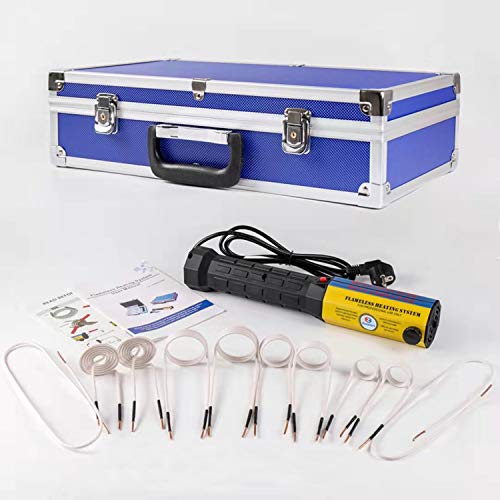
This handheld induction heating machine provides 110V operation at 1000W and is marketed for automotive repair and bolt removal. It includes multiple coils and is designed for flameless heating of metal fasteners and small components.
Features emphasize preheating stuck or rusted fasteners, removing paint coatings, and straightening small dents by localized heating. For copper pipe tasks, it can heat fittings and short pipe segments for soldering or loosening joints without an open flame, reducing heat risk to surrounding materials.
Practical considerations: the unit aims at mobility and fieldwork. Coil sizes and power are suitable for small- to medium-diameter copper pipes and fittings. Safety around solvents and nearby combustible materials should still be observed despite being flameless.
Induction Innovations Mini-Ductor Venom HP (MDV-787)

The Mini-Ductor Venom HP is a commercial-grade handheld induction heater supplied with three basic coils, a rugged carrier case, and an operations manual. It is built to remove nuts, bolts, bearings, adhesives, and other bonded parts using precise, localized induction heat.
Features highlight flame-free heating for improved workplace safety and reduced collateral damage. The tool is positioned for professional use, with emphasis on repeatability and control when heating metal components like copper fittings and pipe joints.
Call 888-896-7031 for Free Local HVAC Quotes – Compare and Save Today!
Practical considerations: this system is engineered for professionals requiring dependable, localized heating. It is effective for soldering or brazing copper pipe fittings where controlled, rapid heating is needed. The included coils and manual support safer operation practices and coil selection for different pipe diameters.
10PCS Induction Heater Coil Kit For Magnetic Heater

This DIYAREA coil kit supplies 10 coils of varying diameters plus two free-forming copper wires for use with magnetic induction heater bases. Coil diameters range from 20mm to 40mm and two long flexible coils are included for custom shapes.
Features include a 3.0mm copper coil diameter rated for heat resistance up to 1200℃ and advanced insulation/coating for abrasion protection. The range of sizes is useful for matching coil ID to different copper pipe diameters to maximize coupling efficiency.
Practical considerations: coils are accessories rather than standalone heaters. For copper pipe work, these coils enable tailored fits around pipe sections and fittings, improving induction coupling and heating speed. Compatibility with your induction generator should be confirmed before purchase.
VEVOR Induction Heater Coil Kit 8PCS Most Used Coils

The VEVOR coil kit contains eight commonly used coil lengths and diameters designed for repeated induction heating tasks. The listing cites coil durability, resistance to overheating, and flexibility to bend coils for specific applications.
Features highlight multiple coil lengths for different fastener and pipe sizes, heat-resistant construction for longevity, and flexibility to conform to varied shapes. These characteristics support repeated copper pipe work by enabling appropriate coil geometry for fittings and joints.
Practical considerations: like other coil kits, these are best paired with compatible induction power units. Selecting a coil that closely matches the pipe diameter improves heating efficiency and reduces cycle time for soldering or brazing copper pipes.
Buying Guide: How To Choose An Induction Heater For Copper Pipe
Choosing the right induction heater for copper pipe work requires assessing power, coil fit, portability, control, and safety. Below are key factors and comparison perspectives to guide your decision.
Tips for Getting the Best HVAC Prices
- Prioritize Quality Over Cost
The most critical factor in any HVAC project is the quality of the installation. Don’t compromise on contractor expertise just to save money. - Check for Rebates
Always research current rebates and incentives — they can significantly reduce your overall cost. - Compare Multiple Quotes
Request at least three estimates before making your choice. You can click here to get three free quotes from local professionals. These quotes include available rebates and tax credits and automatically exclude unqualified contractors. - Negotiate Smartly
Once you've chosen a contractor, use the proven strategies from our guide — How Homeowners Can Negotiate with HVAC Dealers — to get the best possible final price.
Power And Heating Capacity
- Wattage And Current: Higher wattage and current provide faster heating. For larger copper pipes or thicker fittings, choose units or modules that supply ample power. For small-diameter pipe and delicate work, lower power with fine control is adequate.
- Duty Cycle And Cooling: Consider how long the unit can run continuously. High-power modules often need active cooling or heat sinks. Continuous professional use benefits from systems with robust cooling designs.
Coil Compatibility And Geometry
- Coil Diameter: Optimal coupling occurs when the coil inner diameter closely matches the pipe diameter. Kits with multiple coil sizes increase versatility.
- Formable Coils: Flexible or free-form coils allow wrapping around elbows, T-fittings, or irregular shapes. Rigid coils provide consistent geometry for repeated identical tasks.
- Insulation And Heat Resistance: Coils rated for higher temperatures and with quality insulation last longer under repeated heating cycles.
Control And Precision
- Localized Heating: Handheld units and professional tools emphasize localized heat to protect surrounding materials (valves, insulation, or solder joints).
- Power Adjustment: Variable power settings or pulse control allow matching heat rate to the joint size and solder/braze material to prevent overheating.
Portability And Use Case
- Field Service vs. Shop Use: Portable 110V handheld units are suited to on-site plumbing and HVAC repairs. High-power modules may be better for bench setups where a dedicated power supply is available.
- Ergonomics: For frequent work, prioritize ergonomic handles and lighted or easy-to-hold designs to reduce operator fatigue.
Safety And Workplace Considerations
- Flameless Heating: Induction eliminates open flames, reducing fire risk around combustible materials, but hot metal and nearby flammable coatings still pose hazards.
- Electrical Safety: Confirm proper grounding, rated cables, and fuse protection for high-current modules. Follow manufacturer guidelines on ventilation and cooling.
- Material Compatibility: Induction heats conductive materials effectively. For copper pipe with brass or stainless fittings, note differing heating rates and adjust technique accordingly.
Compatibility With Existing Equipment
- Generator And Coil Matching: Coil kits require a compatible induction generator or handheld unit. Verify connector types and power ratings before mixing components.
- Accessories: Look for kits including multiple coils, cases, or manuals when planning a range of copper pipe jobs. Replacement coils and connectors increase long-term flexibility.
Cost Of Ownership And Durability
- Coil Lifespan: Durable copper coils with good insulation resist deformation and overheating. Cheaper coils may degrade faster under frequent use.
- Serviceability: Modules and professional units with replaceable coils or parts are easier to maintain and can reduce long-term operating costs.
Comparison Perspectives
- Speed vs. Control: High-power modules heat faster but can be harder to control. Handheld systems balance speed with targeted control for delicate plumbing tasks.
- Versatility vs. Specialization: Coil kits expand versatility across pipe sizes, while dedicated coil-and-unit combos may offer more plug-and-play reliability.
- Professional vs. DIY: Professionals may prefer robust systems like the Mini-Ductor for repeatable results and included safety documentation. DIYers may favor portable 110V units and multi-size coil kits for occasional repairs.
Practical Tips For Heating Copper Pipe
- Match Coil To Pipe: Use a coil whose inner diameter closely fits pipe or fitting for efficient coupling.
- Use Short Cycles: Apply heat in controlled bursts and check joint temperature frequently to avoid overheating flux or nearby plastic components.
- Protect Surroundings: Remove flammable materials and use heat shields where necessary—even with flameless induction heating.
- Test On Scrap: Practice on scrap copper to gauge heating time and coil placement before working on an installed system.