
Find reliable, high-output electric heaters designed for industrial spaces, garages, and workshops. This guide compares five durable models with fan-forced, ceiling, wall, and portable configurations to help match capacity, mounting style, and safety features to your workspace needs.
| Model | Type | Rated Output | Key Features |
|---|---|---|---|
| Comfort Zone 4,800W | Portable Fan-Forced | 4,800 W | Thermostat, heavy-gauge steel, overheat protection |
| NewAir 5,600W | Portable Fan-Forced | 5,600 W | Thermostat, auto-fan control, rugged steel |
| TEMPWARE 7,500W | Ceiling-Mount Shop Heater | 6,250–7,500 W | Digital controls, ECO mode, timer, remote |
| Comfort Zone 10,000W | Ceiling Heater | 10,000 W | Digital thermostat, remote, adjustable vents |
| HiCFM 4,800W | Fan-Forced Portable | 4,800 W (16,380 BTU) | Enclosed motor, thermostat, UL listed |
Content Navigation
- Comfort Zone 4,800W Fan-Forced Heater
- NewAir 5,600W Portable Garage Heater
- TEMPWARE 7,500W Ceiling Mount Heater
- Comfort Zone 10,000W Ceiling Heater
- HiCFM 4,800W Fan-Forced Heater
- Buying Guide: Choosing An Industrial Electric Space Heater
- 1. Heating Capacity And Coverage
- 2. Mounting Type: Portable Vs. Ceiling Vs. Wall
- 3. Electrical Requirements And Installation
- 4. Control Options And Energy Management
- 5. Durability And Construction
- 6. Safety Features And Certifications
- 7. Noise And Airflow Considerations
- 8. Maintenance And Serviceability
- 9. Application-Specific Factors
- 10. Comparing Models
Comfort Zone 4,800W Fan-Forced Heater

Type: Portable Fan-Forced Industrial Heater. Power: 4,800 watts. This unit emphasizes efficient heat distribution via a fan-forced design to spread warmth across large open areas. The integrated thermostat allows personalized temperature control, while the heavy-gauge steel construction targets long-term durability in demanding environments.
Safety features include overheat protection, and the package adds stable rubber feet and a carry handle for relocation. It uses a NEMA 6-30P plug for 240V circuits typical in many shops and garages. Suitable for spot heating and temporary placement where portability and robust casing are priorities.
NewAir 5,600W Portable Garage Heater

Type: Portable Fan-Forced Garage Heater. Power: 5,600 watts. Designed to heat larger single-bay garages and medium workshops, this model specifies coverage up to a stated square footage suitable for open work areas.
Call 888-896-7031 for Free Local HVAC Quotes – Compare and Save Today!
The heater features a thermostat with auto-fan temperature control so the fan engages as needed to maintain set temperatures. The steel body with a black powder-coated finish enhances scratch and scuff resistance for workshop environments. It includes a cord wrap and carrying handle for storage and repositioning.
TEMPWARE 7,500W Ceiling Mount Heater
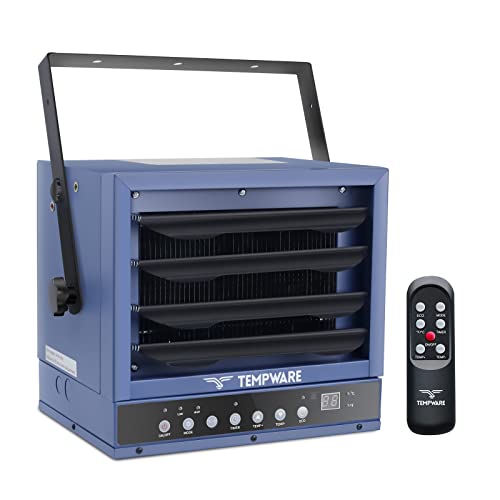
Type: Ceiling-Mount Fan-Forced Shop Heater. Power: 6,250–7,500 watts. This hardwired 240V unit is intended for permanent installation in larger workshops and commercial bays where sustained output and distributed airflow matter.
Key controls include a digital thermostat, ECO mode, 12-hour timer, and a full-function remote. Adjustable louvers and mounting angles let you direct airflow to work zones. Built-in overheat protection and a precise temperature sensor support automated operation for energy management in occupied spaces.
Comfort Zone 10,000W Ceiling Heater

Type: High-Output Ceiling-Mounted Heater. Power: 10,000 watts. Built for larger industrial or multi-car garage spaces, this fan-forced ceiling unit emphasizes broad, even heating and directed airflow through adjustable vents.
Call 888-896-7031 for Free Local HVAC Quotes – Compare and Save Today!
Features include a digital thermostat, 12-hour timer, remote control, and an enclosed motor design to help resist dust and debris encountered in workshops. The heavy-gauge steel body and fully sheathed heating elements are engineered to meet the durability and safety expectations of continuous use environments.
HiCFM 4,800W Fan-Forced Heater

Type: Portable Fan-Forced Industrial Heater. Power: 4,800 watts (rated around 16,380 BTU). The design highlights fast heating performance with claims of rapid temperature rise for modestly sized zones. An enclosed AC motor and aluminum blade combination aims to extend lifespan under frequent duty cycles.
The unit includes a thermostat and lists UL compliance. Manufacturer notes recommend industrial or workshop settings due to noise and output characteristics. Use cases include localized heating and supplementing central systems in spaces with intermittent occupancy.
Buying Guide: Choosing An Industrial Electric Space Heater
Selecting the right industrial electric heater requires matching capacity, mounting style, safety features, and electrical infrastructure to your environment. Below are the most important considerations and comparative perspectives.
1. Heating Capacity And Coverage
Wattage and BTU determine maximum heat output. Higher wattage (5,600 W to 10,000 W) suits larger garages and workshops. Estimate room heat load by volume and insulation level: poorly insulated spaces need more output. Check manufacturer guidance for square-foot coverage but validate against your ceiling height and heat loss.
2. Mounting Type: Portable Vs. Ceiling Vs. Wall
- Portable Fan-Forced: Offers flexibility and spot heating. Good for temporary workstations or multi-use spaces.
- Ceiling-Mount: Best for permanent centralized heating and more even distribution. Frees floor space and reduces trip hazards.
- Wall-Mount: Useful for directing heat into a specific zone without overhead mounting.
3. Electrical Requirements And Installation
Industrial heaters commonly require 240V circuits and specific plugs (e.g., NEMA 6-30P) or hardwiring. Confirm your facility’s panel capacity, circuit amperage rating, and whether an electrician is required for installation. Ceiling-mounted units often need hardwired 240V connections and secure structural supports.
4. Control Options And Energy Management
Thermostats, timers, ECO modes, and remote controls enable efficient operation. Automated temperature control reduces runtime and energy usage in intermittent-occupancy settings. For larger installations, consider models with setpoint accuracy and programmable schedules.
5. Durability And Construction
Look for heavy-gauge steel housings, enclosed motors, and powder-coated finishes for resistance to dust, debris, and impact. Fully sheathed heating elements and enclosed motors extend operational life in dirty or dusty environments.
6. Safety Features And Certifications
Important protections include overheat shutoff, tip-over switches (for portable units), grille safety, and UL/ETL listings. Enclosed motor designs reduce exposure to particulates. Verify listed safety standards and compliance with local codes for installation.
7. Noise And Airflow Considerations
Fan-forced units move heat quickly but produce sound; consider noise levels if people will work near the heater. Ducting or directional louvers can help direct airflow where needed without creating drafts at workstations.
8. Maintenance And Serviceability
Evaluate ease of access for cleaning or motor replacement. Units with replaceable parts and accessible filters or grilles are easier to service. Regular inspection of connections, elements, and mounting hardware maintains safe operation.
9. Application-Specific Factors
- Workshops With Dusty Processes: Prefer enclosed motors and sealed elements.
- Intermittent Use Garages: Portable units with thermostats and timers offer flexibility.
- Large Open Bays: Ceiling-mounted high-output units provide broader coverage and steady background heat.
10. Comparing Models
When comparing the presented models, weigh power output vs. installation complexity. Portable 4,800–5,600 W units are simple to deploy and good for spot heating. Ceiling units at 7,500 W and 10,000 W require permanent installation but deliver wider, more even heating for large spaces. Consider the balance between portability and centralized performance based on your workspace layout.
Tips for Getting the Best HVAC Prices
- Prioritize Quality Over Cost
The most critical factor in any HVAC project is the quality of the installation. Don’t compromise on contractor expertise just to save money. - Check for Rebates
Always research current rebates and incentives — they can significantly reduce your overall cost. - Compare Multiple Quotes
Request at least three estimates before making your choice. You can click here to get three free quotes from local professionals. These quotes include available rebates and tax credits and automatically exclude unqualified contractors. - Negotiate Smartly
Once you've chosen a contractor, use the proven strategies from our guide — How Homeowners Can Negotiate with HVAC Dealers — to get the best possible final price.