
Quick Overview: Infrared heaters vary by technology, application, and build quality. This guide profiles five notable models from leading manufacturers known for reliable infrared heating solutions. Use the summary table to compare key features at a glance before reading individual product profiles.
| Product | Manufacturer | Type / Use | Key Features |
|---|---|---|---|
| Dr. Infrared Heater 10,260 BTU | DR. INFRARED HEATER | Patio / Garage / Indoor-Outdoor | 3000W carbon infrared, IP55, remote, ceiling/wall mount |
| Dr Infrared DR-238 Carbon | DR. INFRARED HEATER | Patio / Restaurant / Backyard | 120V, 3 power settings, IP55, plug-in |
| ThermoMate Infrared Electric Patio Heater | thermomate | Patio / Deck / Garage (hardwired) | 3000W carbon fiber tube, 24-hour timer, remote |
| Heat Storm HS-1500-PHX-WIFI | Heat Storm | Wall-Mounted Indoor | Wi‑Fi control, touchscreen thermostat, tip-over safety |
| Könighaus Infrared Space Heater | Könighaus | Wall-Mounted Small Rooms | Multiple watt options, maintenance-free, 5-year warranty |
Content Navigation
- Dr. Infrared Heater 10,260 BTU Infrared Heater
- Dr Infrared Heater DR-238 Carbon Infrared Outdoor Heater
- ThermoMate Infrared Electric Patio Heater 3000W
- Heat Storm HS-1500-PHX-WIFI Infrared Heater Wi‑Fi Wall Mounted
- Könighaus Infrared Space Heater Wall-Mounted
- Buying Guide: How To Choose An Infrared Heater
Dr. Infrared Heater 10,260 BTU Infrared Heater
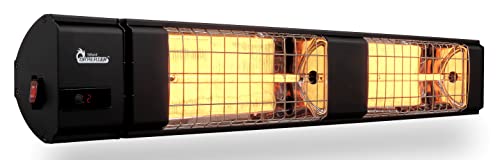
Brand: DR. INFRARED HEATER
This ceiling/wall-mount infrared heater uses a 3000W carbon infrared heating element rated at 10,260 BTU. It operates on 220–240V and includes a power plug and remote control. The unit is IP55 weatherproof, enabling both indoor and outdoor use such as patios, garages, and commercial spaces.
Installation supports both ceiling and wall mounting with included hardware. The remote controls two power levels and a standby mode. The heater emphasizes instant, odorless infrared heat that radiates directly to people and objects rather than heating air, useful for semi-open outdoor environments.
Notable specifications referenced in the listing: carbon infrared element, IP55 weatherproof rating, remote operation, and 220–240V compatibility. The product is aimed at larger coverage areas where a high-output, hardwired-capable or plug-ready heater is needed.
Call 888-896-7031 for Free Local HVAC Quotes – Compare and Save Today!
Dr Infrared Heater DR-238 Carbon Infrared Outdoor Heater
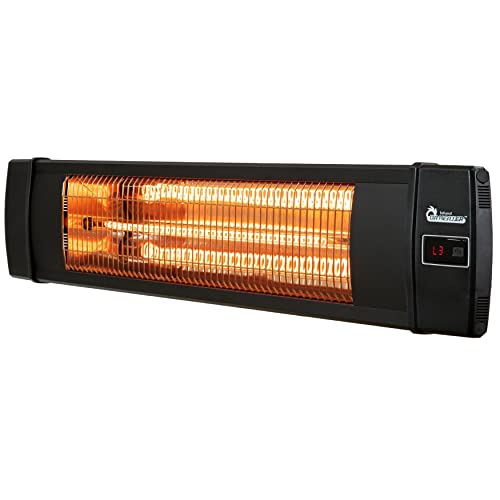
Brand: DR. INFRARED HEATER
The DR-238 is a 120V plug-and-go carbon infrared heater designed for patios, restaurants, and backyard spaces. It carries an IP55 rating for outdoor use and offers three power settings: 900W, 1200W, and 1500W.
Its listed strengths include clean, instant, and odorless heat, remote control operation, and suitability for both indoor and outdoor settings. This model targets locations that need flexible power settings and simple installation without hardwiring.
Because the heater directly radiates warmth to people and surfaces, it is effective in semi-open environments where convective heating would be less efficient. The DR-238 is positioned as a mid-range plug-in option for commercial and residential patios.
ThermoMate Infrared Electric Patio Heater 3000W

Call 888-896-7031 for Free Local HVAC Quotes – Compare and Save Today!
Brand: thermomate
The ThermoMate patio heater uses a 3000W carbon fiber heating tube designed for rapid infrared output with a claimed 3-second warm-up. It is intended for hardwired 240V installation and includes a remote with a 24-hour timer and selectable low/high modes (1500W/3000W).
Manufacturer details emphasize concentrated radiant heat that warms people and objects directly, reducing wind-related heat loss. The model lists recommended mounting height and estimated coverage area for outdoor and enclosed spaces.
Key features in the listing are the carbon fiber heating element, rapid heat onset, timer control, and remote operation. This product is tailored to installations where a dedicated circuit and permanent mount are acceptable.
Heat Storm HS-1500-PHX-WIFI Infrared Heater Wi‑Fi Wall Mounted

Brand: Heat Storm
The Heat Storm HS-1500-PHX-WIFI is a wall-mounted indoor infrared heater with Wi‑Fi control, touchscreen digital thermostat, and remote control. It’s designed for space-saving installation in bedrooms, kitchens, and offices.
Listed features include app-based temperature control, a digital thermostat for setpoint accuracy, and integrated safety features such as tip-over protection where applicable. The form factor suits supplemental zone heating where preserving floor space is important.
Key product details on the listing focus on connectivity and control options, making it suitable for users who prioritize remote management and smart home integration alongside direct infrared warming.
Könighaus Infrared Space Heater Wall-Mounted

Brand: Könighaus
Könighaus offers compact wall-mounted infrared panels in multiple wattages intended for small-to-mid-size rooms. The product emphasizes high performance across available watt options and a maintenance-free5-year manufacturer warranty.
Construction uses powder-coated aluminum for a low-profile aesthetic. The listing highlights longevity, quiet operation, and a simple form factor that integrates into modern interiors while delivering radiant heat for zones where convection heating is inefficient.
Applicable use-cases include bedrooms, offices, and other enclosed spaces where discreet, continuous infrared heating is preferred. The warranty and maintenance claims are central to the product positioning.
Buying Guide: How To Choose An Infrared Heater
Choosing the right infrared heater requires evaluating application, power, installation, safety, efficiency, and manufacturer support. Below are key considerations and comparison perspectives to guide purchase decisions.
1. Application And Coverage
- Indoor vs. Outdoor: Outdoor-rated units should have an IP rating (e.g., IP55/IP65). Indoor panels focus on zone heating and may include smart controls.
- Coverage Area: Match wattage to the target area. Higher wattage (1500W–3000W) suits patios and garages; lower wattage panels are for bedrooms or small offices.
- Mounting Orientation: Ceiling vs. wall vs. portable — ceiling/ wall-mounted infrared heaters concentrate radiant heat into a zone while portable units heat small rooms.
2. Heating Technology
- Carbon Infrared Elements: Known for quick warm-up and focused radiant output; common in patio heaters.
- Quartz and PTC: Often used in portable units; combos (quartz + PTC) can provide broader room heating and rapid response.
- Far Infrared: Penetrates more deeply in therapeutic pads; for room heating, far infrared panels can feel more uniform.
3. Power, Voltage, And Installation
- Voltage Requirements: Confirm 120V plug-in vs. 240V hardwired units. Hardwired models require electrical wiring and dedicated breakers.
- Wattage And Heat Output: Compare wattage ratings and manufacturer stated coverage. Higher wattage equals more radiant capacity, not necessarily hotter ambient air.
- Mounting Requirements: Check mounting hardware, recommended heights, and clearances for safe operation.
4. Durability, Weather Rating, And Safety
- IP Rating: For outdoor units, IP55/IP65 ratings indicate protection against dust and water ingress.
- Certifications: Look for ETL, UL or equivalent safety listings relevant to your region.
- Built-in Protections: Overheat shutoff, tip-over switches (for portable models), and thermal cutouts enhance safety.
5. Controls, Timers, And Smart Features
- Remote Control & Timers: Useful for scheduling and convenience; 24-hour timers are common in patio models.
- Wi‑Fi / App Control: Smart-enabled heaters allow remote temperature management and integration into home automation.
- Thermostatic Control: For indoor space heating, a digital thermostat gives better comfort control and energy savings.
6. Efficiency And Comfort Considerations
- Radiant vs. Convective Heating: Infrared targets people and objects directly; in drafty outdoor areas, radiant heating is often more efficient.
- Warm-Up Time: Carbon and specialized elements often provide near-instant radiant heat; factor warm-up speed into usability.
- Wind And Directionality: Outdoor heaters work best when aimed toward seating areas—wind disperses convective heat but has less effect on direct radiant warmth.
7. Warranty, Maintenance, And Manufacturer Support
- Warranty Length: Longer warranties can indicate manufacturer confidence—e.g., stated 5-year warranty on some panels.
- Maintenance Needs: Many infrared panels are maintenance-free; exposed elements may require occasional checks depending on environment.
- Replacement Parts & Service: Check availability of mounting hardware, replacement bulbs/elements, and customer support channels for your region.
8. Comparison Perspectives
- Commercial vs. Residential Use: Commercial settings may require higher durability, IP ratings, and installation by a professional electrician.
- Plug-In Flexibility vs. Hardwired Permanence: Plug-in heaters offer portability; hardwired units provide a cleaner, permanent solution for high-output patio heating.
- Smart Controls vs. Simplicity: Wi‑Fi and app features add convenience but can introduce network dependency; simple remote/timer units offer reliable manual control.
Final Note: Cross-check manufacturer specs such as IP rating, wattage, voltage, warranty, and listed safety certifications against your planned installation and local electrical codes before purchase.
Tips for Getting the Best HVAC Prices
- Prioritize Quality Over Cost
The most critical factor in any HVAC project is the quality of the installation. Don’t compromise on contractor expertise just to save money. - Check for Rebates
Always research current rebates and incentives — they can significantly reduce your overall cost. - Compare Multiple Quotes
Request at least three estimates before making your choice. You can click here to get three free quotes from local professionals. These quotes include available rebates and tax credits and automatically exclude unqualified contractors. - Negotiate Smartly
Once you've chosen a contractor, use the proven strategies from our guide — How Homeowners Can Negotiate with HVAC Dealers — to get the best possible final price.