
Choosing the right infrared heater wattage affects coverage, energy use, and installation. This guide compares common wattages and five representative models to help match wattage to room size and use. Summary table below lists the selected heaters and their key wattage options.
| Product | Wattage Options | Best For |
|---|---|---|
| Heat Storm Phoenix Infrared Space Heater | 750 / 1500 W | Small rooms, wall or floor mount |
| Dr Infrared Heater DR-238 Carbon Outdoor Heater | 900 / 1200 / 1500 W | Indoor/outdoor patios and garages |
| Dr Infrared Portable Space Heater (Original) | 1500 W | Large rooms requiring sustained output |
| Könighaus Infrared Space Heater | 300 W / 600 W | Small rooms, energy-efficient wall mount |
| Dr. Infrared 3000W Infrared Heater | 3000 W (220–240V) | Large outdoor areas, commercial patios |
Content Navigation
- Heat Storm Phoenix Infrared Space Heater With Attachable Feet
- Dr Infrared Heater DR-238 Carbon Infrared Outdoor Heater
- Dr Infrared Heater Portable Space Heater, Original, 1500-Watt
- Könighaus Infrared Space Heater 600W Wall-Mounted
- Dr. Infrared Heater 10,260 BTU 3000W Indoor/Outdoor Heater
- Buying Guide: Choosing The Right Infrared Heater Wattage
Heat Storm Phoenix Infrared Space Heater With Attachable Feet

This model offers dual power modes: 1500 watts for full output and 750 watts for reduced consumption. Its rated output (about 5200 BTU) targets small rooms or offices. The heater uses a patented heat exchanger and HMS technology to deliver infrared warmth without reducing humidity or oxygen. The grill remains safe to touch. Installation options include wall mounting or floor use with removable feet, adding flexibility for space-limited rooms. The configuration allows selecting lower wattage for energy savings or higher wattage for faster heat-up.
Dr Infrared Heater DR-238 Carbon Infrared Outdoor Heater
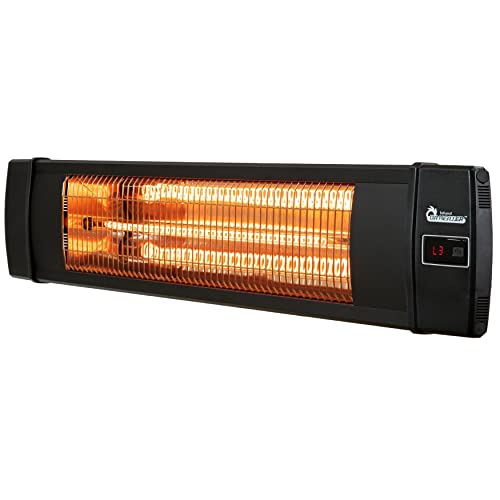
The DR-238 provides three power settings: 900W, 1200W, and 1500W. It is IP55 rated for indoor and outdoor use, making these wattage choices useful for adapting heat intensity to open-air patios or semi-enclosed garages. Infrared carbon elements provide clean, instant, odorless heat. The multiple wattage settings let users balance desired warmth with power consumption depending on ambient conditions and coverage needs.
Dr Infrared Heater Portable Space Heater, Original, 1500-Watt
Call 888-896-7031 for Free Local HVAC Quotes – Compare and Save Today!
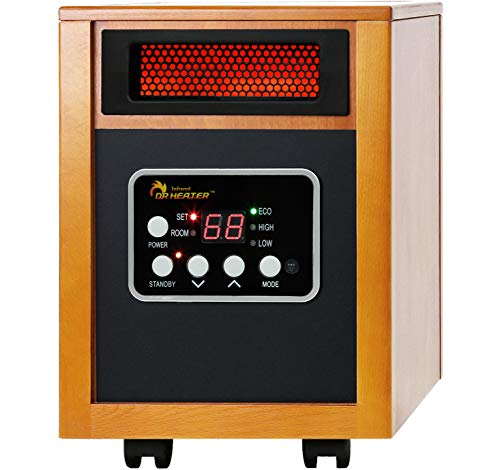
This portable unit runs at 1500 watts and uses a dual heating system (infrared quartz tube + PTC) to increase effective heat output. It’s rated near 5200 BTU and includes features like tip-over and overheat protection, 12-hour timer, and a quiet blower. The single higher-wattage design is suitable when consistent, sizeable heat delivery is required for larger rooms.
Könighaus Infrared Space Heater 600W Wall-Mounted

Könighaus offers smaller wattage choices such as 300W and 600W, with stated coverage estimates: 300W for ~43–86 ft² and 600W for ~86–142 ft². The unit emphasizes energy efficiency and a compact wall-mounted profile. Lower wattages are often sufficient for insulated bedrooms, small offices, or supplemental heating where continuous, gentle infrared warmth is preferred over rapid high-output heat.
Dr. Infrared Heater 10,260 BTU 3000W Indoor/Outdoor Heater
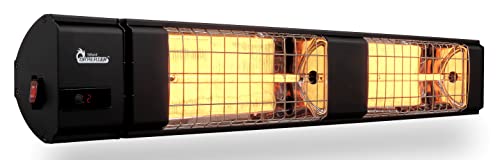
This high-power model delivers 3000 watts (10,260 BTU) using a carbon infrared element and is designed for 220–240V circuits. It’s IP55 weatherproof and intended for large patios, commercial spaces, garages, and heavy-duty applications. Multiple power levels and a remote make it adaptable, and the high wattage supports wider coverage and faster temperature rise in open or poorly insulated environments.
Buying Guide: Choosing The Right Infrared Heater Wattage
Wattage determines heating capacity, operating cost, and suitable application. Match wattage to room size, insulation, and intended use. Below are key considerations and comparison perspectives to guide selection.
Call 888-896-7031 for Free Local HVAC Quotes – Compare and Save Today!
Tips for Getting the Best HVAC Prices
- Prioritize Quality Over Cost
The most critical factor in any HVAC project is the quality of the installation. Don’t compromise on contractor expertise just to save money. - Check for Rebates
Always research current rebates and incentives — they can significantly reduce your overall cost. - Compare Multiple Quotes
Request at least three estimates before making your choice. You can click here to get three free quotes from local professionals. These quotes include available rebates and tax credits and automatically exclude unqualified contractors. - Negotiate Smartly
Once you've chosen a contractor, use the proven strategies from our guide — How Homeowners Can Negotiate with HVAC Dealers — to get the best possible final price.
Coverage And Wattage Rules Of Thumb
- Small Rooms (up to ~150 ft²): 300–1500 W depending on insulation and ceiling height. Low-watt models (300–600 W) can suffice for well-insulated bedrooms. Higher single-room units (1000–1500 W) provide faster warm-up.
- Medium Rooms (150–300 ft²): 1500 W and up; consider multiple lower-watt units or 1500 W models with fan assistance for better distribution.
- Large Rooms & Outdoor Areas: 1500–3000 W or commercial-grade heaters. Outdoor spaces may require 2000 W+ and directional heating due to heat dissipation.
Energy Efficiency And Operating Cost
- Wattage is direct measure of power draw: higher wattage heats faster but uses more electricity per hour at full power.
- Variable wattage models or multiple settings (e.g., 750/1500 W or 900/1200/1500 W) allow balancing comfort and cost.
- Infrared heaters heat objects and people directly, often allowing lower air temperature and reduced runtime compared with convection heating.
Installation And Power Supply Considerations
- Check voltage: Most portable units use 120V (North America). High-wattage commercial models may require 220–240V circuits.
- Wall- or ceiling-mounted units provide directional heating; wattage choice should reflect mounting and coverage pattern.
- For outdoor or damp locations, choose IP-rated units and consider higher wattage to offset heat loss.
Use Case Comparisons
- Bedroom / Office: 300–1000 W wall-mounted units deliver comfortable radiant heat without noise; choose models with thermostat control for steady comfort.
- Living Room / Large Interior Space: 1500 W portable or multiple units; look for models with fans or dual heating systems to improve distribution.
- Patio / Garage: 1500–3000 W depending on openness; IP55 weatherproofing and directional mounting help concentrate heat where needed.
- Reptile / Animal Heat Lamps: Low-wattage infrared emitters (e.g., 100W) provide localized basking heat without visible light — choose based on species and enclosure size.
Safety And Controls
- Look for tip-over and overheat protection, especially in portable units.
- Thermostats, timers, and remote controls improve energy management and convenience.
- Ensure surface temperatures and grill designs are appropriate for households with children or pets.
Practical Selection Steps
- Measure area and assess insulation and ceiling height.
- Decide if fixed mounting or portable use is preferred.
- Match wattage to area using the rules of thumb and consider models with multiple power settings for flexibility.
- Verify electrical supply (120V vs 220–240V) and install per manufacturer guidance.