
Infrared radiant heaters provide direct, sun-like warmth by heating objects and people rather than air. Below is a quick comparison of five relevant infrared radiant heaters selected for indoor and outdoor use, portability, and safety features.
| Product | Type | Power/Settings | Safety/Notes |
|---|---|---|---|
| BLACK+DECKER Infrared Quartz Tower Heater | Indoor Tower | 750W / 1500W | Tip-over & Overheat Shutoff |
| Dr Infrared Heater DR-238 Carbon | Indoor/Outdoor | 900W / 1200W / 1500W | IP55 Rated; Remote |
| Comfort Zone Indoor Tower Heater | Indoor Tower | 1500W, Dual Quartz | Fan-assisted distribution |
| Comfort Glow Infrared Quartz Heater | Indoor Portable | 1500W, Dual Quartz | Lightweight, Carry Handle |
| SUNKOS Far-Infrared Panel Heater | Indoor Panel (Far-IR) | Thermostatic Control, Wide Range | Aramid Mesh, Tip-Over & Overheat |
Content Navigation
- BLACK+DECKER Infrared Quartz Tower Heater
- Dr Infrared Heater DR-238 Carbon Infrared Outdoor Heater
- Comfort Zone Indoor Tower Space Heater
- Comfort Glow Indoor Radiant Quartz Heater
- SUNKOS Far-Infrared Panel Heater
- Buying Guide: How To Choose An Infrared Radiant Heater
- 1. Intended Location And Weather Resistance
- 2. Infrared Type: Near, Mid, Or Far-Infrared
- 3. Power, Coverage, And Zone Heating
- 4. Heat Distribution: Fan-Assisted Vs. Radiant-Only
- 5. Safety Features
- 6. Controls And Convenience
- 7. Noise And Fan Operation
- 8. Portability, Mounting, And Aesthetics
- 9. Energy Efficiency And Running Costs
- 10. Maintenance And Durability
- Comparative Considerations
BLACK+DECKER Infrared Quartz Tower Heater

This compact tower model uses dual quartz tubes plus an integrated fan to deliver fast, focused infrared radiant heat. It offers two power settings — Low (750W) and High (1500W) — plus an adjustable manual thermostat for basic temperature control.
Safety features include cool-touch housing, a power indicator, overheat shutoff, and tip-over auto shutoff. The unit is designed for personal or small-room use, providing an efficient way to warm occupants and nearby objects rather than attempting to heat an entire home by convection alone.
Dr Infrared Heater DR-238 Carbon Infrared Outdoor Heater
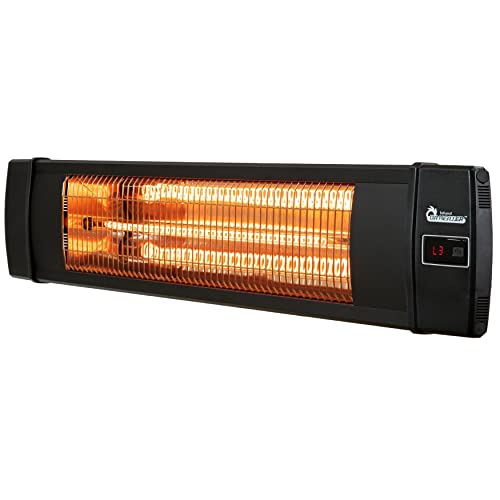
This model is rated IP55 for indoor and outdoor installation, making it suitable for patios, decks, garages, and open-air dining areas. The heater uses clean, odorless carbon infrared heat and provides three power options: 900W, 1200W, and 1500W.
Call 888-896-7031 for Free Local HVAC Quotes – Compare and Save Today!
It operates on standard 120V and includes a remote control for convenience. Because it generates direct radiant warmth and is designed to withstand outdoor conditions, this unit fits scenarios where wind resistance and moisture protection are important considerations for effective heating performance.
Comfort Zone Indoor Tower Space Heater

The Comfort Zone tower uses dual quartz tubes and fan assistance to rapidly emit and distribute radiant infrared heat. Its coverage is stated in the 200–300 square foot range, making it appropriate for medium rooms.
Controls are simple top-mounted knobs for thermostat and heat settings. The fan-assisted dispersion provides more even warming of room occupants and surrounding objects compared to non-assisted radiant units, helping reduce cold spots in occupied areas.
Comfort Glow Indoor Radiant Quartz Heater

This lightweight portable model features dual quartz elements designed to provide powerful infrared radiant heat suitable for spaces up to about 250 square feet. The compact footprint and integrated carry handle make it easy to move between rooms.
Call 888-896-7031 for Free Local HVAC Quotes – Compare and Save Today!
Because it emphasizes radiant quartz heating, it targets quick warmth for nearby occupants and objects. The unit’s portability and compact dimensions make it a practical option for spot heating where temporary or room-to-room use is common.
SUNKOS Far-Infrared Panel Heater

This panel heater uses a carbon nano heating film to emit far-infrared wavelengths (3–15 micrometers). It is described as a quiet, no-fan design suitable for large rooms up to 300 sq. ft. and includes a thermostatic display for precise temperature control.
Safety-focused construction uses aramid mesh and space-class flame-retardant materials. Built-in protections include tip-over shut-off, overheat protection, and a grounded plug. The heater is positioned as a health-oriented far-IR option that heats people and objects gently and steadily.
Buying Guide: How To Choose An Infrared Radiant Heater
When selecting an infrared radiant heater, compare units across use case, power output, coverage, and safety. The right heater depends on where and how you plan to use it.
1. Intended Location And Weather Resistance
Indoor-only units prioritize compactness and quiet operation. For patios, garages, or semi-covered zones, choose an IP-rated or outdoor-rated unit designed to tolerate moisture and wind. Outdoor models often use carbon or ceramic elements and may be sealed for weather resistance.
2. Infrared Type: Near, Mid, Or Far-Infrared
Quartz and carbon heaters typically emit near- to mid-infrared wavelengths that heat quickly for spot warming. Far-infrared panels
3. Power, Coverage, And Zone Heating
Look at wattage and manufacturer coverage estimates. 1500W is a common maximum for portable electric models and is suited for single-room or spot heating. For larger or open outdoor areas, multiple units or higher-output outdoor-rated heaters are more effective.
4. Heat Distribution: Fan-Assisted Vs. Radiant-Only
Radiant-only heaters warm objects directly and create localized warmth. Fan-assisted radiant towers combine direct infrared heating with forced airflow to improve distribution across a room. Choose fan assistance if you need more even warming or fewer cold spots.
5. Safety Features
Prioritize units with tip-over shutoff, overheat protection, cool-touch exteriors, and certifications from recognized test labs. For homes with children or pets, look for grills and materials designed to reduce accidental burns and fires.
6. Controls And Convenience
Consider adjustable thermostats, multi-level heat settings, timers, and remote controls. Digital thermostats and programmable modes improve energy efficiency by maintaining target temperatures without constant manual adjustments.
7. Noise And Fan Operation
If quiet operation is important (bedrooms, offices), prefer no-fan or low-noise
8. Portability, Mounting, And Aesthetics
Portable heaters should be lightweight with handles for room-to-room mobility. Flat-panel and wall-mountable units save floor space and offer permanent placement options. Consider design and finish if the heater will be visible in living spaces.
9. Energy Efficiency And Running Costs
Infrared heaters can be energy-efficient for spot heating because they heat occupants and objects directly. Use targeted heating rather than heating entire homes to reduce energy use. Models with thermostats and timers further reduce runtime and energy consumption.
10. Maintenance And Durability
Check for easily replaceable elements and robust housings. Outdoor-rated and commercial-grade units generally use more durable materials and require less frequent replacement in harsher environments.
Tips for Getting the Best HVAC Prices
- Prioritize Quality Over Cost
The most critical factor in any HVAC project is the quality of the installation. Don’t compromise on contractor expertise just to save money. - Check for Rebates
Always research current rebates and incentives — they can significantly reduce your overall cost. - Compare Multiple Quotes
Request at least three estimates before making your choice. You can click here to get three free quotes from local professionals. These quotes include available rebates and tax credits and automatically exclude unqualified contractors. - Negotiate Smartly
Once you've chosen a contractor, use the proven strategies from our guide — How Homeowners Can Negotiate with HVAC Dealers — to get the best possible final price.
Comparative Considerations
- Choose outdoor-rated (IP55 or similar) models for patios and open-air environments to handle moisture and drafts.
- Choose fan-assisted towers when you want faster, more even output in medium-sized rooms.
- Prefer far-infrared panels
- For portability and targeted spot heating, compact quartz or carbon heaters are practical and often lighter.
- Always verify safety features and relevant certifications before purchase.