
Choosing the best indoor gas heater depends on room size, fuel type, installation, and safety features. The table below summarizes the top indoor-capable gas heaters selected for reliable heating performance across homes, garages, workshops, and sunrooms.
| Product | Type | Fuel | Coverage |
|---|---|---|---|
| Mr. Heater Portable Buddy MH9BX | Portable Radiant | Propane | Up To 225 Sq. Ft. |
| Mr Heater 4K–18K Dual Tank Unit | Portable LP Heater | Propane | Up To 450 Sq. Ft. |
| Dyna-Glo IR30NMDG-1 Wall Heater | Infrared Wall | Natural Gas | Up To 1,000 Sq. Ft. |
| Mr. Heater Vent Free Blue Flame 20K | Vent-Free Wall | Propane | Up To 700 Sq. Ft. |
| ProCom Natural Gas Ventless 30K | Ventless Blue Flame | Natural Gas | Up To 1,400 Sq. Ft. |
Content Navigation
Mr. Heater Portable Buddy MH9BX
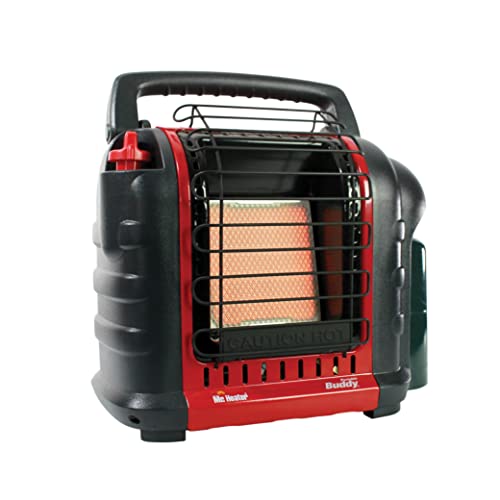
This portable radiant propane heater uses infrared technology to warm objects and people directly. It provides adjustable output between 4,000 and 9,000 BTU and is suited for rooms up to 225 sq. ft.
- Radiant Heat: Direct, sun-like warmth—good for focused heating in small indoor spaces.
- Safety: Improved tip-over safety switch that audibly engages if the unit is tipped or shaken.
- Ignition: Durable Piezo igniter for match-free startup; no batteries required.
- Applications: Camping, workshops, small garages, and indoor-outdoor transitional spaces when ventilation is appropriate.
Consider ventilation and propane tank placement for indoor use per local codes. The unit’s compact design and simple controls make it practical for temporary or supplemental heating needs.
Mr Heater 4000 To 18000 BTU Unit
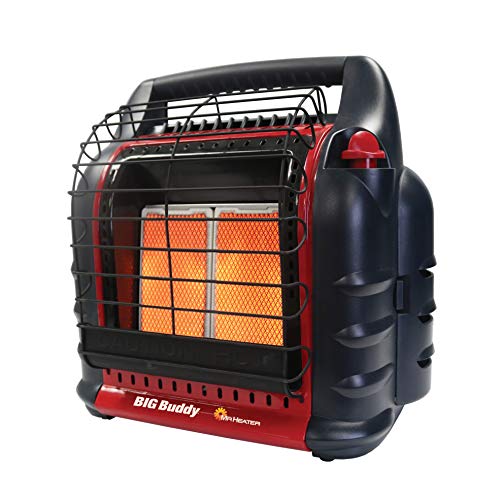
This adjustable propane heater offers three heat settings: 4,000, 9,000, and 18,000 BTU, extending coverage to roughly 450 sq. ft. It supports larger tanks up to 40 lbs with an optional hose and filter.
Call 888-896-7031 for Free Local HVAC Quotes – Compare and Save Today!
- Versatile Heat Levels: Selectable output supports smaller rooms to larger enclosed areas.
- Dual Tank Connection Option: Enhances runtime and is useful for extended indoor applications following code-compliant installation.
- Safety: Piezo ignition with automatic tip-over shutoff.
- Applications: Porches, sheds, workshops, or as supplemental heat in open-concept spaces where venting and clearance guidelines are met.
Because of the higher BTU range, confirm room volume, combustible clearance, and local fuel installation rules before permanent indoor placement.
Dyna-Glo IR30NMDG-1 Infrared Wall Heater

This natural gas infrared wall heater provides up to 30,000 BTU and is designed to heat up to 1,000 sq. ft. It radiates heat to objects and people, similar to sunlight, rather than relying solely on warmed air.
- Infrared Technology: Efficient direct heating—suitable for garages, workshops, and larger rooms.
- Natural Gas Ready: Intended for natural gas supply; fuel conversion is not permitted by the manufacturer.
- Installation: Wall-mounted configuration requires proper gas connection and clearance per instructions.
As a permanent or semi-permanent indoor fixture, it delivers steady radiant heat and is effective where spot or zone heating is preferred over whole-house HVAC adjustments.
Mr. Heater Vent Free Blue Flame 20,000 BTU
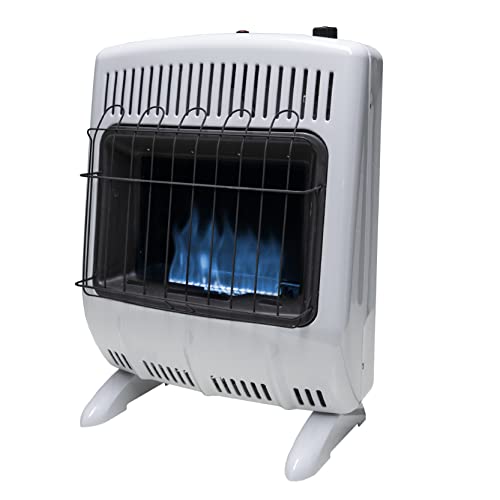
This vent-free blue flame wall heater provides up to 20,000 BTU and is rated for rooms up to 700 sq. ft. It includes battery-powered electronic ignition and an internal thermostat for temperature regulation.
Call 888-896-7031 for Free Local HVAC Quotes – Compare and Save Today!
- Blue Flame Heating: Heats air directly for consistent room temperature in enclosed spaces.
- Safety: Factory-installed Oxygen Depletion Sensor (ODS) for automatic shutoff in low-oxygen conditions.
- Controls: Built-in thermostat and electronic ignition simplify daily operation.
- Applications: Sunrooms, additions, cabins, and garages where vent-free operation is permitted by local codes.
Vent-free units deliver effective heat without venting infrastructure but require attention to ventilation, combustion air requirements, and local regulations for indoor use.
ProCom Natural Gas Ventless 30,000 BTU

The ProCom ventless blue flame heater delivers up to 30,000 BTU and is designed to heat areas up to 1,400 sq. ft. It requires natural gas and features manual controls with three heat settings.
- No Electricity Required: Manual control and Piezo ignition make this unit functional in locations without electrical supply.
- ODS Safety: Included oxygen depletion sensor for automatic shutoff under unsafe oxygen conditions.
- Three Settings: Low/Medium/High for flexible zone heating based on demand.
- Applications: Larger rooms, garages, and utility spaces where natural gas supply and ventless operation are acceptable.
This model provides robust coverage and is useful for primary or supplemental heating in sizable indoor or semi-enclosed spaces when installed per code.
Buying Guide: Choosing The Right Indoor Gas Heater
Selecting the appropriate indoor gas heater requires evaluating several factors to ensure safety, efficiency, and suitability for your space.
Fuel Type And Supply
Propane vs. Natural Gas: Propane units are portable and do not require a gas line, making them good for temporary or movable setups. Natural gas models need a steady gas line and are better for permanent installations. Confirm availability, connection requirements, and local code allowances.
Heater Type And Heat Delivery
- Radiant/Infrared Heaters: Heat objects and people directly—effective for spot heating, workshops, and areas with drafts. They provide immediate warmth without heating all the air.
- Blue Flame/Vent-Free Heaters: Heat air directly for even room temperature. They’re efficient for enclosed spaces but require attention to indoor air quality and ODS safety systems.
- Wall-Mounted Infrared Units: Good for continuous, zone heating in larger rooms and garages; installation is typically permanent and requires professional gas hookup.
BTU Output And Space Size
Match BTU output to room volume rather than floor area alone. Consider ceiling height, insulation, and typical outdoor temperature. As a rough guide, higher BTU ratings are needed for larger or poorly insulated spaces. Always follow manufacturer coverage recommendations.
Safety Features
- Oxygen Depletion Sensor (ODS): Required on many vent-free units to prevent operation under low-oxygen conditions.
- Tip-Over Switch: Important for portable units to shut off fuel if the heater falls over.
- Automatic Shutoff: Useful for overheating protection or ignition failures.
- Ensure carbon monoxide alarms and adequate ventilation are present when using gas heaters indoors.
Installation And Venting
Determine whether the unit is vent-free, requires venting, or is wall-mounted with specific clearances. Permanent installations often require permits and professional gas/plumbing work. Verify manufacturer instructions for minimum clearances and venting options.
Control And Convenience
Consider units with thermostatic controls for temperature stability. Manual units are simpler and useful in power-outage situations. Remote or smart controls add convenience but may require compatible wiring or modules.
Efficiency And Operating Costs
Efficiency varies by heater type and usage pattern. Infrared and blue flame units can be efficient for zone heating, reducing the need to heat an entire home. Operating cost depends on local gas rates, BTU consumption, and runtime.
Code Compliance And Indoor Air Quality
Check local building codes and regulations governing vent-free appliances and indoor gas heaters. Vent-free units are restricted in some jurisdictions and in certain rooms (e.g., bedrooms, bathrooms). Maintain fresh air intake to manage moisture and combustion byproducts.
Comparison Perspectives
- Portability vs. Permanence: Portable propane radiant heaters provide flexibility but limited coverage; wall-mounted and vent-free units deliver larger coverage with permanent installation requirements.
- Direct Radiant Heat vs. Air Heating: Radiant heaters are fast and comfortable for people in the zone, while convection/blue flame units warm the air for whole-room comfort.
- Power Needs: Some natural gas ventless models require no electricity, suitable for power outages; other units include electronic ignition or thermostats that need batteries or mains power.
When evaluating options, weigh intended location, runtime needs, and local restrictions. For permanent indoor installations, consult licensed installers to confirm safe placement, ventilation, and compliance with codes.
Tips for Getting the Best HVAC Prices
- Prioritize Quality Over Cost
The most critical factor in any HVAC project is the quality of the installation. Don’t compromise on contractor expertise just to save money. - Check for Rebates
Always research current rebates and incentives — they can significantly reduce your overall cost. - Compare Multiple Quotes
Request at least three estimates before making your choice. You can click here to get three free quotes from local professionals. These quotes include available rebates and tax credits and automatically exclude unqualified contractors. - Negotiate Smartly
Once you've chosen a contractor, use the proven strategies from our guide — How Homeowners Can Negotiate with HVAC Dealers — to get the best possible final price.