
The term intrinsically safe heater refers to heating equipment certified for use in hazardous or explosive atmospheres. The supplied product list contains certified intrinsically safe lighting items and several conventional space and infrared heaters that lack intrinsic safety certification. This article summarizes the most relevant items from the list, highlights certification status, and compares features so readers can make informed purchasing decisions for hazardous-location needs or safe general-purpose heating.
Summary Table Of Selected Products
| Product | Brand | Relevant Notes |
|---|---|---|
| Nightstick XPR-5592GX [Zone 0] Intrinsically Safe Rechargeable Scene Light | Nightstick | Intrinsically Safe (cULus, ATEX, IECEx) — lighting, not a heater |
| Nightstick XPP-5465R Helmet-Mounted Multi-Function Flashlight | Nightstick | Helmet-mounted IS light — designed for PPE and hazardous locations |
| Heat Storm HS-1500-PHX-WIFI Infrared Heater, WiFi Wall Mounted | Heat Storm | Wall-mounted infrared heater — not listed as intrinsically safe |
| Dr Infrared Heater Portable Space Heater, 1500-Watt | DR. INFRARED HEATER | Portable dual heating — conventional consumer heater, includes safety features |
| BEYOND HEAT Milkhouse Space Heater, 1300W/1500W | BEYOND HEAT | Shop/garage heater with thermostat and safety cutoffs — not intrinsically safe |
Content Navigation
- Nightstick XPR-5592GX Intrinsically Safe Rechargeable Scene Light
- Nightstick XPP-5465R Forge™ Helmet-Mounted Multi-Function Flashlight
- Heat Storm HS-1500-PHX-WIFI Infrared Wall-Mounted Heater
- Dr Infrared Heater Portable Space Heater, Original 1500-Watt
- BEYOND HEAT Milkhouse Space Heater 1300W/1500W Electric Heater
- Buying Guide: Choosing Heating And Equipment For Hazardous Locations
Nightstick XPR-5592GX Intrinsically Safe Rechargeable Scene Light

Listed Certifications: cULus, ATEX, IECEx, KOSHA, InMetro certified Intrinsically Safe. The XPR-5592GX is a rechargeable scene light offering high lumen output with hands-free mounting via a rare-earth magnet. It provides a versatile lighting solution in classified areas where any device must not generate sparks or excessive heat capable of igniting gases or dust.
Why It’s Relevant To “Intrinsically Safe Heater” Searches: Buyers seeking equipment for hazardous locations often need both lighting and low-energy heating solutions. This unit demonstrates the type of certification and design approach required for true intrinsic safety: controlled energy sources, tested housings and approved standards.
Key Features From Listing: 1,200 lumen floodlight for 6 hours, 6,500 lumens for 12 hours (mode-dependent), magnetic hands-free base, and multiple international IS certifications. Because it is lighting, it does not provide space heating but is a certified IS component for hazardous workspaces.
Call 888-896-7031 for Free Local HVAC Quotes – Compare and Save Today!
Nightstick XPP-5465R Forge™ Helmet-Mounted Multi-Function Flashlight

This helmet-mounted light provides user-selectable modes (360, 180, 30 lumens), a helmet clamp that avoids marring, and a multi-angle mount to direct light while maintaining PPE clearance. It features a single push-button operation suitable for gloved hands.
Relevance: Like the XPR-5592GX, this product highlights intrinsic-safety-compliant design for personnel working in explosive atmospheres. It serves as an example of wearable, certified equipment that prioritizes low-energy, low-heat operation to meet safety standards in classified environments.
Key Features From Listing: Helmet clamp with rubber foot, 360-degree multi-angle mount, glove-friendly switch. This is a lighting tool, not a heating device; its mention is useful for buyers assembling a full set of IS-rated gear for hazardous spaces.
Heat Storm HS-1500-PHX-WIFI Infrared Wall-Mounted Heater

The Heat Storm HS-1500 is a Wi‑Fi enabled, wall-mounted infrared heater with a digital thermostat and included remote. It features tip-over safety shutoff and a space-saving profile intended for bedrooms, offices and similar indoor spaces.
Call 888-896-7031 for Free Local HVAC Quotes – Compare and Save Today!
Certification Note: The product listing does not indicate intrinsic safety certification (ATEX/IECEx/cUL for hazardous areas). Infrared heaters use higher energy elements, and in explosive atmospheres, typical consumer heaters are not suitable unless explicitly certified for that use.
Key Features From Listing: Wi‑Fi control, touch screen thermostat, remote included, wall-mount design. For hazardous locations, verify with manufacturer documentation whether modified, certified models exist; otherwise, treat this as a standard consumer wall heater for non-classified indoor areas.
Dr Infrared Heater Portable Space Heater, Original 1500-Watt
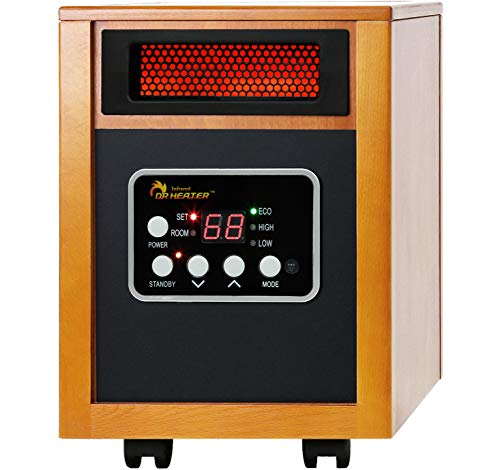
The Dr Infrared Heater is a portable 1500W unit that combines an infrared quartz tube with a PTC element for a dual heating system and auto energy-saving mode. It includes tip-over and overheat protection and a low-noise blower.
Certification Note: The product is designed for conventional residential/commercial use and is not described as intrinsically safe. Devices used in hazardous locations must carry specific approvals and design constraints to prevent ignition sources; consumer space heaters typically do not meet those requirements.
Key Features From Listing: Dual heating technology, 12-hour shutoff timer, remote control, low noise blower. This makes it suitable for large rooms in standard environments but not for classified hazardous atmospheres unless a certified variant exists.
BEYOND HEAT Milkhouse Space Heater 1300W/1500W Electric Heater

The BEYOND HEAT Milkhouse model offers three heat settings including a fan-only and an anti-freeze mode that activates below 40°F. It targets garages, workshops and warehouses with durable construction and ETL certification for consumer safety.
Certification Note: While ETL and tip-over/overheat protections address electrical and fire safety for ordinary environments, this model is not indicated as intrinsically safe for explosion-prone atmospheres. ETL differs from hazardous-location approvals like ATEX/IECEx.
Key Features From Listing: 3 heat settings, thermostat-controlled anti-freeze mode, tip-over and overheat protection, heavy-duty build. For workspaces without explosive-atmosphere classifications, this is a practical heating option; for classified spaces, seek IS-certified or purge-and-pressurize solutions approved for the zone of use.
Buying Guide: Choosing Heating And Equipment For Hazardous Locations
When researching intrinsically safe heaters or equipment for potentially explosive atmospheres, prioritize certification, installation method, and operational energy limits. The following considerations help compare options and determine suitability.
1. Understand Intrinsic Safety Standards
- ATEX / IECEx / cULus: International and national standards that define equipment allowed in hazardous zones. Look for explicit markings and certificates from manufacturers.
- Zone/Division Ratings: Zone 0, 1, 2 (gas) or Zone 20, 21, 22 (dust) define exposure likelihood. Devices rated for Zone 0 are among the most restrictive.
- Documentation: Obtain manufacturer certificates and installation manuals showing approved installation environments.
2. Heating Options For Hazardous Areas
- Intrinsically Safe Heaters: Rare — where available, they are low-energy, limited-temperature devices designed to prevent ignition. Confirm the temperature class and maximum surface temperature.
- Ex-Proof / Explosion-Proof Heaters: Heaters with rugged enclosures that prevent internal arcs from igniting the atmosphere; they are different from intrinsic safety and are often used in Zone 1/2 applications.
- Purge-And-Pressurize Systems: Enclosures or cabinets that keep hazardous atmospheres out by maintaining positive pressure using clean air; heaters inside these enclosures can be non-IS if the enclosure is certified.
- Indirect Heating or Remote Heat Sources: Locate heaters in non-hazardous areas and distribute heat via ducts, oil circulation or fluid loops to avoid bringing electrical devices into the classified zone.
3. Key Technical Parameters
- Maximum Surface Temperature: Must be below ignition temperature for the surrounding gas or dust. Certifications often specify temperature class (T1–T6).
- Energy Storage And Release: IS devices limit stored and released energy — important for battery-operated or capacitive circuits.
- Ingress Protection (IP) Rating: Dust and moisture protection matter in dusty or humid hazardous areas.
- Mounting And Location: Wall-mount, floor-mount, or enclosure mounting can change suitability. Follow manufacturer installation guidelines for clearances and ventilation.
4. Safety Features To Require
- Overheat Protection: Automatic cutoff if internal temperatures exceed safe limits.
- Tip-Over Switches: For portable heaters in non-classified spaces, this prevents accidental fires; in hazardous areas, use only certified devices.
- Fail-Safe Controls: Redundant thermostats, locked housings and tamper-resistant controls for industrial environments.
5. Certification Cross-Checks
- Request full certificate numbers and search the issuing body’s database (ATEX, IECEx, cUL, InMetro) to confirm authenticity.
- Confirm the rated gas group (e.g., IIA, IIB, IIC) and temperature class match your site’s classified atmosphere.
- Verify component-level approvals (batteries, chargers, switches) as some devices are listed only when specific accessories are used.
6. Practical Comparison Perspectives
- Function vs Certification: Many consumer heaters deliver strong heat performance but lack hazardous-location approvals. Evaluate whether installation strategies (remote heat, purge enclosures) can achieve compliance.
- Portability vs Permanence: Portable heaters are convenient in non-classified areas. For hazardous spaces, fixed, certified heating or remote heat transfer is commonly safer and code-compliant.
- Energy Efficiency vs Safety Margin: High-power devices produce more heat but may have larger surface temperatures. Intrinsic safety often requires trade-offs in power to limit ignition risk.
- Operational Environment: Consider dust explosion potential (silos, grain handling) vs flammable gases (petrochemical areas); device selection and certification differ by hazard type.
7. Purchasing And Installation Checklist
- Obtain manufacturer certificates and confirm applicability to your zone and gas/dust group.
- Check installation instructions for required clearances, mounting, and wiring methods.
- Ask about approved accessories (mounts, brackets, power supplies) that preserve certification.
- Ensure qualified personnel install and commission equipment per applicable codes and site safety procedures.
8. When Products In The List Might Be Used
- Nightstick XPR-5592GX and XPP-5465R: Use in classified areas where certified lighting is required. They indicate the level of certification necessary for any electrical device intended for hazardous atmospheres.
- Heat Storm, Dr Infrared, BEYOND HEAT Models: Suitable for standard indoor or workshop use where no explosive atmospheres are present. For hazardous locations, consult the manufacturer or certified HVAC/controls contractors for compliant alternatives.
Final Note: If your requirement is specifically an intrinsically safe heater, prioritize products with explicit ATEX/IECEx/cUL hazardous-location markings and verified certificates. If such certified heaters are not available for your application, consider alternative compliant approaches such as purge-and-pressurize enclosures, remote heat transfer, or consulting a certified hazardous-area equipment specialist.
Tips for Getting the Best HVAC Prices
- Prioritize Quality Over Cost
The most critical factor in any HVAC project is the quality of the installation. Don’t compromise on contractor expertise just to save money. - Check for Rebates
Always research current rebates and incentives — they can significantly reduce your overall cost. - Compare Multiple Quotes
Request at least three estimates before making your choice. You can click here to get three free quotes from local professionals. These quotes include available rebates and tax credits and automatically exclude unqualified contractors. - Negotiate Smartly
Once you've chosen a contractor, use the proven strategies from our guide — How Homeowners Can Negotiate with HVAC Dealers — to get the best possible final price.