
Quick Overview: This guide reviews five kerosene heaters and heat-powered fan options suitable for indoor and outdoor use, focusing on heat output, run time, safety features, and portability.
| Product | Type | Key Specs |
|---|---|---|
| Dyna-Glo WK24BK | Kerosene Convection Heater | 23,800 BTU • Heats up to 1,000 sq ft • No electricity needed |
| Sengoku HeatMate HMC-23K | Portable Kerosene Heater | 23,500 BTU • 1.9 gal tank • Auto shutoff & tip-over switch |
| Dura Heat DH1051 | Indoor Kerosene Heater | 10,500 BTU • Up to 15 hrs on 1.1 gal • 360° heating |
| CNCEST 2-in-1 Kerosene Heater | Portable/Adjustable Kerosene Radiant Heater | 9,000 BTU • 1.22 gal tank • 15–17 hrs runtime |
| JossaColar Heat Powered Fan | Thermoelectric Fan Attachment | Heat-powered • Bracket for Buddy/heater • Magnetic thermometer |
Content Navigation
Dyna-Glo WK24BK Kerosene Heater
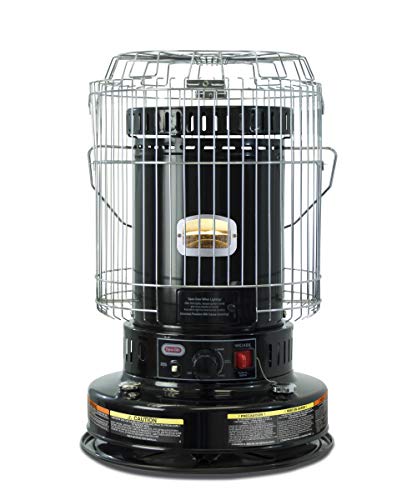
This Dyna-Glo WK24BK is a high-output convection kerosene heater rated at 23,800 BTU, designed to heat spaces up to about 1,000 square feet without electricity. Its convection design moves warm air through natural circulation rather than forced air, making it suitable for larger, open spaces such as garages and workshops.
Key features listed include no electricity needed and a high BTU output. Convection heaters typically provide uniform warming over time but may take longer to increase air temperature quickly. The unit’s reliance on kerosene and lack of electric fan means quieter operation and continued operation during power outages.
Sengoku HeatMate HMC-23K
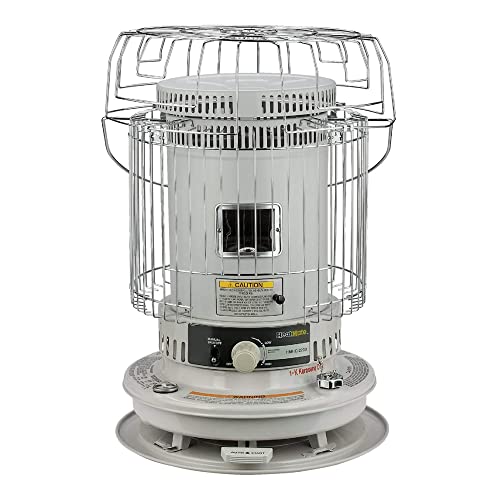
The Sengoku HeatMate HMC-23K delivers 23,500 BTU and is marketed for indoor and outdoor use. It has a 1.9-gallon fuel capacity and offers up to 12 hours of runtime on a fill, per the manufacturer’s features. Safety elements include automatic shutoff, a tip-over switch, and guard grills.
Call 888-896-7031 for Free Local HVAC Quotes – Compare and Save Today!
As a cordless kerosene heater, it’s intended for temporary heating and emergency use. The large fuel capacity supports extended runtime for larger rooms or poorly insulated areas. The safety features are designed to meet indoor use requirements, but proper ventilation and adherence to local codes remain important.
Dura Heat DH1051 Indoor Kerosene Heater

The Dura Heat DH1051 is a compact indoor kerosene heater rated at 10,500 BTU. It reportedly operates up to 15 hours on 1.1 gallons of fuel and offers 360-degree heating, making it suitable for bedrooms, small workshops, or backup heating zones.
This unit emphasizes efficiency for smaller spaces and extended runtime per tank. The 360-degree heat pattern can be useful for evenly distributing warmth in confined areas. As with all kerosene heaters, proper ventilation and safe fueling practices are essential to control fumes and combustion byproducts.
CNCEST 2-In-1 Kerosene Heater

This CNCEST 2-in-1 kerosene heater is a portable radiant heater with 9,000 BTU output and an adjustable height. It includes a 1.22-gallon tank designed to run 15–17 hours at full capacity. The product highlights a carrying handle and mesh exterior for contact protection.
Call 888-896-7031 for Free Local HVAC Quotes – Compare and Save Today!
Its portable design and long runtime make it suitable for small indoor spaces, camping, or emergency preparedness kits. The mesh cover and adjustable height focus on user safety and placement flexibility. Radiant heaters warm nearby objects directly, providing rapid localized heat but less whole-room circulation compared with convection models.
JossaColar Heat Powered Stove Fan

The JossaColar unit is a thermoelectric, heat-powered fan intended for use on wood stoves and compatible propane/kerosene heaters (with bracket). It uses temperature differential to generate power, circulating warm air without electricity or batteries.
Features include a magnetic stove thermometer, a bracket to fix on Buddy-style heaters or stoves, and a sturdy build for portability across applications like workshops, tents, and emergency use. Heat-powered fans are useful for improving warm air distribution from radiant or convective heat sources while operating silently and fail-safe when cooling down.
Buying Guide: How To Choose A Kerosene Heater Or Heat-Powered Fan
Selecting the right kerosene heater or heat-powered fan depends on several technical and practical factors. Below are the key considerations with comparison perspectives.
Tips for Getting the Best HVAC Prices
- Prioritize Quality Over Cost
The most critical factor in any HVAC project is the quality of the installation. Don’t compromise on contractor expertise just to save money. - Check for Rebates
Always research current rebates and incentives — they can significantly reduce your overall cost. - Compare Multiple Quotes
Request at least three estimates before making your choice. You can click here to get three free quotes from local professionals. These quotes include available rebates and tax credits and automatically exclude unqualified contractors. - Negotiate Smartly
Once you've chosen a contractor, use the proven strategies from our guide — How Homeowners Can Negotiate with HVAC Dealers — to get the best possible final price.
Heat Output (BTU) And Coverage
- BTU Rating: Higher BTU means more heat potential. Units like Dyna-Glo and Sengoku (around 23,000 BTU) are for larger spaces up to ~1,000 sq ft. Lower BTU models suit small rooms or personal heating.
- Radiant Vs Convection: Radiant heaters (CNCEST) heat objects and people directly and warm quickly nearby areas. Convection heaters (Dyna-Glo) circulate warm air for whole-room warmth but can take longer to warm up.
Fuel Capacity And Runtime
- Tank Size: Larger tanks (e.g., Sengoku’s 1.9 gal) offer longer continuous runtime, reducing refueling frequency.
- Efficiency: Runtime estimates vary by BTU setting and insulation; balance required between output needs and desired runtime.
Safety Features And Indoor Use
- Required Safety Features: Look for tip-over protection, automatic shutoff, and protective grills for indoor use. These are noted in Sengoku and other models.
- Ventilation: All kerosene heaters emit combustion byproducts; adequate ventilation and CO detectors are essential for indoor operation.
Portability And Installation
- Handles & Weight: Portable models like CNCEST include handles for movement. Consider size and weight if you’ll move the heater often.
- Mounts/Brackets: Heat-powered fans such as JossaColar include brackets or magnetic mounts to attach to stoves or compatible heaters for better air circulation.
Noise And Operation Type
- Electric Fans vs Heat-Powered: Electric fan-assisted heaters move air faster but need power. Heat-powered fans require no electricity and provide silent distribution but are dependent on surface temperature.
- Quiet Operation: Convection and thermoelectric fans generally operate quietly compared with mechanical fans.
Durability And Use Cases
- Indoor vs Outdoor: High-BTU units can be used outdoors or in well-ventilated indoor spaces; confirm manufacturer guidance. For emergency indoor heating, choose models with built-in safety features.
- Worksite & Camping: Portable, rugged designs with long runtime are better for outdoor use and remote sites.
Distribution And Comfort Considerations
- Localized Warmth: If you need immediate personal warmth, choose a radiant unit or add a heat-powered fan to spread heat.
- Whole-Room Heating: For heating entire rooms, convection kerosene heaters with higher BTU are more effective when paired with fans or natural circulation strategies.
Maintenance And Fuel Handling
- Cleaning & Wicks: Kerosene heaters need periodic wick inspection/replacement and cleaning to maintain performance.
- Safe Refueling: Refuel outdoors or in well-ventilated areas with the heater cooled; store kerosene safely following regulations.
Regulatory And Environmental Notes
- Local Codes: Check local regulations for indoor kerosene heater use, venting, and storage.
- Emissions: Kerosene combustion produces particulates and CO; use CO detectors and ventilate to reduce risk.