
Kerosene patio heaters offer portable, high-output warmth for patios, porches, garages, and emergency use. The table below summarizes five top options selected for outdoor and semi-indoor patio heating performance, safety features, and run time.
| Product | Brand | BTU / Fuel Capacity |
|---|---|---|
| Sengoku Indoor & Outdoor Kerosene Heater (23,500 BTU) | KeroHeat | 23,500 BTU / 1.9 gal |
| Sengoku HeatMate Portable Kerosene Heater (23,500 BTU) | HeatMate | 23,500 BTU / 1.9 gal |
| Dyna-Glo Convection Kerosene Heater (23,800 BTU) | Dyna-Glo | 23,800 BTU / no fuel capacity listed |
| Sengoku Indoor & Outdoor Kerosene Heater (10,000 BTU) | KeroHeat | 10,000 BTU / 1.2 gal |
| Outdoor Camping Kerosene Stove / Heater (9000 BTU) | ACNAO | Up To 9,000 BTU / 1.22 gal (4.6L) |
Content Navigation
- Sengoku 23,500 BTU Kerosene Heater
- HeatMate 23,500 BTU Portable Kerosene Heater
- Dyna-Glo 23,800 BTU Kerosene Convection Heater
- Sengoku 10,000 BTU Portable Kerosene Heater
- ACNAO 9,000 BTU Outdoor Kerosene Camping Heater
- Buying Guide: Choosing A Kerosene Patio Heater
- 1. Heat Output (BTU) And Coverage
- 2. Fuel Capacity And Runtime
- 3. Portability And Placement
- 4. Ignition Type And Ease Of Use
- 5. Safety Features
- 6. Ventilation And Emissions
- 7. Convection vs. Radiant vs. Hybrid
- 8. Build Quality And Materials
- 9. Maintenance And Fuel Handling
- 10. Noise And Operating Characteristics
- 11. Regulatory And Local Considerations
- 12. Comparison Perspectives
Sengoku 23,500 BTU Kerosene Heater

This model Delivers 23,500 BTU tailored for large outdoor patios, garages, or poorly insulated rooms. The unit has a 1.9-gallon fuel tank and claims up to 12 hours of runtime per fill, making it suitable for extended evening use. It is a non-electric design with an automatic safety shut-off and a push-button start for matchless ignition. Built-in safety includes a tip-over switch, protective grills, and an adjustable EZ Flame control to manage output.
Use Cases: Effective for open patios and semi-enclosed porches where high output and portability are priorities. Safety features support use around populated gatherings, but proper ventilation is required for enclosed areas.
HeatMate 23,500 BTU Portable Kerosene Heater
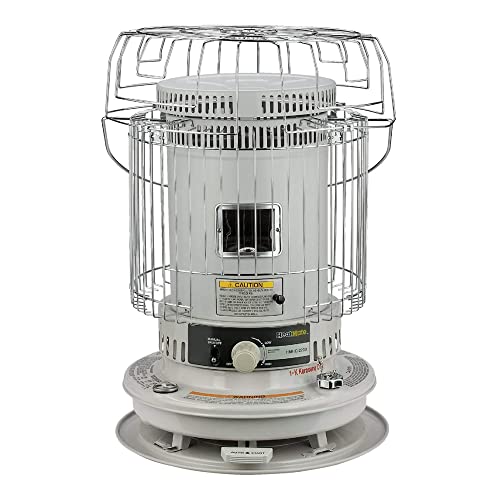
The HeatMate HMC-23K Produces 23,500 BTU and covers up to approximately 1,000 square feet. It features a 1.9-gallon tank designed for up to 12 hours of continuous operation. Safety is emphasized with an automatic shut-off, tip-over switch, and guard grills to reduce accidental contact. The heater is positioned for both emergency heat and routine patio use, and it is presented as an economical option for large areas.
Call 888-896-7031 for Free Local HVAC Quotes – Compare and Save Today!
Performance Notes: This unit’s runtime and output align with larger kerosene convection heaters, offering strong heat distribution for outdoor seating areas. The safety features are standard for indoor/outdoor-rated kerosene units.
Dyna-Glo 23,800 BTU Kerosene Convection Heater
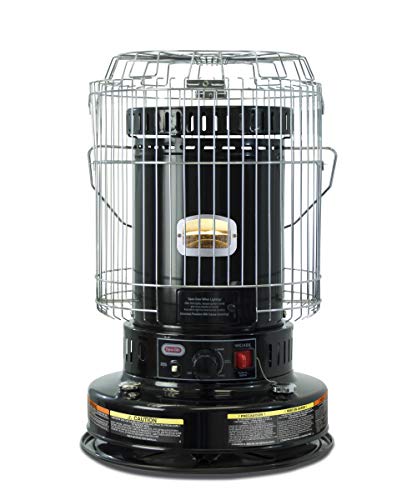
Dyna-Glo’s convection heater advertises 23,800 BTU and is designed to heat up to 1,000 square feet without electricity. Convection-style operation warms air that circulates naturally, making it appropriate for larger open outdoor areas like patios and covered porches. Key selling points are the high BTU output and no electricity required functionality.
Safety & Suitability: Convection heaters like this one are suitable for spaces where air movement spreads heat. They require adequate ventilation and should be placed to avoid flammable materials. As with other kerosene heaters, compliance with local codes and manufacturer ventilation guidelines is important.
Sengoku 10,000 BTU Portable Kerosene Heater

The Sengoku CTN-110 Provides 10,000 BTU and is sized for smaller patios, screened porches, and enclosed patio rooms up to about 400 square feet. Its 1.2-gallon tank offers a runtime reported up to 14 hours on low settings. The unit includes automatic shut-off, a tip-over switch, and protective grills. This lower-BTU model is an option when high-output heating is unnecessary or when a compact footprint is preferred.
Call 888-896-7031 for Free Local HVAC Quotes – Compare and Save Today!
Performance Notes: Lower BTU output yields longer runtime and more targeted heating. Choose this for smaller outdoor seating areas where high airflow is limited and where quieter, steady heat is preferred.
ACNAO 9,000 BTU Outdoor Kerosene Camping Heater
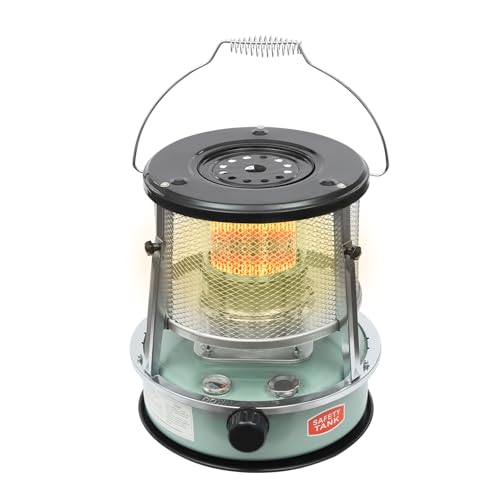
This compact heater is marketed for outdoor camping and small patio spaces with a max output near 9,000 BTU. It features a 1.22-gallon (4.6L) tank and reports extended runtime—commonly 15–17 hours at lower settings. The design emphasizes portability with an adjustable height and carrying handle, plus a mesh exterior covering to reduce direct contact with the heat source.
Use Cases: Best suited for small patios, tented seating areas, or as a portable unit for tailgates and camping. The lower BTU and long runtime are advantageous for overnight use and situations where minimal refueling is preferred.
Buying Guide: Choosing A Kerosene Patio Heater
Selecting the right kerosene patio heater requires balancing heat output, runtime, safety, and portability. Consider the following factors and comparison perspectives before purchasing.
1. Heat Output (BTU) And Coverage
BTU rating determines the heater’s capacity. Models around 23,000–24,000 BTU are typical for heating large patios or semi-enclosed porches. Lower-output units (8,000–10,000 BTU) are better for seating groups or smaller covered areas. Compare BTU to the square footage you need to heat; higher BTU suits open areas, while lower BTU suits contained spaces.
2. Fuel Capacity And Runtime
Fuel tank size correlates with runtime. Larger tanks (around 1.9 gallons) often run longer at higher output. Some lower-BTU units extend runtime to 14–17 hours. Decide whether you prefer fewer refills (larger tank) or lighter weight and portability (smaller tank).
3. Portability And Placement
Patio heaters range from compact camping-style units to heavier convection heaters. Look at weight, handles, and footprint. If you move the heater frequently or take it to events, choose a compact, lightweight model with a secure carrying handle. For permanent patio setups, a heavier convection unit may provide steadier heat.
4. Ignition Type And Ease Of Use
Most modern kerosene heaters offer matchless push-button or piezo ignition. Consider how simple the start-up is, especially in windy or low-light conditions. Look for user-friendly flame controls to adjust output conveniently.
5. Safety Features
Essential safety features include automatic shut-off, a tip-over switch, and protective grills. For family or pet environments, confirm the unit’s protective guards and stability. For semi-enclosed patios, ensure the model is rated for indoor-adjacent use and follow clearance guidelines from the manufacturer.
6. Ventilation And Emissions
Kerosene combustion produces fumes and requires airflow. Use heaters outdoors or in well-ventilated, semi-enclosed patios only. Compare manufacturer guidance on indoor use and emissions. For covered patios, confirm clearance and recommended ventilation practices to avoid carbon monoxide risk.
7. Convection vs. Radiant vs. Hybrid
Convection heaters warm the air, which is useful for whole-area heating on patios. Radiant heaters directly warm people and objects and can feel warmer more quickly in open-air settings. Choose convection for consistent ambient warmth and radiant for targeted chair-level comfort.
8. Build Quality And Materials
Stainless steel, powder-coated finishes, and sturdy grills increase longevity for outdoor exposure. Check corrosion resistance and whether the manufacturer provides a warranty or replacement parts. Robust builds better withstand patio elements.
9. Maintenance And Fuel Handling
Consider how easy it is to access the fuel tank, wick maintenance, and cleaning. Some kerosene heaters require periodic wick trimming or replacement. If you plan seasonal use, opt for models with straightforward maintenance and available replacement parts.
10. Noise And Operating Characteristics
Some forced-air or fan-assisted heaters produce noise; convection and radiant kerosene heaters are generally quieter. If your patio is used for conversation or entertainment, prioritize quieter models or check noise characteristics in product specs.
11. Regulatory And Local Considerations
Review local codes and HOA rules about fuel-burning appliances on patios. Some jurisdictions restrict open fuel-burning devices on balconies or within multi-unit housing. Verify permitted use before buying.
12. Comparison Perspectives
- Performance vs. Portability: High-BTU convection units deliver broad coverage but are heavier. Camping-style units sacrifice output for portability and long runtime.
- Runtime vs. Output: Higher output consumes fuel faster; choose a larger tank or lower BTU for longer unattended use.
- Safety vs. Convenience: Models with more safety interlocks and guards may limit quick access but increase suitability for family settings.
- Convection vs. Radiant: Convection is better for heating air in semi-enclosed patios; radiant is better for open-air comfort where direct warmth on occupants matters.
Final Practical Tips: Always follow manufacturer clearance guidelines, use fresh kerosene rated for heaters, store fuel safely, and never operate a kerosene heater in a fully enclosed space without adequate ventilation. Regularly inspect wicks and safety interlocks to maintain reliable operation.
Tips for Getting the Best HVAC Prices
- Prioritize Quality Over Cost
The most critical factor in any HVAC project is the quality of the installation. Don’t compromise on contractor expertise just to save money. - Check for Rebates
Always research current rebates and incentives — they can significantly reduce your overall cost. - Compare Multiple Quotes
Request at least three estimates before making your choice. You can click here to get three free quotes from local professionals. These quotes include available rebates and tax credits and automatically exclude unqualified contractors. - Negotiate Smartly
Once you've chosen a contractor, use the proven strategies from our guide — How Homeowners Can Negotiate with HVAC Dealers — to get the best possible final price.