
Keeping a koi pond healthy through winter requires the right pond heater or de-icer to maintain an ice-free area for gas exchange and fish survival. The table below summarizes five well-reviewed pond heaters suited for koi ponds of different sizes and climates.
| Product | Type | Typical Pond Size |
|---|---|---|
| HITOP Outdoor Pond Heater – 600W | Floatable Thermostatic De-icer | Up To ~320 Gallons (localized) |
| TetraPond De-Icer | Thermostatically Controlled De-icer | Small To Medium Ponds |
| Farm Innovators 1250W Floating De-Icer | Cast Aluminum Floating Heater | Large Ponds |
| Aobiono 1000W Pond Heater | Thermostatic Floating De-icer | Medium To Large Ponds |
| Pennington Aquagarden Ice Vent Pond Heater | Ice Vent / De-icer | Up To 1200 Gallons (venting zones) |
Content Navigation
- HITOP Outdoor Pond Heater – 150W 300W 600W Aquarium Heater
- TetraPond De-Icer, Thermostatically Controlled Pond De-Icer
- Farm Innovators 1250W Cast Aluminum Floating De-Icer
- Aobiono Pond Heater De Icer 1000W Floating Thermostat
- Pennington Aquagarden Ice Vent Pond Heater, Thermostat Controlled
- Buying Guide: Choosing The Right Koi Pond Heater For Winter
HITOP Outdoor Pond Heater – 150W 300W 600W Aquarium Heater

Type: Floatable, foam-mounted de-icer with thermostat control. Key Features: 600W model heats surrounding water and creates melting holes so fish can breathe; floats on upgraded black foam to avoid mud contact; maintains a constant temperature of 68–72°F near the unit.
This unit is designed to produce a focused warm area rather than heat an entire pond. The floatable foam helps keep the heater above sediment and improves longevity in outdoor ponds. The thermostat feature automatically cycles the heater to hold temperature near the device, which is helpful for preventing ice formation directly over critical oxygen exchange zones.
TetraPond De-Icer, Thermostatically Controlled Pond De-Icer
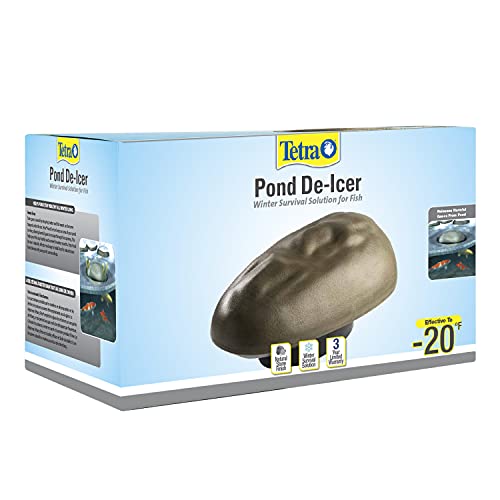
Type: Thermostatically controlled pond de-icer. Key Features: Keeps an area of pond free from ice; allows toxic gases to escape from under ice; effective at temperatures as low as -20°F; UL listed for safety.
Call 888-896-7031 for Free Local HVAC Quotes – Compare and Save Today!
The TetraPond De-Icer emphasizes safety certifications and reliable thermostat control to maintain an ice-free hole for oxygen exchange. Its design is compact and intended to operate only when needed, reducing unnecessary energy use. As a proven option for smaller to medium ponds, it primarily serves as a survival solution for pond life by preventing complete freeze-over.
Farm Innovators 1250W Cast Aluminum Floating De-Icer

Type: Heavy-duty cast aluminum floating de-icer with built-in thermostat. Key Features: Patented cast aluminum construction for efficiency and durability; thermostatically controlled to operate only when necessary; floats to create a protective ice-free zone.
Farm Innovators’ cast aluminum design supports higher heating capacity and durability in harsh winters. The built-in thermostat reduces runtime by engaging when temperatures demand it. Its larger wattage makes it suitable for bigger ponds where a sizeable opening in the ice is necessary to allow gas exchange and circulation near the surface.
Aobiono Pond Heater De Icer 1000W Floating Thermostat

Type: 1000W thermostatic floating de-icer. Key Features: Designed to prevent outdoor ponds from freezing; rugged plastic outer casing for durability; simple plug-and-place installation; 12 ft cord for flexible placement.
Call 888-896-7031 for Free Local HVAC Quotes – Compare and Save Today!
This Aobiono model targets medium to larger ponds requiring a stronger heat source without heavy metal housing. The robust outer casing reduces exposure concerns and simplifies handling. The 1000W output supports maintaining an ice-free zone in colder climates when positioned strategically near pond surfaces used for aeration or flow.
Pennington Aquagarden Ice Vent Pond Heater, Thermostat Controlled

Type: Ice vent pond heater (de-icer) with thermostat control. Key Features: Creates ice-free zones to allow toxic gas escape and oxygen entry; designed for ponds up to 1200 gallons; safe for all pond types, including liners and plastic ponds.
Pennington focuses on creating a venting zone rather than broad heating. Its compatibility with pond liners and multiple pond types makes it versatile for backyard ponds. The design helps preserve gas exchange and oxygenation during freeze conditions while operating as a targeted winter protection device for aquatic life.
Buying Guide: Choosing The Right Koi Pond Heater For Winter
Selecting a pond heater involves evaluating pond size, climate severity, power availability, placement, and safety. Use the points below to match a product to your pond’s needs.
Pond Size And Heater Wattage
- Small Ponds / Birdbaths (Under 100 gallons): Low-wattage units or specialized bird bath de-icers suffice.
- Medium Ponds (100–500 gallons): Consider 300–1000W de-icers positioned near flow or aeration points to keep localized holes open.
- Large Ponds (500+ gallons): Use high-wattage units (1000W–1250W or multiple units) or install aeration/recirculation with de-icers to prevent full freeze.
Heater Types And Installation
- Floatable De-Icers: Create an ice-free hole at the surface; easy to install and maintain. Ideal for most backyard koi ponds.
- Cast Aluminum Units: Durable and efficient at shedding heat, often better for harsh climates and larger ponds.
- Ice Vent Heaters / Vents: Create openings for gases without heating large volumes of water; useful when pond liners or materials require gentle heating.
- Submersible Rod/Disc Heaters: Less common for koi ponds; typically used for stock tanks or bird baths.
Thermostat Control And Energy Use
- Thermostatically Controlled Units: Cycle on/off to maintain a target area temperature. Reduces energy waste and prevents overheating.
- Constant-Run Units: May be used in extreme cold but can increase energy consumption. Prefer thermostats where possible.
Safety And Construction
- Certifications: Look for UL listing or equivalent safety marks where available.
- Materials: Cast aluminum and corrosion-resistant casings increase long-term durability in outdoor conditions.
- Cord Length And GFCI Protection: Adequate cord length allows ideal placement; use GFCI-protected circuits for outdoor electrical safety.
Placement And Pond Management
- Location: Place de-icers near waterfalls, skimmers, or aerators when possible to maintain flow near the ice-free area.
- Multiple Units: For irregularly shaped or large ponds, use more than one de-icer to ensure adequate ventilation and gas exchange.
- Debris And Mud Avoidance: Floatable units with foam or elevated housings prevent clogging and sediment contact, improving efficiency.
Climate Considerations
- Mild Winters: Smaller thermostatic units often suffice for periodic freezes.
- Harsh Winters: Prefer higher wattage units, cast aluminum options, or combined aeration plus de-icing strategies to prevent complete freeze.
Multiple Comparison Perspectives
- Durability: Cast aluminum models (Farm Innovators) typically outperform plastic-bodied units in longevity under heavy cold exposure.
- Energy Efficiency: Thermostatically controlled units (TetraPond, HITOP) minimize runtime and energy consumption versus constant-run models.
- Localized Heating vs. Large-Volume Coverage: Most de-icers create localized warm pockets; for whole-pond temperature control, consider circulation, aeration, or multiple heaters.
- Safety And Certification: Devices with UL or similar certifications provide additional assurance for outdoor electrical use.
Use this guide to balance pond volume, winter severity, and installation logistics. Proper placement and combining de-icers with aeration or recirculation often deliver the best outcomes for koi health and winter survival.
Tips for Getting the Best HVAC Prices
- Prioritize Quality Over Cost
The most critical factor in any HVAC project is the quality of the installation. Don’t compromise on contractor expertise just to save money. - Check for Rebates
Always research current rebates and incentives — they can significantly reduce your overall cost. - Compare Multiple Quotes
Request at least three estimates before making your choice. You can click here to get three free quotes from local professionals. These quotes include available rebates and tax credits and automatically exclude unqualified contractors. - Negotiate Smartly
Once you've chosen a contractor, use the proven strategies from our guide — How Homeowners Can Negotiate with HVAC Dealers — to get the best possible final price.