
Large fan heaters combine strong airflow with rapid heating to warm big rooms or circulate air across open spaces. Below is a comparison of five full-size tower-style and high-velocity heater-fan combos that suit living rooms, garages, and large bedrooms.
| Product | Type | Key Feature |
|---|---|---|
| Lasko Oscillating Hybrid Fan And Space Heater (FHV820) | Tower/High-Velocity Hybrid | High Velocity Fan + 3 Heat Speeds, 37.5″ |
| Dreo Tower Fan And Heater Combo (Silver) | 42″ Tower Heater/Fan | PTC Element, 42″, 120° Oscillation, 1585 CFM |
| Lasko Oscillating All Season Tower (FH515) | 42″ Tower Heater/Fan | 1500W Ceramic, 4 Fan Speeds, Oscillation |
| Dreo Heater Fan 42″ (Black) | 42″ Tower Heater/Fan | PTC Ceramic, 5 Heat & 12 Fan Levels |
| Aikoper PTC Ceramic Space Heater | Portable PTC Ceramic Unit | PTC Fast Heating, 3 Heat Settings, Compact |
Content Navigation
Lasko Oscillating Hybrid Fan And Space Heater
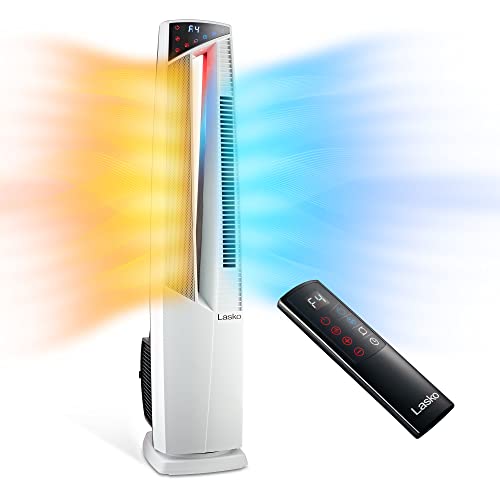
This Lasko unit combines a high-velocity fan with a 1500W heater in a 37.5-inch hybrid design. It offers four fan speeds and three heat settings, plus widespread oscillation to distribute airflow across larger rooms. Controls include a large digital display, touch sensing buttons, a built-in carry handle, and a remote control for convenience.
Safety and energy features include Lasko’s AutoEco adjustable thermostat, a tip-over switch, and an 8-hour auto-off timer with 30-minute increments. The combination of high-velocity cooling and ceramic heating makes this model suitable for spaces that need both fast air circulation and targeted warmth.
Dreo Tower Fan And Heater Combo — Silver

The Dreo 42-inch tower integrates a PTC heater element and a high-performance DC motor rated at 1800 RPM. The unit delivers up to 1585 CFM and features ultrawide 120° oscillation to move warm or cool air across larger spaces. Modes include 5 heat levels and 12 fan speeds with a precise temperature range of 41–95°F and ±1.5°F accuracy in ECO mode.
Call 888-896-7031 for Free Local HVAC Quotes – Compare and Save Today!
Auto-shift technology lets the unit switch between heating and cooling modes seasonally. Additional features include a 12-hour timer, remote control, and a focus on faster heat-up time via a larger PTC element. The design targets efficiency and coverage for sizable rooms.
Lasko Oscillating All Season Tower Heater

The Lasko FH515 is a 42-inch tower that pairs a 1500W ceramic heater with four quiet fan speeds. It provides optional widespread oscillation and an adjustable thermostat to maintain comfort while managing energy use. The multi-function remote controls fan, heater, timer, and oscillation functions.
Features emphasize all-season versatility: efficient room heating on cold days and improved circulation in warm months. The timer supports up to 8 hours for scheduled shutdown, and built-in safety includes tip-over protection. The unit is intended for living room or bedroom installations requiring steady distributed warmth.
Dreo Heater Fan 42″ — Black

This Dreo tower mirrors the silver model in size and capabilities with a Hyperamics PTC element, five heat levels, and 12 fan speeds. The upgraded DC motor enhances airflow performance and delivers wide reach using 120° oscillation. The unit claims instant heating in 2 seconds and precise temperature control in ECO mode.
Call 888-896-7031 for Free Local HVAC Quotes – Compare and Save Today!
Operational features include a 12-hour timer, quiet operation at low noise levels, remote control, and multiple modes tailored to seasonal use. Its focus is on fast thermal response and broad room coverage, emphasizing efficiency for large indoor spaces.
Aikoper PTC Ceramic Space Heater
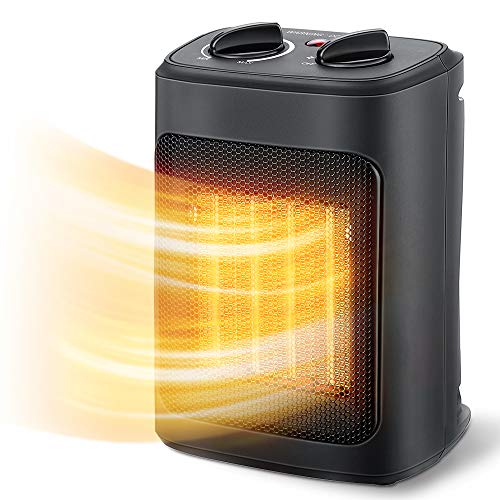
The Aikoper portable unit is a compact PTC ceramic heater aimed at fast room warm-up. It provides three heat settings plus a fan-only mode, and uses PTC ceramic technology for rapid heat generation. An adjustable thermostat helps maintain a set temperature while cycling to conserve energy.
Safety and convenience features include overheat protection and a small footprint for flexible placement. While not a tall tower, this model is often used as a supplementary heater for medium-to-large rooms when paired with airflow solutions or positioned centrally for circulation.
Buying Guide: How To Choose A Large Fan Heater
Choosing a large fan heater requires matching performance, coverage, efficiency, and safety to the intended space. Below are the key factors to weigh before purchasing.
Room Size And Coverage
- CFM And Airflow Reach: Higher CFM numbers and wide oscillation angles (100°–120°) move warm air across large rooms. Tower models with specified CFM or long-distance airflow are better for open areas.
- Wattage: Most tower heaters use up to 1500W for effective spot and room heating. For very large or poorly insulated spaces, pair the heater with good circulation or use multiple units.
Heating Technology
- PTC Ceramic: Provides fast, safe heating with self-limiting characteristics and efficient heat-up times.
- Fan-Forced/High-Velocity: Fan-driven heaters move warmed air quickly—ideal when you need to heat a room fast or boost circulation.
- Hybrid Designs: Units that offer both high-velocity fan and ceramic heat modes provide seasonal flexibility and strong airflow for larger rooms.
Controls, Modes, And Precision
- Thermostat Accuracy: Look for models that state temperature ranges and precision (±1–2°F) if you need stable comfort and energy savings.
- Fan & Heat Levels: Multiple fan speeds and heat levels let you balance noise, reach, and warmth. Auto-shift or dual-mode systems switch between heating and cooling seasonally.
- Timer & Remote: Timers up to 8–12 hours and remotes increase convenience for night or scheduled use.
Noise And Motor Type
- DC Motors often run quieter and deliver variable speeds with better efficiency than standard AC motors.
- Noise Ratings: If using in bedrooms or shared spaces, check listed dB levels. Lower dB values (around 25–35 dB) suit quiet environments.
Safety Features
- Tip-Over Protection: Essential for freestanding towers in homes with pets or kids.
- Overheat Shutoff: Prevents failure from prolonged high-heat operation.
- Auto-Eco Modes: Thermostat-driven cycling reduces power use and lowers continuous run risks.
Placement And Portability
- Height & Oscillation: Taller tower heaters with widespread oscillation cover more vertical and horizontal space.
- Handles & Weight: Built-in handles and reasonable weight help if you plan to move the unit between rooms.
Energy Use And Efficiency
- Wattage Management: 1500W is common; use thermostat and ECO modes to limit runtime and save energy.
- Targeted Heating: Heating only occupied zones is more efficient than boosting whole-house systems.
Durability & Maintenance
- Filter-Free vs Filtered: Many tower heaters are filter-free and require less maintenance; check fan intakes for dust buildup and clean as recommended.
- Build Quality: Metal grilles and sturdy housings indicate longer life in heavy-use scenarios.
Comparison Perspectives
- Performance vs Noise: High airflow often means higher noise. Balance CFM needs with acceptable dB for your space.
- Coverage vs Portability: Very large units provide better distribution but may be harder to move. Choose based on whether the heater stays in one room or travels.
- All-Season Versatility: If you want a single device year-round, prefer models that offer robust fan modes plus efficient heating elements.
Using these considerations, compare the CFM, oscillation, thermostat control, safety features, and motor type to pick a large fan heater that fits your room size and usage patterns.
Tips for Getting the Best HVAC Prices
- Prioritize Quality Over Cost
The most critical factor in any HVAC project is the quality of the installation. Don’t compromise on contractor expertise just to save money. - Check for Rebates
Always research current rebates and incentives — they can significantly reduce your overall cost. - Compare Multiple Quotes
Request at least three estimates before making your choice. You can click here to get three free quotes from local professionals. These quotes include available rebates and tax credits and automatically exclude unqualified contractors. - Negotiate Smartly
Once you've chosen a contractor, use the proven strategies from our guide — How Homeowners Can Negotiate with HVAC Dealers — to get the best possible final price.