
Find reliable, portable heating options built for larger spaces. This guide compares powerful electric PTC ceramic units and a propane radiant heater suited for living rooms, garages, workshops, and open-plan areas. Below is a quick summary of the five selected units to help you scan options fast.
| Product | Type | Notable Feature |
|---|---|---|
| Dreo 25″ Ceramic Space Heater (Gold) | Electric PTC Ceramic | Long-throw hyperamics airflow, quiet operation |
| Dreo 1500W Digital Portable Heater | Electric PTC Ceramic | Precise thermostat, digital display, 5 modes |
| Dreo 1500W Oscillating Heater | Electric PTC Ceramic | 70° oscillation, 8 safety protections |
| Dreo 1500W Fast Heating Large PTC | Electric PTC Ceramic | 11.6 ft/s heating speed, covers up to 250 sq.ft. |
| Mr. Heater Portable Buddy (Propane) | Propane Radiant | Infrared radiant heat, 4,000–9,000 BTU, indoor-safe design |
Content Navigation
- Dreo Space Heater 25″ Ceramic For Large Rooms
- Dreo 1500W Portable Heater With Digital Display
- Dreo Oscillating Heater For Larger Rooms
- Dreo Fast Heating Large PTC Electric Heater
- Mr. Heater Portable Buddy Propane Radiant Heater
- Buying Guide: How To Choose A Large Portable Heater
- 1. Heating Method And Effectiveness
- 2. Coverage Area And Heat Output
- 3. Safety Features
- 4. Controls, Timers, And Thermostats
- 5. Noise And Comfort
- 6. Portability And Placement
- 7. Energy Use And Operating Costs
- 8. Specific Use-Case Comparisons
- 9. Maintenance And Longevity
- 10. Safety Practices And Installation Tips
Dreo Space Heater 25″ Ceramic For Large Rooms

This Dreo model is a tall 25″ PTC ceramic heater engineered to push warm air farther with its Hyperamics thermal design and an extended impeller. The manufacturer highlights an airflow speed up to 11.5 ft/s, which improves reach across larger rooms.
Key Features Referenced: fast heat delivery through improved impeller, V0 flame retardant materials, reinforced plug, 45° tip-over and overheat protection, and a child lock. Noise is reported as low as 32 dB, targeting quiet bedroom or office use.
Use Cases: Appropriate for open living areas and larger bedrooms where extended throw and quiet operation are priorities. The safety features and child lock make it suitable for family spaces where accidental contact or tipping is a concern.
Dreo 1500W Portable Heater With Digital Display

Call 888-896-7031 for Free Local HVAC Quotes – Compare and Save Today!
This Dreo unit combines a 1500W PTC heating element with a digital thermostat and remote control. The brand emphasizes a new heat funnel design that increases warm air circulation and extends effective range versus traditional ceramic heaters.
Key Features Referenced: Hyperamics 1500W PTC system, precise NTC chipset thermostat from 41–95°F in 1°F increments, tilt-detection sensor, ETL-certified safety features, and a 12-hour timer. It offers five operating modes for adaptable heat control.
Use Cases: Best where precise temperature control matters — home offices, bedrooms, and shared living spaces. The digital display and remote enable small adjustments without walking across a cold room.
Dreo Oscillating Heater For Larger Rooms

This model adds 70° oscillation to PTC ceramic heating, improving side-to-side coverage for larger or wider rooms. Dreo lists multiple safety protections and a focus on quiet operation.
Key Features Referenced: ETL-certified safety with smart tip-over, overheat protection, 12-hour timer, and an automatic power-off routine. The heater uses 1500W PTC ceramic to heat quickly and claims coverage suitable for spaces up to about 200 sq.ft.
Call 888-896-7031 for Free Local HVAC Quotes – Compare and Save Today!
Use Cases: Choose oscillation when you want more even distribution across a living room or shared workspace, or when heating an area that’s wider than it is deep. The timer and auto-off features are useful for overnight or unattended use.
Dreo Fast Heating Large PTC Electric Heater

This Dreo variant targets rapid comfort with 11.6 ft/s heating speed and claims effective coverage up to 250 sq.ft. The combination of PTC ceramic and Hyperamics technology is positioned to produce fast, consistent warmth.
Key Features Referenced: 1500W PTC ceramic, wide-angle 70° heating, Shield360° protection, tip-over and overheat safeguards, and a 24-hour auto-off feature. ETL-listed construction and V-0 flame-retardant materials are emphasized.
Use Cases: Suited for larger bedrooms, living areas, or small open-plan spaces where fast warm-up and broad coverage are priorities. The 70° spread helps deliver heat across wider floorplans without relocation.
Mr. Heater Portable Buddy Propane Radiant Heater
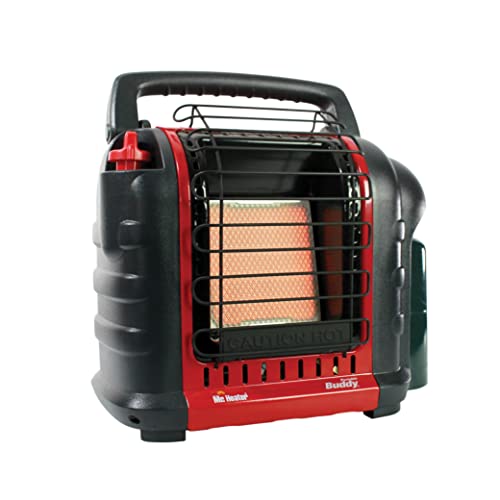
Unlike the electric PTC units above, the Mr. Heater Portable Buddy uses propane infrared radiant heat, delivering a sun-like warmth that heats people and objects directly rather than only warming air.
Key Features Referenced: Adjustable output from 4,000 to 9,000 BTU, effective for up to 225 sq.ft., improved tip-over safety switch, and a durable piezo igniter. The unit is marketed as indoor-safe for specific use cases when ventilation recommendations and safety instructions are followed.
Use Cases: Appropriate for workshops, unheated garages, job sites, or open patios where electrical options are limited and immediate radiant heat is preferable. Follow manufacturer guidelines for indoor use and ventilation requirements; this is a different heating approach compared to electric ceramic heaters.
Buying Guide: How To Choose A Large Portable Heater
Choosing the right portable heater for a large room requires matching heating method, coverage, safety, and operational controls to your space and needs. Below are the primary factors to compare.
1. Heating Method And Effectiveness
- PTC Ceramic (Electric): Heats air quickly, often with fans and oscillation to distribute heat. Best for climate-controlled homes and spaces with electrical access.
- Infrared/ Radiant (Propane or Electric): Warms people and objects directly. Radiant heaters can feel warmer sooner in open or drafty areas and are useful where heating air is inefficient.
- Match the method to your space: radiant for work zones or garages, electric ceramic for bedrooms, living rooms, and open-plan interiors.
2. Coverage Area And Heat Output
- Manufacturers provide suggested square footage or airflow speeds (ft/s). For large rooms, look for units rated for 200–250 sq.ft. or with long-throw airflow designs.
- 1500W electric is common for indoor portable units and typically adequate for many rooms; BTU ratings are more common for propane units.
3. Safety Features
- Tip-Over Protection: Shuts off if knocked over — essential in homes with pets or kids.
- Overheat Protection: Auto shutoff to prevent excessive temperatures.
- Material Ratings: Flame-retardant housings (e.g., V0) and ETL/UL certifications add assurance.
- For fuel-based heaters, follow ventilation guidance and CO safety recommendations.
4. Controls, Timers, And Thermostats
- Precise thermostats (1°F increments) and digital displays allow efficient temperature maintenance and energy savings.
- Remote controls and programmable timers improve convenience and can reduce power use by avoiding constant full-power operation.
5. Noise And Comfort
- Noise levels matter in bedrooms and offices — units with low dB ratings or quiet fan designs are preferable.
- Oscillation improves perceived evenness of warmth; fans may also move dust—consider placement and filtration needs.
6. Portability And Placement
- Consider size, weight, and carry handles if you plan to move the heater between rooms frequently.
- Look at cord length and plug type; some manufacturers caution against extension cord use for high-wattage heaters.
7. Energy Use And Operating Costs
- Electric units usually specify wattage (e.g., 1500W). Higher wattage provides faster heating but increases draw — use thermostats and timers to control costs.
- Propane units convert fuel to heat differently — evaluate fuel availability and ventilation needs rather than electrical cost alone.
8. Specific Use-Case Comparisons
- Bedrooms/Offices: Quiet electric PTC units with thermostats and timers are typically best.
- Garages/Workshops: Radiant propane or high-output electric units are effective; ensure ventilation and safety measures.
- Large Living Areas: Choose units with long-throw airflow, oscillation, or multiple modes to distribute heat evenly.
9. Maintenance And Longevity
- Check manufacturer guidance for cleaning filters and fan housings. PTC elements generally require less maintenance than combustion-based units.
- Inspect cords and plugs regularly, and follow recommended replacement intervals for fuel canisters in propane heaters.
10. Safety Practices And Installation Tips
- Place heaters on stable, level surfaces away from flammable materials and drapes.
- Avoid running high-wattage heaters on extension cords unless specifically rated; prefer direct wall outlet connections.
- For propane units used indoors, follow ventilation instructions, monitor CO detectors, and adhere to local codes.
Comparing these perspectives—heating method, coverage, safety, and control features—will help you select the best large portable heater for your room type and usage pattern. Consider trade-offs between immediate radiant warmth and longer-range electric airflow when deciding between heater technologies.
Tips for Getting the Best HVAC Prices
- Prioritize Quality Over Cost
The most critical factor in any HVAC project is the quality of the installation. Don’t compromise on contractor expertise just to save money. - Check for Rebates
Always research current rebates and incentives — they can significantly reduce your overall cost. - Compare Multiple Quotes
Request at least three estimates before making your choice. You can click here to get three free quotes from local professionals. These quotes include available rebates and tax credits and automatically exclude unqualified contractors. - Negotiate Smartly
Once you've chosen a contractor, use the proven strategies from our guide — How Homeowners Can Negotiate with HVAC Dealers — to get the best possible final price.