
Finding a large propane heater suitable for indoor spaces means balancing output, safety, and installation. The table below summarizes five indoor-focused propane wall and vent-free heaters that deliver high BTU output for garages, cabins, sunrooms, and additions. Each product entry links to the Amazon listing for more specifications and purchase details.
| Product | Brand | BTU Range / Type |
|---|---|---|
| Mr. Heater 20,000 BTU Blue Flame Vent Free | Mr. Heater | 20,000 BTU • Blue Flame • Vent-Free |
| Dyna-Glo 30,000 BTU Infrared Vent Free | Dyna-Glo | 6,000–30,000 BTU • Infrared • Vent-Free |
| Mr. Heater 30,000 BTU Vent Free Radiant | Mr. Heater | 30,000 BTU • Radiant • Vent-Free |
| Dyna-Glo 30,000 BTU Blue Flame Vent Free | Dyna-Glo | 24,000–30,000 BTU • Blue Flame • Vent-Free |
| OKF Propane Heater 6,000–18,000 BTU | OKF | 6,000/12,000/18,000 BTU • Portable • ODS & Tip-Over |
Content Navigation
- Mr. Heater 20,000 BTU Blue Flame Vent Free
- Dyna-Glo 30,000 BTU Infrared Vent Free
- Mr. Heater 30,000 BTU Vent Free Radiant
- Dyna-Glo 30,000 BTU Blue Flame Vent Free
- OKF Propane Heater 6,000–18,000 BTU
- Buying Guide For Large Indoor Propane Heaters
- 1. Heater Type: Blue Flame, Radiant (Infrared), Or Vent-Free
- 2. BTU Output And Coverage
- 3. Safety Features
- 4. Fuel Type, Supply, And Runtime
- 5. Installation And Clearance
- 6. Local Codes And Vent-Free Restrictions
- 7. Efficiency And Heating Strategy
- 8. Noise, Controls, And Thermostats
- 9. Maintenance And Serviceability
- 10. Comparison Perspectives
Mr. Heater 20,000 BTU Blue Flame Vent Free
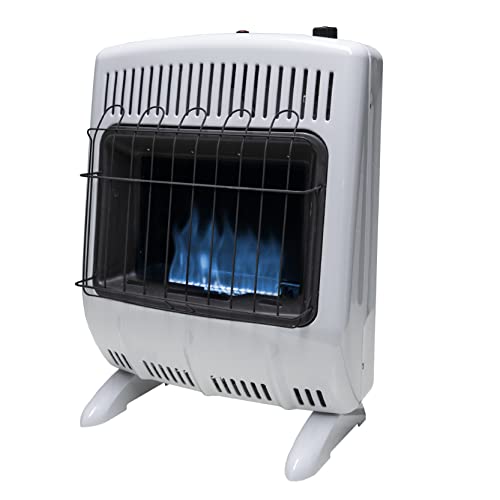
This vent-free blue flame heater produces up to 20,000 BTUs, designed to warm rooms and cabins up to about 700 sq. ft. The unit includes a thermostat for accurate temperature control and a battery-powered electronic ignition for straightforward startup. Fuel consumption data and elevation performance are provided by the manufacturer, indicating steady operation up to 4,500 ft.
Important safety features include an Oxygen Depletion Sensor (ODS), which automatically shuts down the unit if oxygen levels drop. The product listing references reliable performance and a predefined fuel consumption rate. This heater is intended as a wall-mounted permanent or semi-permanent indoor heat source where vent-free systems are permitted by local codes.
Dyna-Glo 30,000 BTU Infrared Vent Free

This Dyna-Glo wall heater uses infrared technology to radiate heat directly to objects and people, similar to sunlight. It offers variable output from 6,000 to 30,000 BTU/hr, suitable for spaces up to approximately 1,000 sq. ft. The listing identifies it as liquid propane ready and notes that fuel conversions are not permitted by the manufacturer.
Call 888-896-7031 for Free Local HVAC Quotes – Compare and Save Today!
As an infrared vent-free unit, this heater emphasizes radiant coverage rather than whole-room convective heating. The product features adjustable heat output for zoning or supplemental warmth. Users should confirm local code allowances for vent-free infrared heaters and ensure adequate room ventilation where required.
Mr. Heater 30,000 BTU Vent Free Radiant

This model provides 30,000 BTU of radiant heat, using multiple burner tiles to deliver sun-like warmth directly to people and surfaces. The manufacturer reports efficient fuel use and gives a runtime example at full output based on a minimum 20 lb LP cylinder. Coverage estimates reach about 1,000 sq. ft.
The listing highlights high efficiency and radiant delivery, making the unit a candidate for large additions, sunrooms, and cabins. As a vent-free product, it offers straightforward wall mounting and strong radiant output, but it requires adherence to local building codes and room ventilation guidance for safe indoor operation.
Dyna-Glo 30,000 BTU Blue Flame Vent Free

This Dyna-Glo blue flame wall heater operates between 24,000 and 30,000 BTU/hr and is designed to convectively warm air, similar to central heating. The manufacturer labels it as liquid propane ready with mounting for wall installations and a heat capacity suitable for up to 1,000 sq. ft.
Call 888-896-7031 for Free Local HVAC Quotes – Compare and Save Today!
Blue flame technology focuses on warming room air rather than direct radiant heating. The product listing notes variable heat output and wall-mount installation. As with other vent-free units, buyers should verify applicable codes and ensure the area meets vent-free operation requirements and clearance specifications.
OKF Propane Heater 6,000–18,000 BTU

The OKF portable heater offers 3 heat settings (6,000 / 12,000 / 18,000 BTU) with pulse ignition and a supplied regulator and hose for a 20 lb propane tank. Manufacturer features include ODS (Oxygen Depletion Sensor) and tip-over shutoff for safety in enclosed or semi-enclosed spaces.
Pulse ignition is described as durable and easy to use. The listing indicates the heater can warm up to about 450 sq. ft. on higher settings and provides long runtime on low output. This product is positioned as a flexible indoor/outdoor option where local codes permit portable propane appliances indoors.
Buying Guide For Large Indoor Propane Heaters
Selecting a large propane heater for indoor spaces involves several intersecting factors: heat output, heater type, safety systems, installation, fuel supply, and local codes. The sections below explain those considerations and compare key perspectives to help identify the right match for a given space.
1. Heater Type: Blue Flame, Radiant (Infrared), Or Vent-Free
- Blue Flame (Convective): Heats air by combustion. Good for whole-room heating and distribution similar to central units. Examples: blue flame wall heaters that list convective performance.
- Radiant / Infrared: Warms people and objects directly. Often feels warmer at lower air temperatures; efficient for spot heating and large, open rooms.
- Vent-Free: Sells as high-efficiency indoor options because they release combustion products into the room within acceptable limits when used correctly. Ensure compliance with local regulations.
2. BTU Output And Coverage
Match BTU capacity to square footage and ceiling height. As a general guide, larger open or poorly insulated spaces need higher BTU outputs. Many wall-mounted vent-free units list coverage up to 700–1,000 sq. ft. Radiant units may effectively heat a person-centered zone with fewer BTUs.
3. Safety Features
- Oxygen Depletion Sensor (ODS): Essential for indoor propane devices to shut off if oxygen drops to unsafe levels.
- Tip-Over Switch: Important for portable units; cuts fuel if tipped.
- Carbon Monoxide Considerations: Vent-free heaters are engineered to limit indoor emissions, but CO monitors and adequate ventilation are recommended.
4. Fuel Type, Supply, And Runtime
Confirm whether the unit requires liquid propane cylinders or a permanent propane line. Larger outputs may require heavier cylinders or dedicated supply lines. Manufacturer runtime estimates and fuel consumption rates help plan refills and placement.
5. Installation And Clearance
Wall-mounted units need specific clearances and mounting hardware; some require professional installation. Portable models require space for tanks and proper placement to avoid obstructions and maintain safety sensor function.
6. Local Codes And Vent-Free Restrictions
Vent-free appliances are restricted or regulated in some jurisdictions. Verify state and local building codes and homeowner association rules before purchasing. If vent-free is not allowed, consider direct-vent or sealed-combustion alternatives.
7. Efficiency And Heating Strategy
Decide whether you want whole-room heating (blue flame/convective) or targeted radiant warmth (infrared). Radiant heaters can create comfortable conditions at lower ambient air temperatures, while convective units equalize room temperature more uniformly.
8. Noise, Controls, And Thermostats
Check whether the model includes a thermostat or variable controls for consistent comfort. Electronic ignition and quiet operation are beneficial in living spaces. Wall thermostats provide precise control for whole-room heating.
9. Maintenance And Serviceability
Look for accessible burner tiles or panels, replacement parts availability, and manufacturer support. Regular inspection of fittings, hoses, and sensors is recommended for safe operation.
10. Comparison Perspectives
- Performance vs. Installation Complexity: High-BTU wall units provide more power but require mounting and clearances; portable units are flexible but limited in max output.
- Radiant vs. Convective Comfort: Radiant feels warmer at lower air temps; convective units warm air more uniformly.
- Safety vs. Efficiency: Vent-free units maximize usable heat but require strict adherence to safety and code constraints; sealed-combustion alternatives trade some efficiency for added safety where vent-free is not allowed.
When choosing a large indoor propane heater, prioritize models with documented safety features such as ODS and reliable ignition, verify local code compliance, and match BTU capacity and heater type to the room layout and insulation. Proper installation and routine checks ensure safe and effective operation of high-output indoor propane heaters.
Tips for Getting the Best HVAC Prices
- Prioritize Quality Over Cost
The most critical factor in any HVAC project is the quality of the installation. Don’t compromise on contractor expertise just to save money. - Check for Rebates
Always research current rebates and incentives — they can significantly reduce your overall cost. - Compare Multiple Quotes
Request at least three estimates before making your choice. You can click here to get three free quotes from local professionals. These quotes include available rebates and tax credits and automatically exclude unqualified contractors. - Negotiate Smartly
Once you've chosen a contractor, use the proven strategies from our guide — How Homeowners Can Negotiate with HVAC Dealers — to get the best possible final price.