
Choosing the right liquid propane heater depends on room size, venting type, portability, and safety features. Below is a quick comparison of five well-reviewed options that cover infrared, blue-flame, vented, and portable designs to suit different needs.
| Product | Type | BTU Range | Coverage |
|---|---|---|---|
| Dyna-Glo IR30PMDG-1 | Infrared Vent-Free Wall | 6,000–30,000 | Up To 1,000 Sq. Ft. |
| Mr. Heater Green Big Buddy | Portable Space Heater | 4,000–18,000 | Small Rooms, Garages, Tents |
| Dyna-Glo IR12PMDG-1 | Infrared Vent-Free Wall | 6,000–12,000 | Up To 300 Sq. Ft. |
| Dyna-Glo 30,000 Blue Flame | Blue Flame Vent-Free Wall | 24,000–30,000 | Up To 1,000 Sq. Ft. |
| Comfort Glow 11,000 Direct Vent | Direct Vent Wall Heater | 11,000 | Up To 375 Sq. Ft. |
Content Navigation
- Dyna-Glo IR30PMDG-1 30,000 BTU Infrared
- Mr. Heater 4,000-18,000 BTU Big Buddy
- Dyna-Glo IR12PMDG-1 12,000 BTU Infrared
- Dyna-Glo 30,000 BTU Blue Flame Vent-Free
- Comfort Glow 11,000 BTU Direct Vent Wall Heater
- Buying Guide: How To Choose A Liquid Propane Heater
- 1. Heater Type And Venting
- 2. Heating Capacity (BTU) And Room Size
- 3. Safety Features
- 4. Installation And Local Codes
- 5. Fuel Connection And Portability
- 6. Thermostatic Control And Settings
- 7. Efficiency, Comfort, And Heat Distribution
- 8. Maintenance And Serviceability
- 9. Noise And Installation Footprint
- 10. Safety And Usage Scenarios
Dyna-Glo IR30PMDG-1 30,000 BTU Infrared

Type: Vent-free infrared wall heater. Fuel: Liquid propane ready (no field conversion allowed). This unit uses infrared technology to radiate heat to objects and people first, similar to sunlight, rather than only warming room air.
Heating output is variable from 6,000 to 30,000 BTU/hr, intended for larger open spaces or whole-room supplemental heating up to approximately 1,000 sq. ft. The vent-free design maximizes efficiency by delivering most heat directly into the room, but requires compliance with local indoor vent-free regulations and adequate ventilation.
Key considerations include proper installation to manufacturer guidelines, ensuring appropriate clearance and manufacturer-recommended combustibles distances. Infrared models provide fast radiant warmth but may create temperature differences between floor and ceiling compared with forced-air systems.
Mr. Heater 4,000-18,000 BTU Big Buddy

Call 888-896-7031 for Free Local HVAC Quotes – Compare and Save Today!
Type: Portable propane heater with dual regulator design. Designed for portability, this heater accepts disposable cylinders or connection to a remote gas supply with an optional hose and filter.
Output ranges from 4,000 to 18,000 BTU, allowing use in small rooms, workshops, garages, or outdoor covered areas. The unit includes a Piezo ignition for push-and-turn lighting and safety features such as an Oxygen Depletion Sensor (ODS) and automatic tip-over shut-off.
Its portability and simple operation make it suitable for temporary heating needs. Because it is primarily for well-ventilated or outdoor use, users should follow manufacturer guidance on indoor use and ventilation to avoid buildup of combustion byproducts.
Dyna-Glo IR12PMDG-1 12,000 BTU Infrared

Type: Compact vent-free infrared wall heater. Fuel: Liquid propane ready (field conversion not permitted). Infrared emission warms people and objects first.
This model provides 6,000–12,000 BTU/hr output and is rated for spaces up to about 300 sq. ft. It is intended for small-to-medium rooms where direct radiant heating is preferred over convective air warming.
Call 888-896-7031 for Free Local HVAC Quotes – Compare and Save Today!
The smaller infrared unit shares similar benefits and considerations with larger infrared models: fast perceived warmth and efficient use of fuel for occupied spaces. Vent-free mounting requires adherence to local codes and manufacturer clearances.
Dyna-Glo 30,000 BTU Blue Flame Vent-Free

Type: Vent-free blue flame wall heater. Fuel: Liquid propane ready (no conversion). Blue flame technology convects heated air, making this style similar to central heating in how it warms room air.
Output is adjustable between 24,000 and 30,000 BTU/hr, designed for open areas up to approximately 1,000 sq. ft. Blue flame units distribute heat by warming air that circulates naturally, which often produces more even room temperatures than direct infrared radiation.
As a vent-free convective heater, installation must meet local vent-free appliance regulations and provide adequate combustion air. Blue flame models typically require less direct line of sight than infrared units to deliver comfortable warmth throughout a space.
Comfort Glow 11,000 BTU Direct Vent Wall Heater
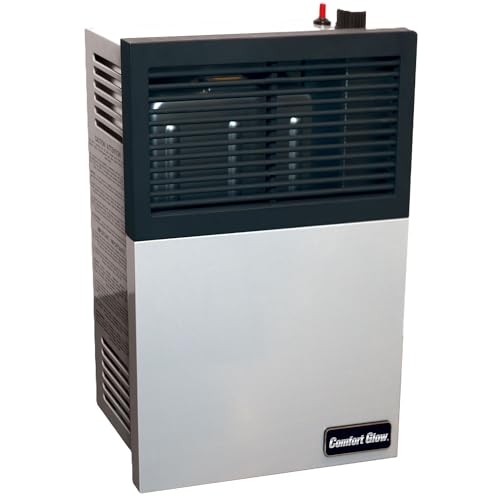
Type: Direct vent (sealed combustion) propane wall heater. The sealed burn system draws outdoor combustion air and exhausts gases outside, reducing indoor moisture and combustion byproducts.
Rated at 11,000 BTU and designed for spaces up to about 375 sq. ft. The unit features matchless Piezo ignition, a safety pilot with built-in pressure regulator to stop gas flow if the pilot extinguishes, and a compact wall-mount design.
Direct vent heaters are often preferred where indoor air quality, reduced humidity, or code restrictions limit vent-free appliances. They require a vent path through an exterior wall and professional installation that follows venting and clearance specifications.
Buying Guide: How To Choose A Liquid Propane Heater
Selecting the right propane heater requires evaluating multiple factors. Below are the most important considerations to compare models objectively before purchase.
Tips for Getting the Best HVAC Prices
- Prioritize Quality Over Cost
The most critical factor in any HVAC project is the quality of the installation. Don’t compromise on contractor expertise just to save money. - Check for Rebates
Always research current rebates and incentives — they can significantly reduce your overall cost. - Compare Multiple Quotes
Request at least three estimates before making your choice. You can click here to get three free quotes from local professionals. These quotes include available rebates and tax credits and automatically exclude unqualified contractors. - Negotiate Smartly
Once you've chosen a contractor, use the proven strategies from our guide — How Homeowners Can Negotiate with HVAC Dealers — to get the best possible final price.
1. Heater Type And Venting
- Vent-Free (Infrared or Blue Flame): High efficiency since combustion products enter the room. Infrared warms people and objects; blue flame convects air. Check local codes and room ventilation before choosing.
- Direct Vent (Sealed Combustion): Draws combustion air from outside and exhausts outside. Better for indoor air quality and permitted in more restricted installations, but requires exterior wall venting.
- Portable Units: Useful for temporary or outdoor-covered heating. Ensure safety features for indoor use and follow ventilation guidance.
2. Heating Capacity (BTU) And Room Size
- Match BTU output to the space. Manufacturers provide approximate coverage; use these as starting points but consider ceiling height, insulation, and windows.
- Infrared models often feel warmer at lower ambient temps because they heat people and objects directly. Convective blue flame or direct vent units may require higher BTU to achieve similar perceived warmth in cold, drafty rooms.
3. Safety Features
- Oxygen Depletion Sensor (ODS): Shuts off the heater if oxygen drops below safe levels—standard on many portable and ventless units.
- Tip-Over Shut-Off: Critical for portable heaters used in garages or temporary setups.
- Sealed Combustion/Pressure Regulators: Direct vent units often include safeguards to prevent gas flow if the pilot extinguishes.
4. Installation And Local Codes
- Vent-free appliances may be restricted or prohibited in some jurisdictions and multifamily buildings. Confirm code compliance before buying.
- Direct vent units require an exterior penetration and may need professional installation. Wall-mount clearances, combustible materials, and mounting height all matter for safe operation.
5. Fuel Connection And Portability
- Some units are designed only for fixed liquid propane supply; others accept disposable cylinders or optional hose connections. Choose based on whether you need portability.
- Check whether field conversion between propane and natural gas is permitted; many units are factory-configured and do not allow conversion.
6. Thermostatic Control And Settings
- Thermostatic models maintain a target temperature and may be more fuel-efficient for continuous use. Manual multi-setting units give simpler control for intermittent warming.
- Consider whether the model offers low/medium/high settings, a built-in thermostat, or compatibility with remote thermostats for zoned heating.
7. Efficiency, Comfort, And Heat Distribution
- Infrared: Provides fast, focused warmth but can leave uneven air temperatures. Good for frequently occupied spots.
- Blue Flame / Convective: Warms air and tends to produce more even room temperatures for continuous heating.
- Direct Vent: Often better for long-term indoor comfort with less effect on indoor humidity and air quality.
8. Maintenance And Serviceability
- Confirm access to replacement parts like thermocouples, pilot assemblies, and ODS sensors. Routine cleaning of vents and burners preserves performance.
- Follow manufacturer maintenance guidelines and schedule professional inspections where required by local codes.
9. Noise And Installation Footprint
- Most gas wall heaters are quiet; portable models with fans may produce some noise. Consider available wall space and clearance requirements for wall-mounted units.
10. Safety And Usage Scenarios
- For enclosed living spaces where indoor air quality is a priority, prefer direct vent units.
- For workshops, temporary heating, or outdoor-covered areas, portable models with ODS and tip-over protection are practical.
- For efficient whole-room supplemental heat without venting, vent-free blue flame or infrared units provide high output but require code review.