
Looking For A Low Profile Baseboard Heater? This guide compares five compact baseboard heaters ideal for narrow wall spaces, bedrooms, and offices. Below is a quick comparison table of the selected models and their standout features to help you scan options fast.
| Product | Type | Power / Voltage | Standout Feature |
|---|---|---|---|
| Comfort Zone CZ600 | Convection Electric Baseboard | 1500W / 120V | Adjustable Thermostat, Safety Features |
| Comfort Zone CZ650B | Convection Baseboard w/ Digital Thermostat | 1500W / 120V | Digital Thermostat, Quiet Operation |
| Cadet 36″ 3F750-1W | Hard-Wired Electric Baseboard | 750W / 120V | Low Profile, Requires Thermostat |
| Cadet 48″ 4F1000W | Hard-Wired Electric Baseboard | 1000/750W / 240/208V | Universal Wiring, High Temp Shutoff |
| KING 4K1210BW | Hard-Wired Baseboard Heater | 1000W / 120V | Aluminum Ribbon Fin, Full-Length Cutout |
Content Navigation
Comfort Zone CZ600 Baseboard Heater

The Comfort Zone CZ600 is a compact convection baseboard heater designed for medium-sized rooms. It delivers 1500 watts with two heat settings and an adjustable thermostat for basic temperature control. The unit emphasizes safety with a tip-over switch, overheat protection, and a stay-cool body, making it suitable near high-traffic areas.
This model claims whisper-quiet operation, which makes it appropriate for bedrooms and offices where noise matters. The dent-proof end panels add durability for wall-mounted use. Because it’s a plug-in convection style, it offers simple installation compared with hard-wired baseboards but verify electrical compatibility for your space.
Comfort Zone CZ650B Digital Heater

The Comfort Zone CZ650B is a 1500-watt convection baseboard with a digital thermostat and two heat settings. The digital control offers more precise temperature readout and repeatable settings compared with analog knobs. Like other Comfort Zone units, it has overheat protection, a tip-over switch, and a stay-cool exterior for safety.
Call 888-896-7031 for Free Local HVAC Quotes – Compare and Save Today!
Design features highlight quiet operation and dent-proof end panels. This model works well where you want a slim heater with clearer temperature control and quieter performance, especially in bedrooms or workspaces. Confirm mounting and power options before installation.
Cadet 36″ Baseboard Heater
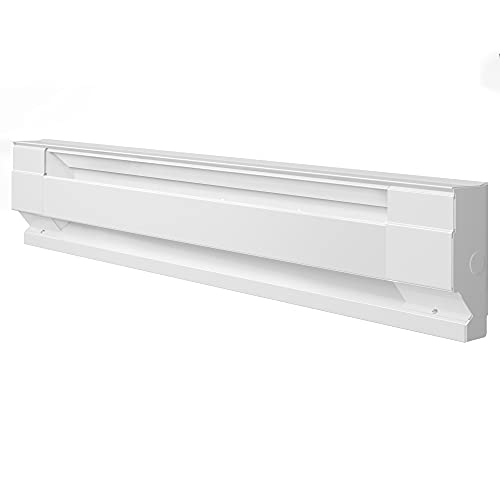
The Cadet 36″ 3F750-1W is a traditional hard-wired baseboard heater rated at 750 watts / 120V. Its low-profile all-metal housing and powder-coated finish suit narrow walls and tight spaces. The unit requires an external thermostat, which provides flexibility if you prefer a wall thermostat or integrated room control.
Built from quality gauge steel, the Cadet unit prioritizes durability and a compact footprint. It’s a good fit where permanent installation and connection to a central thermostat are planned. The simple design supports straightforward mounting and long service life when paired with proper electrical wiring.
Cadet 48″ F Series Baseboard Heater
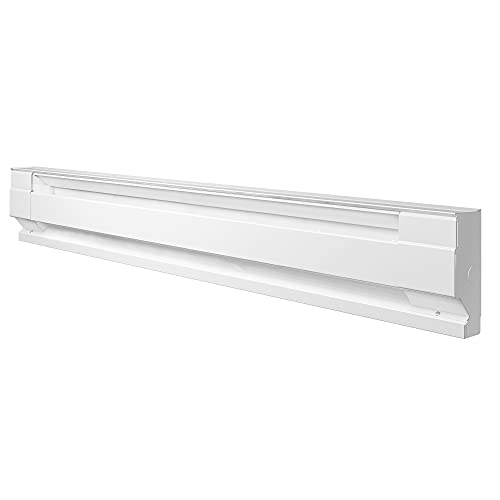
The Cadet F Series 48″ (4F1000W) provides options for higher-voltage installations at 240/208V with 1000/750 watts rating. It’s engineered for small to medium rooms, offering robust heat output while staying relatively low profile. Installation is simplified with universal wiring and pre-punched knockouts.
Call 888-896-7031 for Free Local HVAC Quotes – Compare and Save Today!
Safety features include a high-temperature safety shutoff, helping prevent overheating during prolonged use. This model suits finished rooms where hard-wiring to a central control is preferred. Its length and wattage give broader heat spread along the baseboard compared with shorter units.
KING 4K1210BW Baseboard Heater

The KING 4K1210BW is a hard-wired 4-foot baseboard rated for 1000W at 120V. It uses an aluminum ribbon fin element for efficient heat transfer and includes a full-length safety cutout to reduce hot spots. This construction contributes to a slim profile and consistent heat distribution along the unit.
KING’s model is not a plug-in unit; it requires direct wiring, which suits permanent installations in homes and apartments. The aluminum element helps reduce weight while providing steady warmth. As with other hard-wired baseboards, pair this with an appropriate thermostat for best control.
Buying Guide: How To Choose A Low Profile Baseboard Heater
Picking the right low profile baseboard heater depends on room size, electrical setup, and safety or control preferences. Below are key factors to compare when evaluating models.
1. Power And Room Size
Calculate required wattage by room square footage. As a rule of thumb, baseboard heaters provide roughly 10 watts per square foot for average insulation. Small rooms often work with 500–1000W, while medium rooms may need 1000–1500W. Choose a length and wattage pairing that distributes heat evenly along the wall.
2. Voltage And Wiring Type
Decide between plug-in and hard-wired units. Plug-in convection heaters are easier to install but typically limited to 120V circuits. Hard-wired baseboards support 120V or 240V and larger wattages, require professional wiring, and integrate with wall thermostats or line voltage controls.
3. Thermostat And Control Options
Integrated thermostats simplify control on plug-in units. Digital thermostats offer more precise setpoints and programming. For hard-wired baseboards, choose a compatible line-voltage thermostat or a central control. Consider programmable or smart thermostats for improved energy management.
4. Safety Features
Look for overheat protection, high-temperature shutoff, and stay-cool bodies if the heater is in a high-traffic area. Tip-over switches apply to portable plug-in units. Full-length safety cutouts and robust metal housings reduce risk of hot spots and accidental contact.
5. Installation And Mounting
Measure wall height and available baseboard length. Low profile heaters need adequate clearance from furniture and drapery. Confirm whether the unit mounts to floor or wall and whether pre-punched knockouts or wiring chases match your setup. Hard-wired install typically requires an electrician.
6. Material, Durability, And Finish
Steel housings and powder coats improve longevity and resist dents. Aluminum fins can lower weight and aid heat transfer. If aesthetics matter, check available color and endcap styles. For older homes, consider replacement covers to refresh existing baseboard appearance.
7. Noise And Operation
Convection baseboards are generally quiet, but some designs create airflow noise. If noise is a concern for bedrooms or offices, prioritize models advertising whisper-quiet operation or digital controls that minimize cycling sounds.
8. Energy Efficiency And Heat Distribution
Baseboard heaters are most efficient when paired with proper insulation and zoning. Longer units with uniform element distribution reduce hot and cold spots. Use thermostats with setback or programmable features to reduce runtime and energy use.
9. Compatibility With Existing Systems
If replacing existing baseboards, check length limits and mounting points. Replacement covers can modernize appearance without changing heating elements. For hydronic systems or older electric systems, confirm that a direct replacement is appropriate.
10. Maintenance And Warranty
Review cleaning and maintenance needs, such as dust removal from fins and regular inspection of wiring. Check manufacturer warranty terms for parts and labor to understand coverage for heating elements and controls.
Comparison Perspectives:
Tips for Getting the Best HVAC Prices
- Prioritize Quality Over Cost
The most critical factor in any HVAC project is the quality of the installation. Don’t compromise on contractor expertise just to save money. - Check for Rebates
Always research current rebates and incentives — they can significantly reduce your overall cost. - Compare Multiple Quotes
Request at least three estimates before making your choice. You can click here to get three free quotes from local professionals. These quotes include available rebates and tax credits and automatically exclude unqualified contractors. - Negotiate Smartly
Once you've chosen a contractor, use the proven strategies from our guide — How Homeowners Can Negotiate with HVAC Dealers — to get the best possible final price.
- Plug-In vs Hard-Wired: Plug-in models (Comfort Zone) are easy to install and movable; hard-wired units (Cadet, KING) are better for permanent heat loads and higher wattages.
- Digital Thermostat vs Manual: Digital thermostats (CZ650B) provide precise control and programming; manual thermostats are simpler and sometimes more affordable.
- Length vs Wattage: Longer baseboards spread heat more evenly at lower surface temperatures; shorter high-wattage units can create hot spots.
- Safety Priorities: For homes with children or pets, prioritize models with stay-cool bodies, tip-over protection, and full-length safety cutouts.