
Mini split systems are a common solution when heating a garage or workshop without extending central HVAC ductwork. The options below focus on compact wall-mounted units with heat pump capability, inverter efficiency, and practical coverage for typical garage sizes. The summary table highlights each model’s basic capacity and a key feature to help quick comparison.
| Product | BTU | Typical Coverage | Key Feature |
|---|---|---|---|
| COSTWAY 12000BTU Mini Split | 12,000 BTU | Up To 750 Sq. Ft | Energy Efficient Inverter, Quiet |
| YITAHOME 12000 BTU Mini Split | 12,000 BTU | Up To 750 Sq. Ft | WiFi / Alexa Compatible |
| MRCOOL 12000 BTU Easy Pro | 12,000 BTU | Up To 550 Sq. Ft | DIY-Friendly Installation |
| ROVSUN 9000 BTU Mini Split | 9,000 BTU | Up To 400 Sq. Ft | Very Quiet Operation |
| ROVSUN 11500 BTU Mini Split | 11,500 BTU | Up To ~600 Sq. Ft | WiFi & Voice Control |
Content Navigation
COSTWAY 12000BTU Mini Split

Capacity And Coverage: Rated at 12,000 BTU, the unit is intended for spaces up to about 750 sq. ft. That makes it suitable for many single-car garages and larger workshops depending on insulation and climate.
Heating Technology: The system includes a 1-ton heat pump and inverter compressor, allowing the unit to modulate output rather than cycle on/off frequently. This helps with steady garage temperatures during shoulder seasons.
Modes And Controls: Offers auto, cool, dry, heat, and fan modes plus multiple fan speeds, ECO and turbo functions. A handheld remote provides timer and sleep scheduling for unattended operation.
Garage Considerations: Inverters and AHRI certification suggest predictable performance, but actual winter performance will depend on the model’s low ambient heating range and your garage insulation. The product notes quiet operation, which can matter if the garage is attached to living space.
Call 888-896-7031 for Free Local HVAC Quotes – Compare and Save Today!
YITAHOME 12000 BTU Mini Split
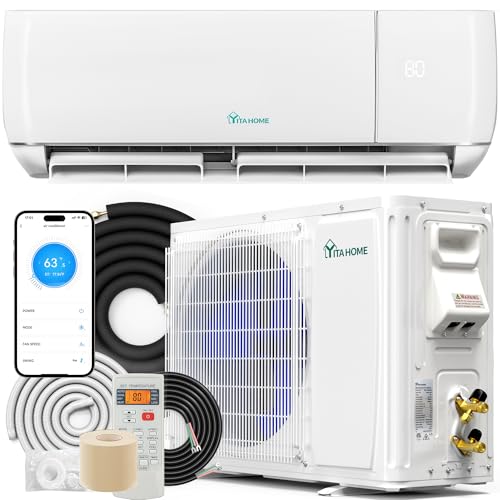
Capacity And Coverage: A 12,000 BTU inverter mini split rated to cover up to 750 sq. ft. Designed for residential and light commercial spaces including garages and basements.
Smart Features: Built-in WiFi and Alexa compatibility enable remote control, scheduling, and integration into smart home routines. This can be useful for pre-heating a garage before arrival.
Performance & Comfort: The unit includes automatic defrost, iFEEL mode, and PM2.5/ion filtration labeled as “HEALTH” mode. It also advertises low noise levels (under 41 dB) which reduces disturbance in attached homes.
Installation And Garage Use: Complete installation kits are often included, which may help garage installations where running refrigerant lines and condensate is straightforward. Check local code and installer guidance for cold-weather performance limits.
MRCOOL 12000 BTU Easy Pro

Call 888-896-7031 for Free Local HVAC Quotes – Compare and Save Today!
Capacity And Intended Use: A 12,000 BTU ductless inverter mini split covering roughly up to 550 sq. ft. The size suits a typical single-car garage or segmented workshop area.
DIY Installation Feature: Marketed as part of a DIY-friendly Easy Pro lineup. Pre-charged linesets and user-oriented installation accessories can reduce labor complexity, but professional installation is recommended if refrigerant handling laws apply in your area.
All-Season Operation: Designed for heating and cooling as a combo solution. For garage heating, consider the system’s low-ambient heating capability and whether additional garage insulation or a backup source is needed during extreme cold.
Practical Garage Notes: The MRCOOL approach focuses on simplified installation and robust compressor technology. Evaluate mounting location and condensate routing to prevent moisture issues in garage environments.
ROVSUN 9000 BTU Mini Split

Capacity And Suitability: At 9,000 BTU, this model is sized for spaces around 400 sq. ft. It is a good match for smaller garages, compact workshops, and insulated sheds.
Energy And Noise: The unit touts a 19 SEER2-equivalent inverter and very quiet operation (as low as 28 dB in mute mode). Quiet performance is valuable for attached garages or hobby spaces.
Heating Range: Designed with heat pump functionality and dehumidification. For uninsulated garages or very cold climates, supplemental heat may be required as performance declines with extreme low ambient temperatures.
Installation Notes: Includes pre-charged condenser and installation kit options. Confirm length of included lineset and whether additional materials are needed for larger garage layouts.
ROVSUN 11500 BTU Mini Split

Capacity And Coverage: Rated near 11,500 BTU with SEER2 performance and an estimated coverage suited for medium garages and workshops.
Smart Controls And Efficiency: This model includes WiFi and voice control17 SEER2
Operational Limits: Manufacturer notes operation across a broad temperature range; verify low-ambient heating specs if your garage regularly experiences subfreezing temperatures.
Practical Garage Advice: The combination of higher capacity and smart controls can be advantageous if you want scheduled pre-heating or remote monitoring before entering the garage.
Buying Guide For A Mini Split Garage Heater
This section outlines the key considerations when choosing a mini split specifically for garage heating, comparing core factors and practical installation points.
1. Sizing And BTU Selection
Match BTU To Garage Volume: Calculate garage volume (square footage × ceiling height). Typical guidance: 9,000–12,000 BTU for single-car garages, 12,000–18,000 BTU for larger or poorly insulated spaces. Factor in insulation, door openings, and climate.
2. Heat Pump Low-Ambient Performance
Low-Temperature Ratings Matter: Heat pump output declines as outdoor temperatures fall. Check manufacturer low-ambient heating specifications and consider models with enhanced cold-weather function or an auxiliary heat source if you live in very cold regions.
3. Energy Efficiency And Operating Cost
SEER2 And Inverter Technology: Higher SEER2 ratings and inverter compressors generally yield lower runtime energy consumption. For a garage that will be heated intermittently, inverter units provide smoother ramp-up and can be more efficient.
4. Noise And Placement
Noise Levels: If the garage is attached to living space, prioritize lower indoor unit dB levels. Also, plan outdoor condenser placement away from bedroom windows and ensure secure mounting to minimize vibration noise.
5. Installation Practicalities
Pre-Charged Linesets vs. Professional Refrigerant Handling: Some models include pre-charged linesets that simplify DIY installations. However, local regulations may require certified technicians for refrigerant work. Confirm included kit lengths and condensate routing needs.
6. Smart Controls And Remote Access
WiFi And Scheduling: Remote control and scheduling let you pre-heat the garage before arrival. Voice integration and smartphone control are convenient for recurring routines but not essential for pure heating function.
7. Durability In Garage Environments
Moisture, Dust, And Chemical Exposure: Garages can be dusty and occasionally expose equipment to fumes. Choose models with accessible filters and straightforward maintenance, and locate outdoor units where they are protected from debris and chemicals.
8. Safety, Codes, And Permits
Electrical Requirements: Verify voltage and circuit size for each model. Some units are 115V and others 208/230V; garage wiring might need upgrading. Check local code for permits and whether a licensed HVAC professional is required.
9. Comparative Perspectives
- Smaller Garages: 9,000–11,500 BTU units offer efficient heating with lower upfront installation footprint and often quieter operation.
- Larger Or Poorly Insulated Garages: 12,000 BTU models or larger are preferable; consider insulation upgrades first to reduce required capacity and operating cost.
- Smart Features vs. Simplicity: WiFi and voice control add convenience for scheduled pre-heating; simpler units may reduce complexity and long-term network dependency.
- DIY vs. Professional Installation: DIY-friendly systems reduce labor cost but verify refrigerant handling laws. Professionals can optimize placement, condensate management, and electrical integration.
Final Practical Tips: Measure your space, check low-ambient heating specs, confirm included installation kit lengths, and plan for condensate disposal. For attached garages, prioritize quiet indoor units and good insulation to maximize comfort and efficiency.
Tips for Getting the Best HVAC Prices
- Prioritize Quality Over Cost
The most critical factor in any HVAC project is the quality of the installation. Don’t compromise on contractor expertise just to save money. - Check for Rebates
Always research current rebates and incentives — they can significantly reduce your overall cost. - Compare Multiple Quotes
Request at least three estimates before making your choice. You can click here to get three free quotes from local professionals. These quotes include available rebates and tax credits and automatically exclude unqualified contractors. - Negotiate Smartly
Once you've chosen a contractor, use the proven strategies from our guide — How Homeowners Can Negotiate with HVAC Dealers — to get the best possible final price.