
Efficient Electric Wall Heaters can deliver targeted warmth, lower energy waste, and supplement central systems. The short reviews below compare popular models by efficiency, controls, safety features, and installation to help you choose the right wall-mounted heater for bedrooms, offices, and small living spaces.
| Product | Brand | Key Strength |
|---|---|---|
| ENVI Plug-in Electric Panel Wall Heater | ENVI | Low-wattage, fan-less silent convection |
| Dreo Smart Wall Heater WH719S | Dreo | Wide oscillation, smart app and voice control |
| Heat Storm HS-1500-PHX-WIFI Infrared Heater | Heat Storm | Infrared warmth with Wi-Fi control |
| Dreo Smart Wall Heater IP24 | Dreo | PTC heating, precise ECO mode, low noise |
| Cadet Energy Plus Wall Heater CEC163TW | Cadet | Built-in digital thermostat, robust safety |
Content Navigation
- ENVI Plug-in Electric Panel Wall Heaters For Indoor Use
- Dreo Smart Wall Heater, 1500W WH719S
- Heat Storm HS-1500-PHX-WIFI Infrared Wall Mounted Heater
- Dreo Smart Wall Heater IP24 PTC Space Heater
- Cadet Energy Plus Wall Heater With Built-In Digital Thermostat
- Buying Guide: How To Choose An Efficient Electric Wall Heater
ENVI Plug-in Electric Panel Wall Heaters For Indoor Use
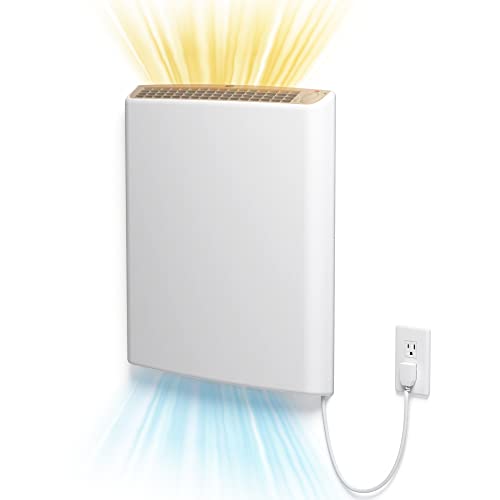
The ENVI panel is a low-wattage wall-mounted heater designed for continuous operation. It uses a fan-less convection design called “Stack Convection” for silent, gradual warmth. The manufacturer highlights energy-efficient targeted heating that can supplement central systems to reduce overall energy use.
Safety features include a wall-sense sensor that cuts power if removed and operation at a cool surface temperature (~90°F). The design avoids forced air, which can reduce dust and allergen circulation and may help maintain indoor humidity. The unit is noted as made in USA and installs quickly with a simple plug or wall mount.
Dreo Smart Wall Heater, 1500W WH719S

The Dreo WH719S pairs a 1500W PTC ceramic element with 120° vertical oscillation to distribute warm air broadly from top to bottom. The wide sweep aims to heat rooms more uniformly and reduce hot/cold spots common with point heaters.
Call 888-896-7031 for Free Local HVAC Quotes – Compare and Save Today!
Smart features include the Dreo app, scheduling, and voice control via Alexa/Google, plus a remote and a 24-hour timer. Temperature control is precise with a 1°F setpoint range from 41°F to 95°F. The design positions the unit as a controllable, efficient supplemental heater for occupied spaces where targeted warmth and automated schedules improve energy use.
Heat Storm HS-1500-PHX-WIFI Infrared Wall Mounted Heater

The Heat Storm HS-1500-PHX-WIFI is an infrared wall-mounted heater with Wi‑Fi connectivity. Infrared systems warm surfaces and occupants directly rather than heating air, which can feel efficient in certain room layouts and reduce perceived heat loss from drafts.
Controls include an on-unit touchscreen, remote, and smartphone control. Standard safety features are present, such as a tip-over shutoff and digital thermostat. The space-saving wall design is suitable for bedrooms, kitchens, and offices where floor space is limited and direct radiant heat is preferred.
Dreo Smart Wall Heater IP24 PTC Space Heater

The Dreo IP24 model emphasizes powerful PTC performance with optimized airflow and a low noise level (about 28 dB). A 30° manual oscillation directs heat where needed and combined with an ECO mode supports energy-efficient operation.
Call 888-896-7031 for Free Local HVAC Quotes – Compare and Save Today!
Smart conveniences include remote control, the Dreo app, and voice command support. Notably, it offers temperature calibration in the app for more accurate readings and an ECO mode that prioritizes lower power consumption while maintaining comfort.
Cadet Energy Plus Wall Heater With Built-In Digital Thermostat

Cadet’s Energy Plus series provides a complete wall heater unit with an onboard digital thermostat. The unit is designed for straightforward operation with push-button controls and a large display for easy temperature management.
Safety is emphasized through a thermal safeguard that shuts the heater off if operating temperatures exceed normal range. The product is compatible with existing Cadet Com‑Pak wall cans, simplifying replacement installs without additional wall work. This model targets buyers who want a robust, familiar hardwired heater with integrated thermostat controls.
Buying Guide: How To Choose An Efficient Electric Wall Heater
Selecting the right wall heater requires comparing heat delivery method, controls, installation, safety, and noise. The following factors and comparisons will help match a heater to your priorities.
Heat Delivery: Convection vs Infrared vs PTC
- Convection (fan-less or with fan): Warms air that circulates through the room. Fan-less panel models (like ENVI) operate silently and reduce dust movement but heat more slowly. Fan-assisted units distribute heat faster but can circulate dust.
- Infrared (radiant): Warms people and surfaces directly. Effective in rooms where direct occupant comfort is preferred and where air mixing is less important. Infrared can feel efficient in drafty areas or high-ceiling rooms.
- PTC ceramic: Rapid heating, self-regulating element that can offer efficient steady output and safety advantages. Often paired with oscillation for better distribution.
Controls And Smart Features
- Digital Thermostat: On-unit digital thermostats provide precise control and can improve runtime efficiency by avoiding overheating.
- Smart App And Voice: Remote scheduling, geofencing, and voice control (Alexa/Google) can reduce energy use by heating only when needed.
- Timers And ECO Modes: Built-in timers and ECO settings help limit run time during unoccupied hours or maintain lower setpoints that reduce electricity usage.
Installation And Power Requirements
- Plug-in vs Hardwired: Plug-in heaters are easier to install and portable; hardwired units require electrical work but can offer cleaner integration and dedicated circuits.
- Voltage And Wattage: Match the heater’s voltage to existing wiring. Higher wattage heats faster but draws more current; sizing should match the room area and circuit capacity.
- Mounting Location: Wall placement affects distribution—higher installs may benefit convection, while lower placement can better radiate to occupants.
Safety Features To Prioritize
- Overheat Protection/Thermal Safeguard: Mandatory for preventing damage or fire risk when airflow is obstructed.
- Tip-Over/Shutoff Sensors: Useful for plug-in or portable units; some wall designs incorporate removal sensors.
- Cool Surface Design: Low surface temperatures reduce burn risk, useful for homes with children or pets.
Efficiency Metrics And Room Sizing
- BTU/Watt Conversion: Compare wattage to intended room size—higher wattage covers larger rooms faster. Use manufacturer BTU or room coverage guidelines to size appropriately.
- Runtime Strategy: Targeted heating of occupied zones often saves more energy than heating the whole house. Consider pairing a wall heater with programmable schedules or smart control.
Noise And Air Quality Considerations
- Fan-less Designs are quiet and limit dust circulation—better for bedrooms or allergy sufferers.
- Fan-Assisted Units can be more effective at distributing heat quickly but might introduce noise and circulate dust.
Durability, Warranty, And Brand Support
- Look for models with clear warranty coverage and accessible customer support. Reputation for reliable components and easy replacement parts can reduce long-term costs.
- Products designed to use standard wall cans or mounting hardware simplify upgrades and replacements.
Comparative Perspectives To Decide
- If silent, continuous background heat is a priority, choose a fan-less panel unit with a cool surface sensor.
- If fast, widely distributed warmth and smart scheduling matter, consider an oscillating PTC model with app control.
- If direct radiant comfort and wall-mounted, low-profile installation are essential, an infrared Wi‑Fi model may be preferable.
- If straightforward hardwired replacement of an in-wall heater is needed, a Cadet unit with integrated thermostat and standard wall can compatibility is practical.
Use these guidelines with room measurements, household occupancy patterns, and electrical system limits to choose an efficient electric wall heater that fits your needs.
Tips for Getting the Best HVAC Prices
- Prioritize Quality Over Cost
The most critical factor in any HVAC project is the quality of the installation. Don’t compromise on contractor expertise just to save money. - Check for Rebates
Always research current rebates and incentives — they can significantly reduce your overall cost. - Compare Multiple Quotes
Request at least three estimates before making your choice. You can click here to get three free quotes from local professionals. These quotes include available rebates and tax credits and automatically exclude unqualified contractors. - Negotiate Smartly
Once you've chosen a contractor, use the proven strategies from our guide — How Homeowners Can Negotiate with HVAC Dealers — to get the best possible final price.