
Kerosene heaters offer powerful, off-grid warmth for garages, workspaces, and emergency use. This guide compares five efficient kerosene heaters selected for heat output, runtime, safety features, and portability. Use the summary table to compare key specs, then read focused product sections and a buying guide to decide which unit suits your needs.
| Model | Brand | BTU | Fuel Capacity | Approx. Run Time |
|---|---|---|---|---|
| 2 In 1 Kerosene Heater Stove | CNCEST | 9,000 BTU | 1.22 gal | 15–17 hours |
| CTN-110 Portable Kerosene Heater | KeroHeat (Sengoku) | 10,000 BTU | 1.2 gal | Up to 14 hours |
| HeatMate / HMC-23K | HeatMate (Sengoku) | 23,500 BTU | 1.9 gal | Up to 12 hours |
| 23,500 BTU Portable Kerosene Heater | KeroHeat (Sengoku) | 23,500 BTU | 1.9 gal | Up to 12 hours |
| 23,800 BTU Convection Heater | Dyna-Glo | 23,800 BTU | ~1.9 gal (typical) | Up to 12 hours |
Content Navigation
2 In 1 Kerosene Heater Stove

Brand: CNCEST. This compact, non-electric radiant heater combines portability and extended runtime. The unit delivers 9,000 BTU and claims a heating area up to 161 sq ft. Its 1.22-gallon tank supports roughly 15–17 hours of continuous operation under full fuel conditions.
Design features include an adjustable height (13.98–16.14 inches) and a carrying handle for mobility. A mesh exterior cover reduces direct contact with hot surfaces, which helps with safety in mixed-use spaces. The radiant format focuses heat outward, making it suitable for nearby work areas, small rooms, or camping environments where directional warmth is desired.
Efficiency considerations: smaller BTU output and long runtime suggest a balance favoring fuel economy for modest spaces. The radiant heat approach produces rapid local warmth but less whole-room air circulation than convection-style units.
CTN-110 Portable Kerosene Heater

Call 888-896-7031 for Free Local HVAC Quotes – Compare and Save Today!
Brand: KeroHeat (Sengoku). The CTN-110 is a cordless kerosene heater rated at 10,000 BTU and designed for indoor and outdoor use. It specifies effective heating coverage up to 400 sq ft and carries a 1.2-gallon fuel capacity with up to 14 hours runtime per fill.
Safety features include an automatic shut-off and a tip-over switch, plus protective guard grills. The model emphasizes portability and versatility for emergency situations, garages, basements, or camping. The non-electric ignition or push-button start reduces reliance on external power for operation.
Efficiency perspective: 10,000 BTU is a mid-range output that can heat medium-sized spaces efficiently. Runtime and fuel capacity indicate a focus on balanced fuel consumption vs. heat output for extended use without frequent refills.
HeatMate HMC-23K Portable Heater
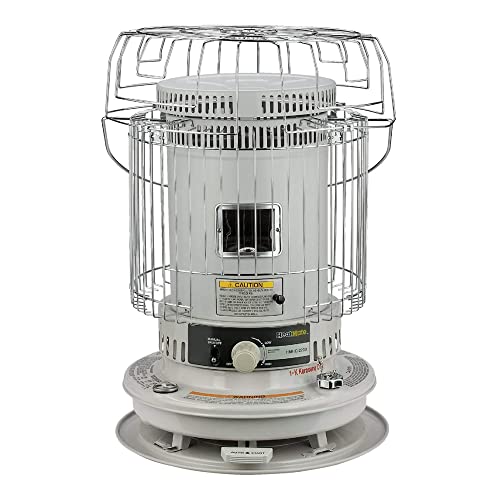
Brand: HeatMate (Sengoku). The HMC-23K delivers a high output of 23,500 BTU with an estimated heating area up to 1,000 sq ft and a 1.9-gallon tank supporting up to 12 hours of operation.
Key safety items include automatic shut-off, tip-over protection, and protective grills. The unit is cordless and intended for spaces that require significant heat without electrical reliance, such as large garages, poorly insulated rooms, or outdoor covered areas.
Call 888-896-7031 for Free Local HVAC Quotes – Compare and Save Today!
Efficiency viewpoint: high BTU paired with substantial fuel capacity provides rapid, widespread heating. For energy efficiency measured as heat delivered per gallon, the HMC-23K is suited where quick recovery and broad coverage are priorities; fuel consumption will be higher than lower-BTU units but heat per hour is greater.
23,500 BTU Portable Kerosene Heater

Brand: KeroHeat (Sengoku). This high-capacity unit offers 23,500 BTU and a fuel capacity of 1.9 gallons, with an indicated heating zone up to 1,000 sq ft and runtime near 12 hours on a full tank.
Features include push-button start, EZ Flame adjuster, tip-over switch, and protective grills. The design supports indoor use where permitted, plus outdoor and semi-enclosed spaces. The unit highlights quick start capability and straightforward flame control for sustained output.
Efficiency considerations: the combination of large BTU and sizable tank provides strong heat delivery for large spaces. Fuel burn rate will be substantial while running at maximum output, so efficiency assessment depends on whether fast heat or extended low-rate operation is the priority.
Dyna-Glo 23,800 BTU Convection Heater
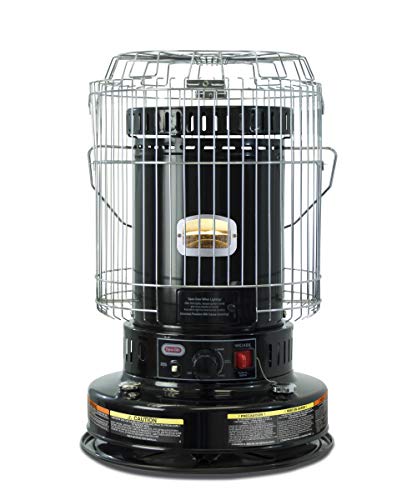
Brand: Dyna-Glo. The WK24BK model is a convection-style kerosene heater rated at about 23,800 BTU/hour, designed to heat spaces up to 1,000 sq ft without electricity.
Convection heaters distribute warmed air more evenly across a room compared with radiant models. Dyna-Glo emphasizes whole-space coverage and no-electric operation. Typical features for this category include large fuel capacity and simplified controls for sustained heating.
Efficiency viewpoint: convection units are efficient at maintaining ambient air temperature across larger spaces, reducing localized hot/cold zones. When paired with appropriate fuel management and airflow, convection heaters can provide fuel-efficient comfort for open-plan areas and garages.
Buying Guide: Choosing The Most Efficient Kerosene Heater
Selecting the most efficient kerosene heater requires balancing heat output, fuel consumption, safety features, and intended application. Use these criteria to evaluate models for your specific needs.
Heat Output (BTU) And Coverage
BTU rating determines potential heat delivered per hour. Lower BTU units (8,000–10,000) are efficient for small rooms and near-field radiant heating. High BTU units (23,000–24,000) are better for garages and large, poorly insulated areas. Choose BTU relative to room volume and insulation.
Fuel Capacity And Run Time
Fuel capacity controls runtime between refills. A larger tank extends operation but can increase unit size and weight. Compare claimed runtime at full fuel to estimate operational efficiency. Efficiency metrics vary by burn rate and thermostat use.
Heater Type: Radiant vs. Convection
- Radiant Heaters deliver direct, localized warmth and often consume less fuel for spot heating.
- Convection Heaters circulate warm air to heat an entire room more uniformly, which can be more efficient for space heating in larger areas.
Safety Features
Look for automatic shut-off, tip-over switches, protective grills, and cool-touch exteriors. These features are crucial when using heaters indoors, around pets, or in workspaces. Consider models with easy, reliable ignition and flame control.
Portability And Installation
Portability matters for frequent relocation. Smaller tanks and built-in handles improve mobility. For permanent or semi-permanent setups, ensure clearance and ventilation requirements are met according to local codes and manufacturer instructions.
Fuel Economy And Usage Patterns
Efficiency depends on how you use the heater. Running at maximum BTU increases heat but consumes more fuel per hour. Using a smaller unit for targeted heating or cycling a high-BTU unit with intermittent operation can improve fuel economy. Consider adding a thermostat or external controls if available.
Indoor Use And Ventilation
Kerosene combustion produces emissions; ensure adequate ventilation and follow manufacturer guidance for indoor use. Use approved fuel, allow fresh air exchange, and follow safety protocols to avoid carbon monoxide and fumes.
Maintenance And Parts Availability
Check availability of replacement wicks, filters, and flame adjusters. Regular maintenance affects long-term efficiency. A well-maintained unit burns more cleanly and uses fuel more effectively.
Tips for Getting the Best HVAC Prices
- Prioritize Quality Over Cost
The most critical factor in any HVAC project is the quality of the installation. Don’t compromise on contractor expertise just to save money. - Check for Rebates
Always research current rebates and incentives — they can significantly reduce your overall cost. - Compare Multiple Quotes
Request at least three estimates before making your choice. You can click here to get three free quotes from local professionals. These quotes include available rebates and tax credits and automatically exclude unqualified contractors. - Negotiate Smartly
Once you've chosen a contractor, use the proven strategies from our guide — How Homeowners Can Negotiate with HVAC Dealers — to get the best possible final price.
Comparison Perspectives
- Small Area Efficiency: Choose lower-BTU radiant units with long runtime for spot heating and lower fuel use.
- Large Space Efficiency: High-BTU convection units will reach target temperatures faster; fuel per hour is higher but may be more efficient to maintain comfortable ambient temps in large areas.
- Emergency/Off-Grid Use: Prioritize cordless units with reliable ignition, safety shut-offs, and sufficient tank capacity for extended runtime.
- Daily Use vs. Occasional Use: For daily use, invest in models with proven safety features and easy maintenance. For occasional emergency use, prioritize portability and runtime.