
Choosing the right natural gas solution for bathroom comfort can mean selecting a space heater for warmth or a tankless unit for reliable hot water. Below is a quick comparison of five relevant products selected from leading brands. The product reviews that follow summarize features, installation context, and suitability for bathroom use.
| Product | Type | Key Feature | Best For |
|---|---|---|---|
| Dyna-Glo 10,000 BTU Blue Flame | Vent-Free Wall Heater | Blue Flame Convection, 5K–10K BTU | Small Bathrooms, Supplemental Heat |
| Comfort Glow 17,000 BTU Direct Vent | Direct Vent Wall Heater | Sealed Burn, 17K BTU, Vented | Larger Bathrooms, Safer Venting |
| Rinnai V53DeN | Outdoor Tankless Water Heater | 5.3 GPM Continuous Hot Water | Single-Family Hot Water Supply |
| Rheem RTG-95DVLN-3 | Indoor Tankless Water Heater | 9.5 GPM Whole-House Capacity | Large Homes, Multiple Fixtures |
| forimo 4.74 GPM Tankless | Indoor Tankless Water Heater | Digital Display, Multi-Protection | Apartment Or Small Home Bathrooms |
Content Navigation
- Dyna-Glo 10,000 BTU Natural Gas Blue Flame Vent Free Wall Heater
- Comfort Glow 17,000 BTU Direct Vent Natural Gas Wall Heater
- Rinnai V53DeN Natural Gas Tankless Water Heater – 5.3 GPM, Outdoor Installation
- Rheem RTG-95DVLN-3 High Efficiency Non-Condensing Indoor Tankless Natural Gas Water Heater, 9.5 GPM
- Tankless Water Heater Natural Gas, 4.74GPM 18L Indoor, Instant Hot Gas Water Heater (forimo)
- Buying Guide: Choosing A Natural Gas Solution For Your Bathroom
- 1. Purpose: Space Heating Versus Hot Water
- 2. Venting And Indoor Air Quality
- 3. BTU Output And Room Size
- 4. Tankless Flow Rate (GPM) And Temperature Rise
- 5. Installation Location And Venting Complexity
- 6. Safety Features
- 7. Code Compliance And Local Regulations
- 8. Maintenance And Serviceability
- 9. Energy Efficiency And Operating Costs
- 10. Noise, Size, And Placement
- Comparison Perspectives
Dyna-Glo 10,000 BTU Natural Gas Blue Flame Vent Free Wall Heater

This vent-free wall heater is designed to convect heat with Blue Flame technology, producing 5,000–10,000 BTU/hr and intended to serve up to about 300 sq. ft. It is natural gas ready and does not support fuel conversion.
- Blue Flame convective heating mimics central system airflow, reducing cold spots.
- Variable heat output allows control in smaller bathrooms or adjoining spaces.
- Vent-free design eliminates the need for venting, simplifying installation where allowed.
Considerations: Vent-free units introduce combustion byproducts into the room; ensure adequate ventilation and compliance with local codes. This unit suits small bathrooms or supplemental heating where vent-free operation is permitted.
Comfort Glow 17,000 BTU Direct Vent Natural Gas Wall Heater

The Comfort Glow offers a direct vent sealed-burn system with a matchless piezo ignition and safety pilot. At 17,000 BTU it is specified to heat spaces up to about 570 sq. ft., making it one of the larger wall-mounted options.
Call 888-896-7031 for Free Local HVAC Quotes – Compare and Save Today!
- Sealed combustion isolates combustion air from indoor air, improving indoor air quality.
- Built-in pressure regulator and safety pilot shut gas flow if the pilot is extinguished.
- Wall-mount design saves floor space and is sized for larger bathrooms or combined bathroom/adjacent rooms.
Considerations: Direct venting requires exterior wall penetration or dedicated venting pathways. This model is suitable where codes or occupant health favor sealed combustion over vent-free units.
Rinnai V53DeN Natural Gas Tankless Water Heater – 5.3 GPM, Outdoor Installation
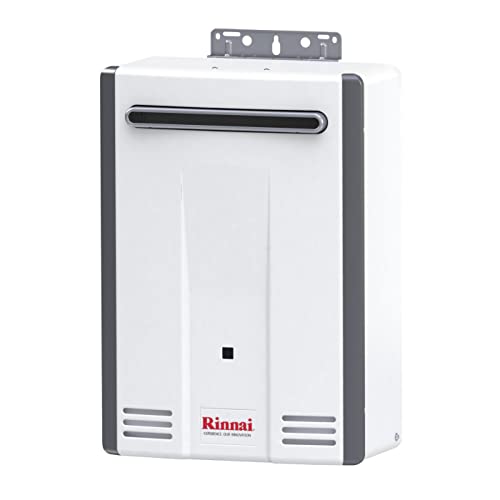
The Rinnai V53DeN is an outdoor tankless unit delivering 5.3 GPM, intended for continuous hot water to serve several bathroom fixtures. It emphasizes energy efficiency by heating only on demand.
- 5.3 GPM supports a shower and a sink simultaneously in many households.
- Outdoor installation reduces indoor venting needs, easing indoor space constraints.
- 10-year heat exchanger warranty indicates expected durability for the core component.
Considerations: Outdoor installation exposes the unit to weather; proper location and freeze protection (if relevant) are essential. This model suits households seeking on-demand hot water without indoor venting complexity.
Rheem RTG-95DVLN-3 High Efficiency Non-Condensing Indoor Tankless Natural Gas Water Heater, 9.5 GPM

The Rheem RTG-95DVLN-3 is an indoor, high-capacity tankless water heater delivering up to 9.5 GPM, suitable for whole-house applications and multiple simultaneous bathroom uses.
Call 888-896-7031 for Free Local HVAC Quotes – Compare and Save Today!
- 9.5 GPM supports multiple showers and appliances with reduced flow interruptions.
- High efficiency operation reduces runtime and potential gas usage compared with storage tanks.
- Designed for indoor installation with appropriate venting and combustion air provisions.
Considerations: Indoor tankless units require proper venting and combustion air; professional installation is typically necessary. Good fit for larger homes or multiple-bathroom scenarios where bathroom hot water demand is high.
Tankless Water Heater Natural Gas, 4.74GPM 18L Indoor, Instant Hot Gas Water Heater (forimo)

The forimo compact tankless unit provides about 4.74 GPM and includes digital temperature control and multiple safety protections like flame failure, anti-freeze, and overheat protection.
- Digital Fahrenheit display allows precise setpoint control for bathroom showers.
- Built-in safety features reduce risk of flame loss and overheating.
- Designed for natural gas (LNG) with stainless steel construction for corrosion resistance.
Considerations: The 4.74 GPM output suits single bathroom use or simultaneous sink and shower under moderate flow. Useful where compact, feature-rich tankless units are preferred for bathrooms with limited space.
Buying Guide: Choosing A Natural Gas Solution For Your Bathroom
Selecting between a space heater and a tankless water heater requires matching needs, code constraints, and installation realities. Below are the main considerations to compare products across multiple perspectives.
1. Purpose: Space Heating Versus Hot Water
Space heaters (vent-free or direct vent) provide instant air warmth for the bathroom. Tankless water heaters provide continuous hot water for showers and sinks. Decide which primary function — ambient heat or hot water supply — is the priority.
2. Venting And Indoor Air Quality
Vent-free units do not require external venting but release combustion products into the room; they are compact but require good ventilation and must comply with local regulations. Direct vent and sealed combustion units draw combustion air from outside and exhaust outdoors, improving indoor air quality at the cost of venting work.
3. BTU Output And Room Size
Match BTU output to bathroom size. Small bathrooms (under 300 sq. ft.) can often be served by 5K–10K BTU vent-free units. Larger bathrooms or connected spaces may need 17K BTU or more. For tankless water heaters, measure required BTU indirectly via desired flow rate and incoming water temperature.
4. Tankless Flow Rate (GPM) And Temperature Rise
For hot water comfort, select tankless units by GPM and expected temperature rise. Typical shower flow is 1.5–2.5 GPM; a single shower generally requires 2–5 GPM depending on incoming water temperature. Whole-house bathroom setups with multiple fixtures need higher GPM ratings.
5. Installation Location And Venting Complexity
Outdoor tankless models eliminate indoor venting but need protection from elements and proper clearances. Indoor tankless units require Category venting or power venting; direct vent heaters need exterior wall or roof venting. Consider cost and feasibility of running vent piping.
6. Safety Features
Key safety items: sealed combustion, oxygen depletion sensor (ODS) on vent-free units, flame failure device, overheat protection, and pressure regulators. For bathrooms, prioritize models with sealed combustion or robust safety controls to protect indoor air quality.
7. Code Compliance And Local Regulations
Many jurisdictions restrict or prohibit vent-free heaters in bathrooms or bedrooms. Check local building codes and HOA rules before selecting a vent-free option. Professional installers can confirm compliance and recommend acceptable models.
8. Maintenance And Serviceability
Tankless units require periodic descaling in hard water areas; space heaters may need pilot checks and occasional cleaning. Verify warranty terms (heat exchanger warranty is especially important) and local service availability for the brand chosen.
9. Energy Efficiency And Operating Costs
Tankless systems reduce standby losses and often yield lower gas usage for hot water demand. Space heaters have higher instantaneous efficiency for their zone but operating costs depend on use duration. Compare efficiency claims and calculate expected runtime for realistic cost estimates.
10. Noise, Size, And Placement
Consider operational noise and physical footprint. Tankless units can be compact but may produce fan or combustion noise. Wall-mounted heaters free floor space but need unobstructed airflow. For bathrooms, small size and low noise are often prioritized.
Comparison Perspectives
- Best For Small Bathroom Heat: Vent-free blue flame units provide quick warmth with minimal installation if allowed by codes.
- Best For Indoor Air Quality: Direct vent models with sealed combustion keep combustion gases out of living spaces.
- Best For Hot Water Reliability: Higher GPM tankless units (8–10 GPM) support multiple bathroom fixtures simultaneously.
- Best For Minimal Vent Work: Outdoor tankless models reduce indoor venting but need weather protection planning.
When evaluating options, weigh safety, code compliance, capacity (BTU/GPM), venting requirements, and maintenance. Professional consultation can clarify site-specific constraints and ensure the chosen natural gas solution performs reliably for your bathroom needs.
Tips for Getting the Best HVAC Prices
- Prioritize Quality Over Cost
The most critical factor in any HVAC project is the quality of the installation. Don’t compromise on contractor expertise just to save money. - Check for Rebates
Always research current rebates and incentives — they can significantly reduce your overall cost. - Compare Multiple Quotes
Request at least three estimates before making your choice. You can click here to get three free quotes from local professionals. These quotes include available rebates and tax credits and automatically exclude unqualified contractors. - Negotiate Smartly
Once you've chosen a contractor, use the proven strategies from our guide — How Homeowners Can Negotiate with HVAC Dealers — to get the best possible final price.