
Choosing the right natural gas hanging heater means matching heat output, mounting style, and safety features to your space. Below is a quick comparison of selected units followed by individual product overviews and a detailed buying guide to help you decide.
| Product | Type | BTU | Best For |
|---|---|---|---|
| SunPak S34 Natural Gas Outdoor Hanging Patio Heater | Hanging Patio Heater | 34,000 BTU | Outdoor patios, covered decks |
| Reznor UDXC-60 Ceiling Mount Natural Gas Heater | Ceiling/Hanging Unit | 60,000 BTU (multi-level) | Garages, shops, commercial spaces |
| Mr. Heater Big Maxx MHU80NG Natural Gas Unit Heater | Hanging/Ceiling Unit Heater | 80,000 BTU | Large garages, workshops |
| Dyna-Glo IR30NMDG-1 Natural Gas Infrared Heater | Infrared Wall/Ceiling Mount | 30,000 BTU | Spot heating, insulated spaces |
| ProCom MN300TPA-B Ventless Natural Gas Infrared Space Heater | Wall/Portable Infrared | 30,000 BTU | Indoor rooms where ventless allowed |
Content Navigation
- SunPak S34 Natural Gas Outdoor Hanging Patio Heater
- Reznor UDXC-60 Ceiling Mount Natural Gas Heater
- Mr. Heater Big Maxx MHU80NG Natural Gas Unit Heater
- Dyna-Glo IR30NMDG-1 Natural Gas Infrared Wall Heater
- ProCom MN300TPA-B Ventless Natural Gas Infrared Space Heater
- Buying Guide: How To Choose A Natural Gas Hanging Heater
- Comparison Perspectives
SunPak S34 Natural Gas Outdoor Hanging Patio Heater
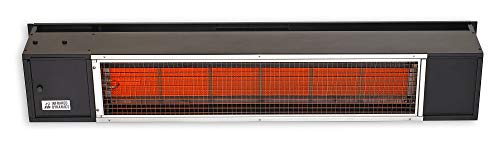
The SunPak S34 is a purpose-built outdoor hanging patio heater designed to suspend from an overhead bracket or chain and deliver focused radiant heat. It lists a 34,000 BTU output and a durable aluminized black finish.
- Finish: Black aluminized exterior suited to outdoor exposure.
- Mounting: Designed for hanging/ceiling suspension to direct heat downward.
- Use Case: Outdoor covered patios and commercial outdoor seating where natural gas service is available.
- Notes: As an outdoor-rated fixture, clearance and weather protection should be confirmed before installation.
Reznor UDXC-60 Ceiling Mount Natural Gas Heater

The Reznor UDXC-60 is an indoor-duty ceiling-mount hanging gas heater intended for garages, workshops, and light commercial spaces. It offers multiple output levels and forced-air distribution for quicker space warming.
- BTU & Efficiency: Rated for 60,000 BTU with selectable lower outputs; 83% thermal efficiency listed.
- Mounting: Threaded-nut retainers at four suspension points allow ceiling hanging; mounting hardware sold separately.
- Performance: Designed for commercial/industrial and larger residential utility spaces where a heater can be suspended from joists or trusses.
- Safety/Use: Listed for indoor use; ensure proper clearances and ventilation per manufacturer instructions.
Mr. Heater Big Maxx MHU80NG Natural Gas Unit Heater
Call 888-896-7031 for Free Local HVAC Quotes – Compare and Save Today!
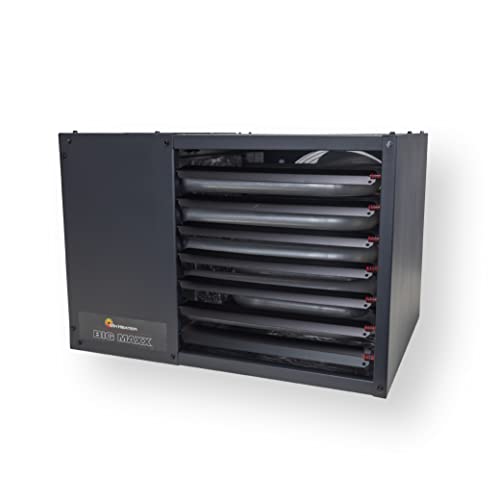
The Mr. Heater Big Maxx MHU80NG is a high-capacity natural gas unit heater that can be installed as a ceiling-hung or suspended unit for large volume spaces. It prioritizes coverage and sustained output.
- BTU & Coverage: 80,000 BTU with stated coverage up to approximately 2,000 sq. ft. (manufacturer guidance).
- Mounting: Includes angle brackets and supports suspension; minimum clearance recommendations apply (minimum 8 ft. from floor to base).
- Venting: Supports Category 1 vertical and Category 3 horizontal venting options; venting selection depends on installation.
- Included Accessories: Unit includes angle brackets and an LP conversion kit (natural gas models ship configured for natural gas).
Dyna-Glo IR30NMDG-1 Natural Gas Infrared Wall Heater

The Dyna-Glo IR30NMDG-1 is an infrared natural gas heater that radiates heat directly to objects and people rather than convecting warm air. While commonly wall-mounted, infrared units can often be mounted in ways that provide localized hanging-like coverage for overhead installations if supported properly and allowed by code.
- Heat Tech: Infrared radiation warms surfaces first, which can feel faster in spot-heating scenarios.
- BTU & Area: 30,000 BTU rated and specified to heat spaces up to around 1,000 sq. ft. depending on insulation.
- Fuel: Natural gas ready; conversion or fuel changes typically restricted—use the fuel specified by the manufacturer.
- Use: Best for targeted warming of work areas, garages, or partially insulated spaces where radiant heat is effective.
ProCom MN300TPA-B Ventless Natural Gas Infrared Space Heater

The ProCom MN300TPA-B is a ventless infrared natural gas space heater with thermostat control. It offers wall-mount or floor placement and provides a compact, modern profile for smaller indoor areas where ventless operation is permitted.
- BTU & Coverage: Up to 30,000 BTU and claimed coverage up to around 1,400 sq. ft., depending on layout and insulation.
- Controls: Built-in thermostat with high/medium/low settings for zoned comfort control.
- Mounting Versatility: Ships with wall-mount hardware and base feet for floor placement.
- Regulatory Note: Ventless gas appliances are regulated in some jurisdictions; confirm local codes and indoor air quality considerations.
Buying Guide: How To Choose A Natural Gas Hanging Heater
Selecting the right hanging gas heater requires balancing space size, mounting options, venting needs, and safety requirements. The sections below outline the key factors to evaluate.
Call 888-896-7031 for Free Local HVAC Quotes – Compare and Save Today!
1. Determine Heater Type And Mounting
Hanging or ceiling-mounted heaters come in two main approaches: radiant (infrared) and forced-air unit heaters.
- Radiant (Infrared): Heats objects and people directly, efficient for spot heating and outdoor covered spaces. Typically lower BTU for perceived warmth.
- Forced-Air Unit Heaters: Use a blower to distribute warm air quickly across larger volumes; better for whole-space heating in garages and workshops.
- Mounting Considerations: Verify whether the unit is explicitly listed for hanging/ceiling mounting and what bracket/hardware is required. Confirm structural support and clearances.
2. Match BTU Output To Space Size
Estimate the square footage and the insulation level. Higher ceilings and poor insulation require more BTU. As a rough guide:
- Small/Moderately Insulated Areas: 20,000–40,000 BTU for spot heating or modest spaces.
- Medium Workspaces: 40,000–60,000 BTU for average garages and shops.
- Large Or Poorly Insulated Areas: 60,000+ BTU for sustained whole-space heating.
3. Venting And Fuel Considerations
Venting requirements depend on the heater category:
- Direct-Vent / Vented Units: Require exhaust venting to the outdoors; safer for indoor use and better for air quality.
- Ventless Units: Release combustion products indoors and are subject to local restrictions; suitable only where allowed and with proper ventilation practices.
- Installation: Professional gas and venting installation is recommended to ensure code compliance and safe operation.
4. Safety And Clearance
All hanging heaters have minimum clearance specifications to combustibles and people. Consider:
- Minimum Mounting Height: Many unit heaters require an 8-foot minimum clearance from floor to base or greater.
- Clearances To Combustibles: Check side and top clearances and maintain a safe distance from overhead structures.
- Safety Features: Look for sealed combustion, safety pilot, and thermostat or limit controls that prevent overheating.
5. Efficiency And Operating Costs
Efficiency ratings (AFUE or thermal efficiency) indicate how much fuel is converted to useful heat. Higher efficiency reduces fuel use, though initial cost and venting needs may differ.
- Infrared Units: Often feel efficient for targeted warmth since they heat people/objects first.
- Forced-Air Units: Can be more effective for large or open-volume spaces but may have distribution losses.
6. Controls And Zoning
Consider thermostatic controls, multiple output levels, or compatibility with external thermostats to optimize comfort and fuel use.
- Variable Output: Units with selectable low/high settings offer flexibility for milder vs. colder days.
- Thermostat Compatibility: Some heaters include built-in thermostats or support remote/line-voltage thermostats for zoning.
7. Installation And Maintenance
Plan for professional installation by a licensed technician for gas connections and venting. Routine maintenance includes cleaning grilles, checking pilot/ignition systems, and inspecting vent terminations.
8. Regulatory And Environmental Factors
Confirm local building codes and appliance listings. Ventless appliances may be restricted in some areas or in certain building types. Consider indoor air quality and carbon monoxide monitoring when using gas appliances indoors.
Comparison Perspectives
When deciding between options, weigh the following perspectives:
Tips for Getting the Best HVAC Prices
- Prioritize Quality Over Cost
The most critical factor in any HVAC project is the quality of the installation. Don’t compromise on contractor expertise just to save money. - Check for Rebates
Always research current rebates and incentives — they can significantly reduce your overall cost. - Compare Multiple Quotes
Request at least three estimates before making your choice. You can click here to get three free quotes from local professionals. These quotes include available rebates and tax credits and automatically exclude unqualified contractors. - Negotiate Smartly
Once you've chosen a contractor, use the proven strategies from our guide — How Homeowners Can Negotiate with HVAC Dealers — to get the best possible final price.
- Indoor Whole-Space Heating: Choose a forced-air unit heater with higher BTU and proper venting (e.g., Reznor or Mr. Heater models).
- Outdoor Or Covered Patio: Select a purpose-built hanging patio heater rated for outdoor use (e.g., SunPak S34) to handle exposure and downward radiant warmth.
- Spot Heating & Fast Perceived Warmth: Infrared units (Dyna-Glo or ProCom) provide rapid radiant warmth to people and workstations.
- Ventless Convenience: Ventless models like the ProCom are easier to install in permitted areas but require attention to indoor air quality and local code allowances.
- High-Capacity Spaces: For large garages or shops, high-BTU suspended units (Mr. Heater Big Maxx, Reznor UDXC) offer sustained heating and distribution via fans or blowers.