
Finding the right natural gas radiant garage heater depends on garage size, ventilation, and mounting preference. Below is a concise comparison of five top-rated options chosen for garages and workshops, followed by focused product overviews and a detailed buying guide to help you choose the best fit.
| Product | Type | BTU | Coverage |
|---|---|---|---|
| Dyna-Glo IR30NMDG-1 | Infrared Wall Heater | 30,000 | Up To 1,000 Sq. Ft. |
| Mr. Heater MHVFRD20NGT | Vent-Free Radiant Wall | 20,000 | Up To 700 Sq. Ft. |
| Comfort Glow 30,000 BTU | Infrared Vent-Free | 30,000 | Up To 1,250 Sq. Ft. |
| Mr. Heater MH40NG | Ceiling/Wall Infrared Unit | 40,000 | High Ceilings, Large Garages |
| Mr. Heater F260560 Big Maxx MHU80NG | Unit Heater (Forced Air Option) | 80,000 | Up To 2,000 Sq. Ft. |
Content Navigation
- Dyna-Glo IR30NMDG-1 30,000 BTU Natural Gas Infrared Wall Heater
- Mr. Heater MHVFRD20NGT Vent Free Radiant 20,000 BTU Natural Gas Heater
- Comfort Glow 30,000 BTU Natural Gas Infrared Radiant Vent-Free Heater
- Mr. Heater F272800 40,000 BTU Natural Gas Garage Heater #MH40NG
- Mr. Heater F260560 Big Maxx MHU80NG Natural Gas Unit Heater, 80,000 BTU
- Buying Guide: Choosing A Natural Gas Radiant Garage Heater
Dyna-Glo IR30NMDG-1 30,000 BTU Natural Gas Infrared Wall Heater

Type: Natural Gas Infrared Wall Heater. Key Features: Natural gas ready (no fuel conversion), infrared radiant heating, up to 30,000 BTU, coverage up to 1,000 sq. ft. The unit radiates heat to objects and people first rather than only heating air.
This model focuses on radiant infrared heat, which can be effective in garages where spot heating and fast surface warming matter. The fixed wall mount design positions the heater to direct radiant energy to benches, vehicles, and workspaces. For garages with moderate insulation and typical ceiling heights, the 30,000 BTU output is suited to single-bay garages or zoned workshop areas.
Mr. Heater MHVFRD20NGT Vent Free Radiant 20,000 BTU Natural Gas Heater

Type: Vent-free radiant wall heater. Key Features: 20,000 BTU output, advanced infrared to warm objects and people, covers up to 700 sq. ft., automatic low-oxygen shut-off (ODS) for safety.
Call 888-896-7031 for Free Local HVAC Quotes – Compare and Save Today!
As a vent-free option, this heater delivers direct, “sun-like” warmth and is designed for supplemental heating in garages, workshops, or attached workspaces. Vent-free units maximize fuel efficiency by releasing combustion products into the room; they require compliance with local codes and adequate ventilation planning. The integrated oxygen sensor provides an important safety layer when used in enclosed or intermittently ventilated spaces.
Comfort Glow 30,000 BTU Natural Gas Infrared Radiant Vent-Free Heater

Type: Vent-free infrared wall heater. Key Features: 30,000 BTU, radiates heat to objects, up to 1,250 sq. ft. coverage, no electricity needed, wall mount with optional floor kit.
This Comfort Glow model emphasizes high efficiency and an ability to operate without electrical power, useful for outages or off-grid workshops. With higher stated coverage, it is targeted at larger garages or open-plan work areas. As with any vent-free unit, verify local regulations and ensure CO/combustion monitoring in the work area. The wall-mount with optional floor conversion adds installation flexibility for different shop layouts.
Mr. Heater F272800 40,000 BTU Natural Gas Garage Heater #MH40NG

Type: Infrared garage heater suitable for larger or high-ceiling garages. Key Features: Efficient infrared heating, designed for buildings with 12–15 ft ceilings, specified clearances for safe installation.
Call 888-896-7031 for Free Local HVAC Quotes – Compare and Save Today!
This 40,000 BTU unit is designed for higher ceiling garages or open workshop environments where downward radiant heat can reach floor-level work areas. The clearances and mounting requirements make it well-suited for ceiling or high-wall installations. Infrared output is useful when heating targeted areas and minimizing warm-air stratification in tall spaces.
Mr. Heater F260560 Big Maxx MHU80NG Natural Gas Unit Heater, 80,000 BTU
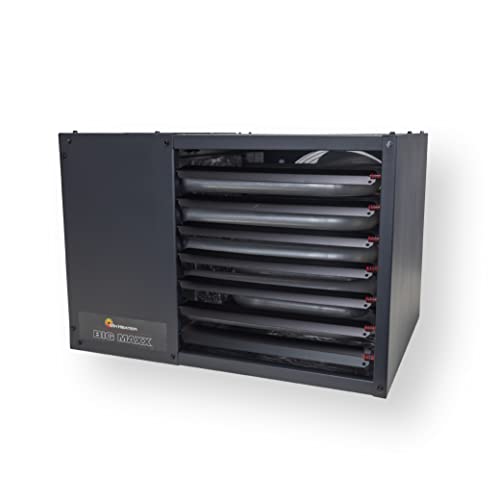
Type: High-capacity natural gas unit heater. Key Features: 80,000 BTU output, coverage up to 2,000 sq. ft., includes angle brackets and LP conversion kit, requires electrical power for fan and thermostat (thermostat not included).
The Big Maxx is aimed at large or commercial-sized garages and workshops. Its 80,000 BTU capacity and support for horizontal or vertical venting (category 1/3) make it a robust choice when sustained whole-space heating is required. Because it is a unit heater with fan assistance, it delivers convective flow in addition to radiant components, reducing stratification in tall spaces and improving overall heat circulation.
Buying Guide: Choosing A Natural Gas Radiant Garage Heater
Selecting the right natural gas radiant heater for your garage requires attention to performance, safety, installation, and long-term operation. The considerations below cover multiple perspectives to help match heater selection to your garage needs.
Heating Capacity And Coverage
- BTU Output: Estimate required BTUs based on garage size, ceiling height, insulation, and desired temperature rise. Small single-car garages often need 10,000–30,000 BTU; larger or poorly insulated garages may need 40,000 BTU or more.
- Ceiling Height: Infrared radiant units work well for spot and surface heating; high ceilings favor higher-output units or fan-assisted models to reduce heat loss above workspace.
Radiant Vs. Unit/Forced-Air
- Pure Radiant (Infrared): Warms objects and people directly, efficient for workbenches, vehicles, or specific zones. Less effective at uniformly heating large volumes of air in tall spaces.
- Unit Heaters (Fan-Assisted): Combine radiant and convective heat; better for whole-space heating and reducing stratification. Require electrical power for fans/controls.
Vent-Free Vs. Vented
- Vent-Free: High fuel efficiency and simpler installation but release combustion byproducts into the space. Check local codes; ensure proper ventilation and install oxygen depletion sensors and CO detection.
- Direct-Vent/Vented: Exhausts combustion products outdoors, improving indoor air quality. Preferred for enclosed garages attached to living spaces or where code restricts vent-free appliances.
Safety Features And Code Compliance
- ODS / Low-Oxygen Shutoff: Important for vent-free heaters to cut gas if oxygen levels fall.
- Sealed Combustion / Direct Vent: Reduces indoor combustion exposure; recommended where air quality is a priority.
- Clearances & Mounting: Follow manufacturer clearances for walls, ceilings, and combustible materials. High-output units often require specific clearances and hanger/venting hardware.
- CO and Combustion Monitoring: Install carbon monoxide detectors and plan ventilation for extended use or poorly ventilated spaces.
Installation And Fuel Considerations
- Natural Gas Supply: Verify line capacity, required pressure, and whether a conversion kit or dedicated line is needed. Some models are natural-gas-only and do not allow conversion.
- Electrical Needs: Some heaters (unit heaters, models with fans or thermostats) require 120 V power. Vent-free, pilot-only radiant models may operate without electricity.
- Mounting Options: Wall vs. ceiling vs. floor kits affect heat directionality. Choose based on workspace layout and target heating zones.
Operational Efficiency And Maintenance
- Efficiency Ratings: Vent-free units often claim near 99% efficiency because exhaust is not vented; direct vent systems avoid indoor combustion products at the expense of slightly lower usable efficiency.
- Maintenance: Periodic burner and pilot inspection, vent cleaning for vented units, and professional service for gas connections improve longevity and safety.
Noise, Controls, And Usability
- Fan Noise: Unit heaters with blowers produce sound; assess if noise is acceptable for your workshop tasks.
- Thermostat Compatibility: Choose units with integrated thermostats or compatible external thermostats for better temperature control and fuel savings.
- Ignition Type: Piezo or matchless pilots are common; electronic ignition reduces pilot gas use but needs power.
Multiple Perspective Comparisons
- Small Garage / Spot Heating: Low-to-moderate BTU vent-free infrared wall heaters provide direct, efficient warmth for benches and vehicles.
- Large Garage / High Ceilings: Higher BTU infrared or fan-assisted unit heaters distribute heat more effectively and reduce stratification.
- Indoor Air Quality Priority: Opt for direct-vent or properly vented unit heaters to avoid introducing combustion products to the workspace.
- Power Outage / Off-Grid Needs: Non-electric vent-free radiants can operate without power, useful for reliability during outages.
Use the combinations of BTU, mounting type, venting method, and safety features above to match the heater to your garage layout and local code requirements.
Tips for Getting the Best HVAC Prices
- Prioritize Quality Over Cost
The most critical factor in any HVAC project is the quality of the installation. Don’t compromise on contractor expertise just to save money. - Check for Rebates
Always research current rebates and incentives — they can significantly reduce your overall cost. - Compare Multiple Quotes
Request at least three estimates before making your choice. You can click here to get three free quotes from local professionals. These quotes include available rebates and tax credits and automatically exclude unqualified contractors. - Negotiate Smartly
Once you've chosen a contractor, use the proven strategies from our guide — How Homeowners Can Negotiate with HVAC Dealers — to get the best possible final price.